We are at Dreamforce 2026, Industry Pavilion at San Francisco


June 20, 2026
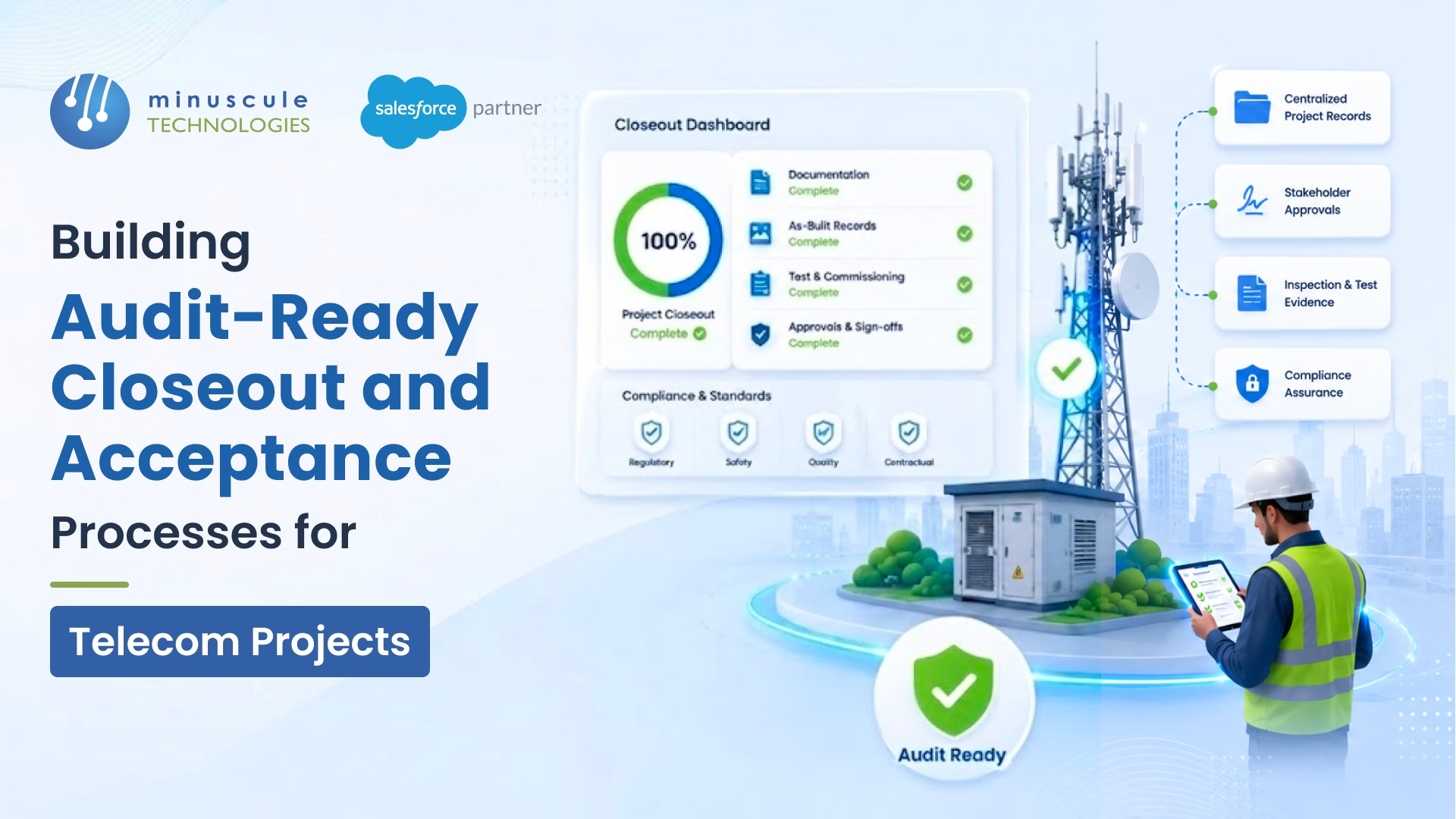
A delivery VP at a tier-one integrator told us about a deployment that had been accepted, billed, and operating for eight months when the customer raised a compliance question. They wanted to see the signed acceptance record for one specific site, the test results that backed the sign-off, and proof that a particular punch list item had been formally closed.
His team spent the next three weeks reconstructing the answer. The acceptance email existed somewhere. The test results were in a vendor's archive. The punch list closure had been confirmed verbally during a closeout call that nobody had documented in writing. The customer's compliance team didn't accept verbal confirmation. The dispute went on for months.
This is the failure mode most telecom organizations don't see until it's too late. Audit-ready closeout and acceptance isn't a paperwork concern - it's a contractual and reputational one. The evidence either exists in defensible form, or it doesn't. And when it doesn't, the cost shows up months or years after the site is live.
This post is for the delivery leaders, contract managers, and compliance owners whose programs are exposed to acceptance disputes they don't know they're carrying.
Most telecom deployment programs treat closeout as the wrap-up - the last week or two of activity before acceptance billing. The team is moving on. The customer signs off. The site goes live. Everyone moves to the next program.
What stays behind is closeout debt - incomplete documentation, verbal sign-offs without records, evidence stored across five systems, punch list items closed without traceable confirmation. The debt is invisible while the customer relationship is healthy. It surfaces the moment something goes wrong: a compliance audit, a contract dispute, a vendor performance question, a renewal negotiation.
By then, reconstructing the record is expensive - sometimes impossible. The people who closed the deployment have moved to other programs. The vendors have archived their files. The email threads are scattered across multiple inboxes.
The failure modes in closeout governance are predictable across organizations:
Most acceptance discussions focus on speed - how fast you can get a site signed off. But speed without defensibility is a liability. A site accepted in two weeks with weak evidence creates eight months of exposure. A site accepted in three weeks with audit-ready evidence is closed business.
The right metric isn't acceptance velocity. It's acceptance defensibility. And defensibility comes from designing acceptance from the start of the deployment, not from compiling it at the end. This is the same fundamental governance argument we made in why telecom deployment governance needs to move beyond spreadsheets - informal data structures create downstream exposure that structured governance prevents.
The shift to audit-ready closeout isn't about producing more documentation. It's about producing the right documentation, in the right format, captured at the right moment in the lifecycle - so that six months later, the answer to any compliance, contractual, or operational question is available in seconds, not weeks.
A governed closeout workflow isn't a final checklist. It's a structural design choice that starts at deployment planning and runs through every stage of execution - culminating in an acceptance record that's defensible against any future question.
The architecture has to handle five governance layers:
Every customer, operator, and contractual acceptance criterion is captured at the planning stage as a tracked record. What evidence is required, what threshold qualifies as acceptable, who has approval authority, what format the documentation must be in. This is the foundation everything downstream validates against. Without it, acceptance becomes a negotiation at the end - not a milestone with criteria defined from the start.
As work progresses, evidence is captured against the specific acceptance criteria it satisfies - not stored in folders to be searched later. Photos link to checklist items. Test results link to design versions. Configuration data links to equipment records. The commissioning governance discipline we've covered makes this structural: evidence is a side-effect of field execution, not a retroactive assembly task.
Every punch list item is a discrete record with description, severity, owner, target date, and closure evidence. No verbal closures. No "we agreed on the call." The closure record itself becomes part of the acceptance audit trail. The same multi-operator governance model supports per-operator punch list isolation in shared deployments.
When acceptance approaches, the closeout package isn't compiled manually. The platform assembles it from the records captured during execution — the as-built documentation, test evidence, exception closures, approval history, and signed acceptance records. The customer or operator reviews against a complete, formatted, traceable package. The same Salesforce-native architecture covered in how Salesforce governs RAN deployment execution end to end provides this automated assembly capability.
Final acceptance is captured as a formal record - timestamped, attributed, linked to the specific version of every deliverable approved. Six months later, when someone asks who approved what, against which design version, with what evidence, the answer is queryable in seconds. This is the audit defensibility that closes the long-tail exposure most deployment programs carry without knowing it.
When closeout governance works, the impact lands in three places that matter to delivery economics and risk exposure.
Dispute reduction and resolution speed. Programs running structured closeout governance see significantly fewer post-acceptance disputes — and the disputes that do happen get resolved in days, not weeks or months. The audit trail does the work that legal and compliance teams used to absorb. For organizations where dispute costs accumulate in legal hours, vendor relationship damage, and customer satisfaction impact, this is material.
Faster handover to managed services. When closeout evidence is structured and complete, the handoff from delivery to managed service teams happens cleanly - with full documentation, defined baselines, and clear ownership. The operations team inherits a managed system, not a partially documented one. This is the same handover discipline we covered in neutral host orchestration.
Stronger renewal and expansion positioning. When acceptance records are defensible and customer-facing closeout packages are professional and complete, the next conversation - renewal, expansion, additional accounts within the customer's organization - starts from a position of demonstrated execution discipline. Audit-ready closeout becomes a competitive differentiator, not just a risk reducer.
For program organizations carrying portfolios of accepted sites, the combined impact of dispute reduction, cleaner handovers, and stronger renewal positioning compounds across every customer relationship.
At Minuscule Technologies, we build Salesforce-native closeout and acceptance governance on top of structured deployment workflows. Acceptance criteria are captured at planning. Evidence is collected against criteria during execution. Punch lists and exceptions are tracked with documented closure. Closeout packages are assembled automatically from governed records. Acceptance is captured as a formal record with full audit trail.
The same lifecycle architecture covered in our Lead-to-Live deployment governance pillar extends naturally into closeout - because acceptance is the closing of the lifecycle, not a separate workflow. The executive dashboard layer reports closeout pipeline health in real time, including acceptance aging, evidence completeness, and dispute exposure across the portfolio.
That's the difference between organizations carrying invisible closeout debt across their portfolio and organizations whose closeout records hold up to any question, six months or six years after acceptance.
Audit-ready closeout is the discipline of capturing every closeout artifact - evidence, approvals, punch list closures, acceptance records — as structured, timestamped, attributed records during execution rather than assembling them retroactively at the end. The result is an acceptance record that can answer any future compliance, contractual, or operational question in seconds, with full audit trail. It's the difference between accepted and defensibly accepted.
Disputes typically surface during compliance audits, contract reviews, renewal negotiations, or operational issues that trigger a look back at the original acceptance record. By that point, the people who closed the deployment have moved on, the vendors have archived their files, and informal sign-offs have no defensible record. The dispute isn't about whether the work was done - it's about whether the work can be proven, in the format the questioning party requires.
Audit-ready closeout requires: defined acceptance criteria per stakeholder (captured at planning), evidence against each criterion (captured during execution), punch list and exception records with documented closure, approval history with timestamps and attribution, the assembled closeout package, and the formal acceptance record linking to every supporting artifact. Everything is structured, queryable, and connected to the deployment lifecycle.
When every acceptance criterion, evidence record, punch list closure, and approval is logged with timestamp and ownership in a single platform, disputes become matters of record rather than memory. The audit trail does the work that legal and compliance teams used to absorb. Most disputes don't happen at all because the record is defensible from the start. Those that do happen get resolved in days, not weeks.
Acceptance speed measures how quickly a site gets signed off. Acceptance defensibility measures whether that sign-off holds up to scrutiny months or years later. Speed without defensibility creates downstream exposure - sites accepted quickly with weak evidence accumulate dispute risk. The right metric for closeout governance is defensibility, not just velocity.
A clean closeout package becomes the input to managed service operations - full as-built documentation, defined baselines, completed punch lists, and documented configuration data. The managed service team inherits a managed system rather than a partially documented one. This handover discipline is the same model we cover in neutral host process orchestration - the deployment-to-operations transition is where the recurring revenue model either works or breaks.
Yes. Salesforce supports custom objects for acceptance criteria, evidence records, punch list items, and acceptance approvals - all with full timestamp, attribution, and version history. The closeout package is assembled automatically from governed records. Experience Cloud gives customers and operators controlled access to review and sign off. The same architecture covered in Salesforce-native RAN deployment governance handles closeout governance natively.
Organizations with structured closeout governance typically see significant reductions in post-acceptance dispute volume, faster dispute resolution when issues do arise, cleaner handover to managed service teams, and stronger positioning in renewal and expansion conversations. For program organizations carrying portfolios of accepted sites, the combined impact compounds across every customer relationship - particularly where acceptance defensibility affects contract value or renewal probability.
The cost of weak closeout is invisible until it isn't. By the time a compliance audit, a contract dispute, or a renewal conversation puts pressure on your acceptance records, the time to fix it has already passed.
If your closeout process still depends on retroactive documentation, verbal sign-offs, and evidence scattered across multiple systems, you're carrying audit exposure that compounds with every site you accept. Audit-ready closeout governance closes that exposure structurally - so the question "can we defend this?" stops being a question you'd rather not be asked. Build defensible closeout into every site book an acceptance governance walkthrough
You've seen what's possible. Now, let's make it happen for your business. Whether you need an end-to-end Salesforce solution, a complex integration, or ongoing managed services, our team is ready to deliver.

Schedule a Free Strategic Call


