125+
Certified Salesforce Engineers
75+
Global Implementations
17+
Years Engineering Experience
24/7
Post-Go-Live Support
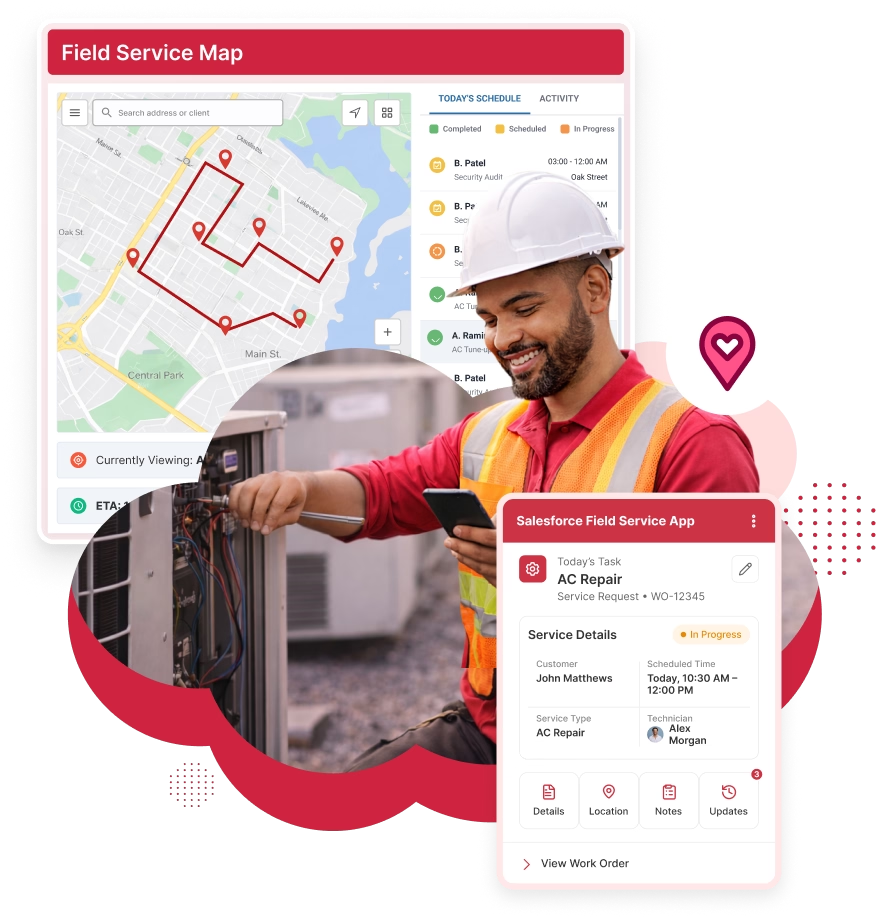
Eliminate missed service windows and scheduling chaos. Field Service replaces disjointed spreadsheets with an intelligent, mobile-first hub. We automate dispatching, track inventory, and connect offline technicians to maximize frontline efficiency.


Connecting Dispatch with On-Site Engineers
Field Service unites dispatchers, field engineers, assets, and back-office operations into one workflow. It replaces communication gaps and paper trails with real-time tracking, clear job context, and automated technician assignment.

Deploying Industrial and Mobile Operations
The platform is built to orchestrate teams that deploy personnel, parts, or vehicles—making it ideal for utility providers, manufacturing OEMs, telecom installers, medical device technicians, and facilities management enterprises.

Optimizing Resources via Scheduling AI
Organizations leverage the platform to execute automated scheduling policies, minimize travel times via geo-fenced routing, and implement Einstein-powered predictive maintenance to resolve asset issues before equipment failure occurs.
Provisioning Offline Field Worker Tools
We implement secure, offline-capable mobile toolkits that allow field technicians to access equipment diagnostics, update inventory balances, and capture digital customer sign-offs even in zero-connectivity environments.

Custom-Engineering Your Local Operations Network
Raw Field Service requires deep integration with inventory systems, fleet tools, and financial ledgers. As your engineering partner, we plan, govern, and customize the platform to fit your exact frontline operational workflows.
Every Salesforce Field Service Lightning implementation we deliver covers three operational pillars — dispatch, mobile, and customer experience — built on Salesforce-native architecture and engineered to scale.
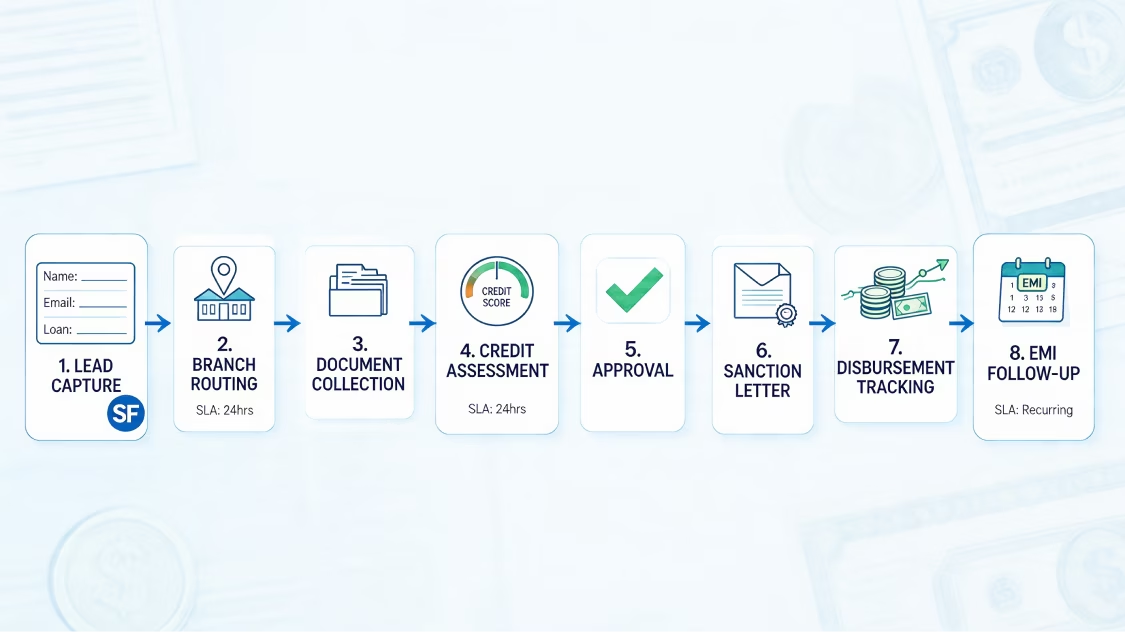
Work orders are auto-assigned to the right field technician based on substation boundaries, service territory, latitude/longitude proximity, and skill match — no manual triage required.
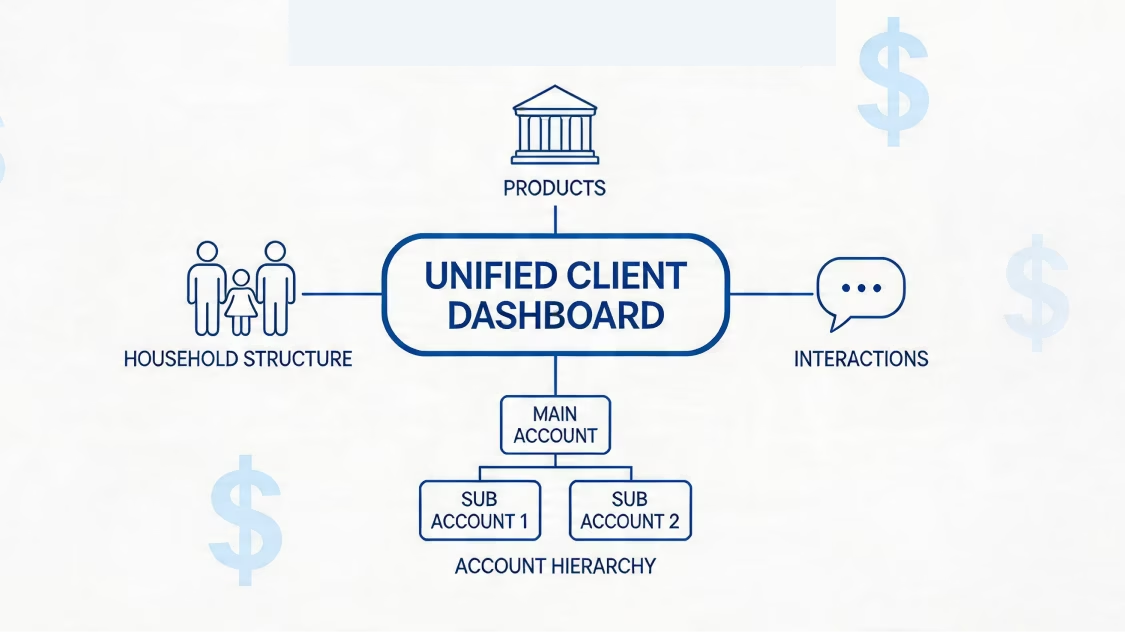
Critical work orders (overdue payments, safety incidents, SLA-sensitive accounts) jump the queue automatically. Lower-priority maintenance flows in around them based on configurable rules.
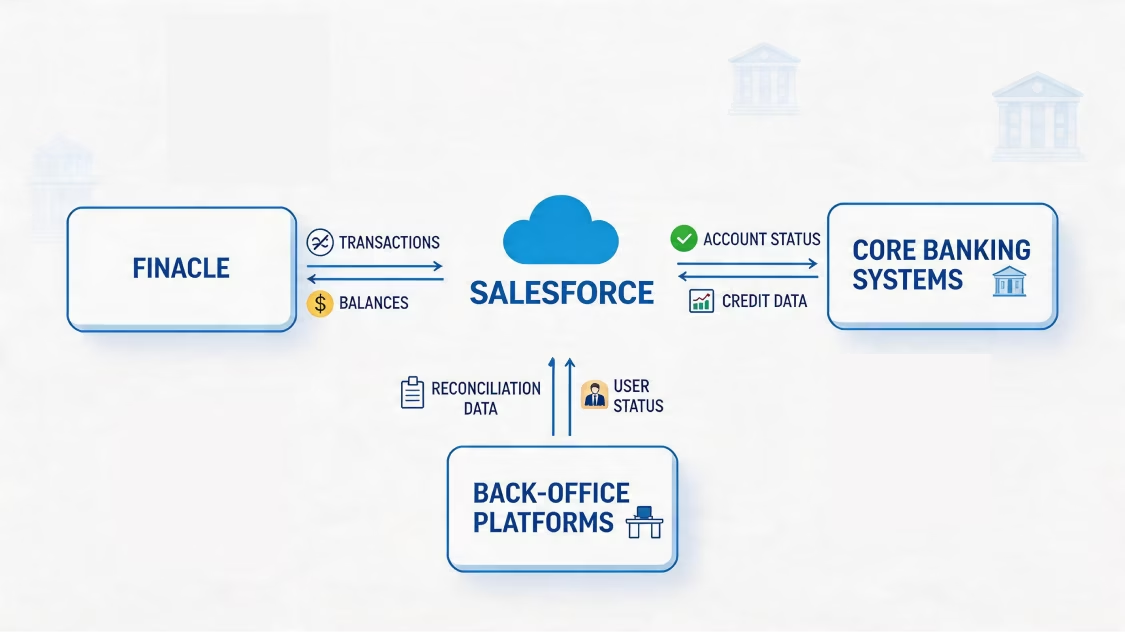
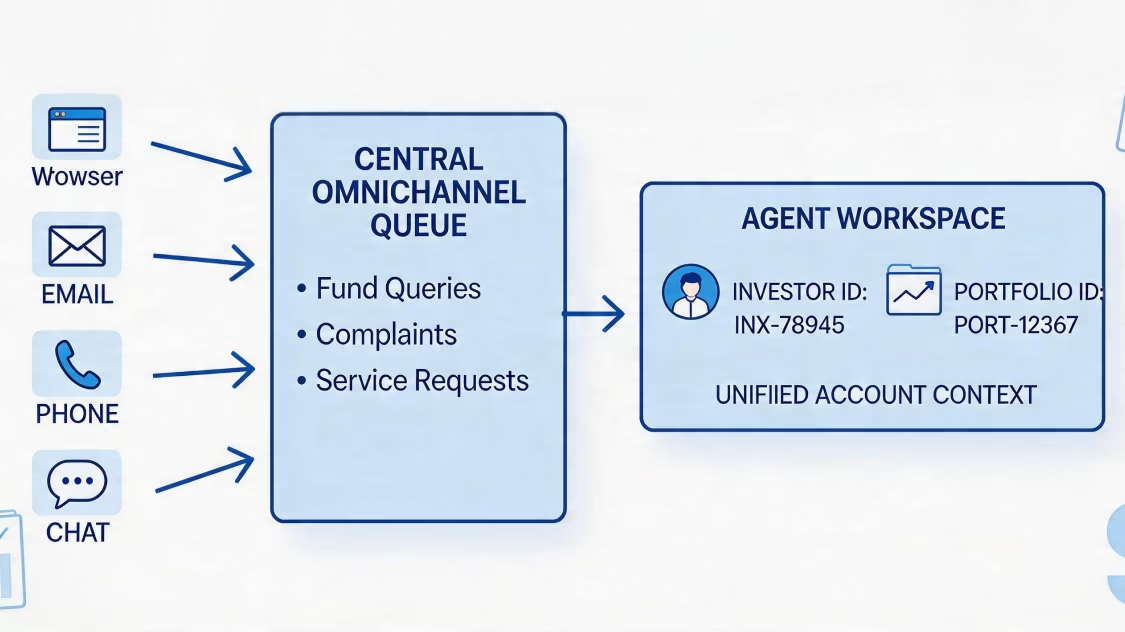
One Service Cloud org runs multiple case workflows — General Cases, Complaints, Enquiries, and Compliments — each with its own fields, page layout, and routing logic. Implemented on ASNB to separate fund queries from general support.
Einstein-powered scheduling weighs traffic, technician skill, parts availability, SLA, and customer preference simultaneously to recommend the optimal route and assignment in seconds.
We deploy and customize the Salesforce Field Service mobile app for iOS and Android — fully offline-capable so technicians keep working in basements, substations, and rural service areas.
Technicians update job status (en route, on-break, in-progress, complete) in real time. The dispatcher console reflects every change instantly. No more "where are we on that job?" radio calls.

Every job is closed with photo evidence, customer signature, and any required compliance documents — captured on mobile and attached directly to the work order record in Salesforce.
Pre-shift vehicle inspections (fuel, tire pressure, oil levels, tool kit), equipment serial number tracking, and consumable inventory management — all paperless, all auditable.
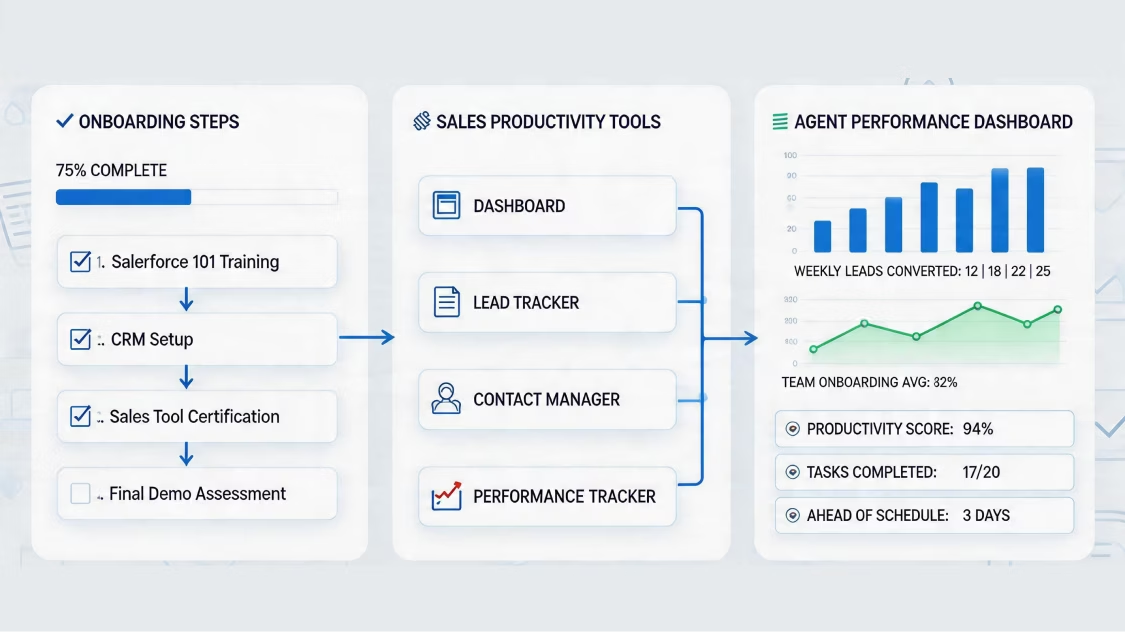
The app suggests nearby work orders to the technician when they finish a job early, eliminating idle time and squeezing more completed tickets out of every shift.

When a customer pays an overdue bill, a reconnection work order is generated and auto-assigned to the nearest available technician — turning a multi-day workflow into a 30-minute one. (We built this for a national utility.)
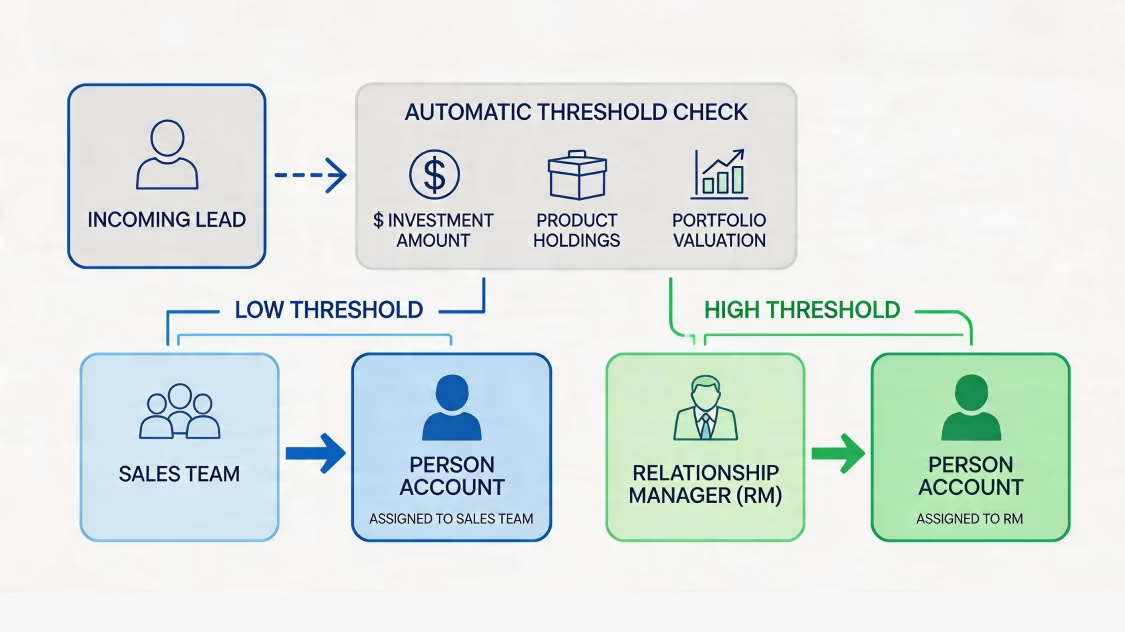
Customers get SMS, WhatsApp, and email updates at every stage — work order created, technician en route, job complete — reducing inbound "where is my technician?" calls by 60%+.
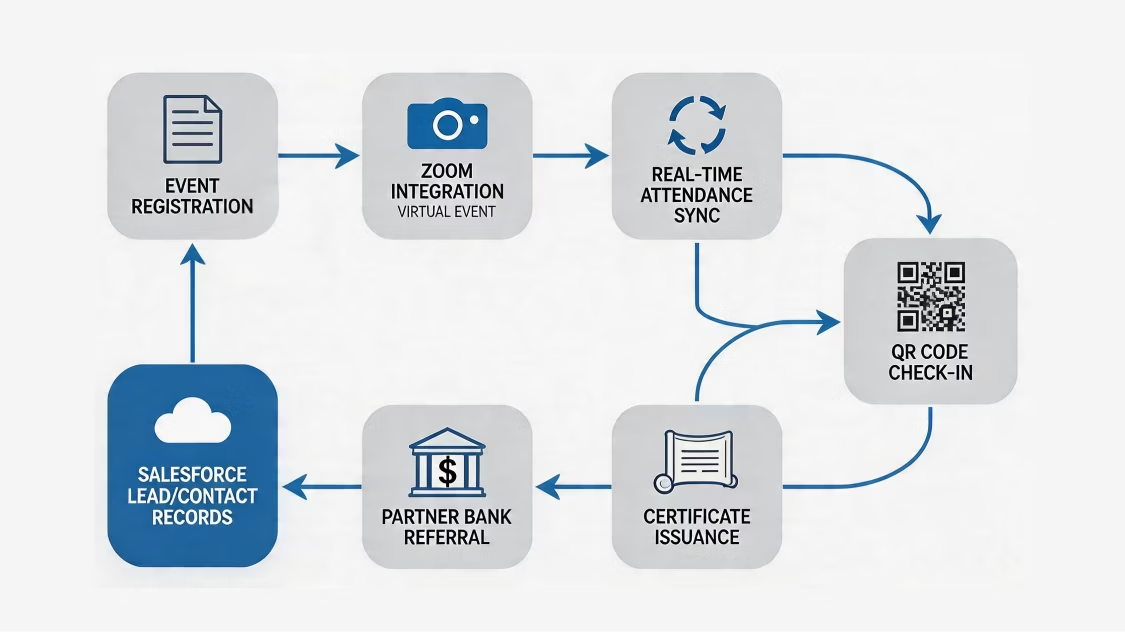
Branded Experience Cloud portals where customers raise service requests, track work order status, view technician ETAs, and approve completed work themselves.
Automated post-service surveys via WhatsApp/SMS feed responses directly into Salesforce for CSAT analysis, technician performance scoring, and continuous improvement.
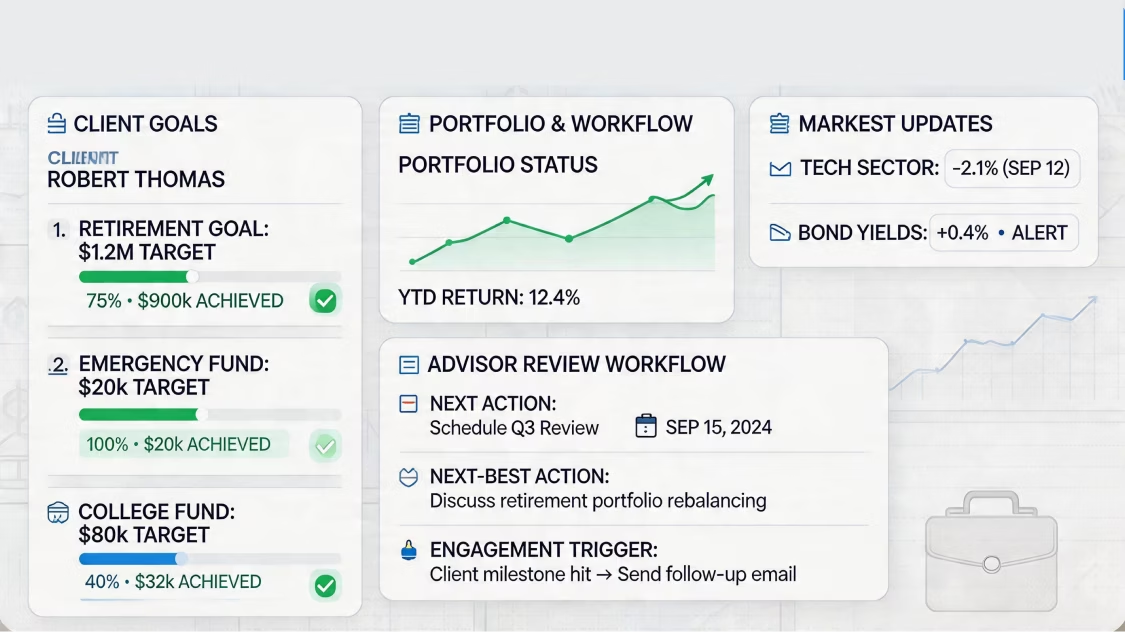
Customers pick their preferred service window from real-time technician availability — eliminating phone tag and double-bookings.
Whether you're starting from scratch, fixing an underperforming org, or scaling an established Field Service Lightning environment, we have a delivery model for it.
Salesforce Field Service Lightning is a platform, not a product. Here are the systems we've built — and can build for you — on top of it.

Dispatcher Console
Real-time command center with map view, technician location tracking, drag-and-drop scheduling, and SLA monitoring.

Work Order Automation Platform
Auto-creation of work orders from billing events, IoT alerts, customer portals, or scheduled preventive maintenance triggers.
IoT-Connected Service Hub
Equipment telemetry triggers automated work orders before failure — predictive maintenance built natively on Salesforce.
Contractor & Third-Party Network Manager
Onboard, dispatch, monitor, and pay external contractors with the same console you use for in-house technicians.

Vehicle Inspection System
Pre-shift inspections, fuel and odometer tracking, defect reporting, and compliance audit trails.
Field Worker Mobile App
Offline-capable iOS/Android app for technicians with work orders, photo capture, e-signatures, parts lookup, and route navigation.

Preventive Maintenance Scheduler
Asset-based maintenance plans that auto-generate recurring work orders, optimized by asset criticality and warranty cycle.
Customer Self-Service Portal
Experience Cloud portal where customers raise tickets, track work orders, approve quotes, and pay invoices.
Service Performance Dashboards
First-time-fix rate, mean time to repair, SLA compliance, technician utilization, customer satisfaction — all in one Salesforce dashboard.
How We Work
We deliver every Salesforce Field Service Lightning implementation in eight disciplined phases — each with clear deliverables, sign-offs, and ownership.

The Service Cloud toolchain our engineers ship with every project.
Case management foundation underlying field service workflows
Customer self-service portals and contractor portals
Custom mobile components and offline-first field worker apps
AI-powered scheduling optimization and predictive insights
Autonomous dispatcher and customer service agents
Unified customer profiles across CRM, IoT, and billing
Integration with SAP, Oracle, ERP, IoT, and legacy systems
Field service performance dashboards and operational reporting
Center / SFDX CI/CD pipelines, sandbox management, and release governance
E-signatures on work orders, service agreements, and completion certificates
Customer notifications and two-way technician communication
Remote diagnostics and customer voice support integration

160+ Salesforce-Certified Experts: A bench of certified administrators, developers, architects, and consultants — not a sales team that subcontracts the work.
75+ Global Salesforce Projects Delivered: Production-grade Salesforce implementations across BFSI, manufacturing, real estate, aviation, healthcare, and energy & utilities — including some of the most complex field service deployments in Southeast Asia and India.
ISO 9001 Certified: Audited quality management across discovery, design, build, test, and deployment — so your Salesforce Field Service Management project doesn't depend on heroics.
Proven Field Service Outcomes: For a national energy utility, our Salesforce Field Service Lightning implementation lifted case completion rates by 24% through automated case distribution, lat/long-based location grouping, and a custom dispatcher console.
End-to-End Field Service Services: Readiness audit, greenfield implementation, optimization, managed services, and continuous improvement — all under one roof.
Multi-Cloud Salesforce Expertise: Field Service rarely lives alone. We bring deep capability across Sales Cloud, Service Cloud, Experience Cloud, Financial Services Cloud, Revenue Cloud (CPQ), and Data Cloud — so your FSL integrates cleanly with the rest of your CRM estate.
Accelerators for Faster Deployment: Our pre-built accelerators — Dealer Management System, RaiseITNow, LWC UI libraries, DevOps toolkits, and Data Quality utilities — compress greenfield Field Service Lightning implementation timelines by 30–40%.
10+ Years of Salesforce & Cloud Engineering: Founded in 2007 with deep Java engineering DNA. Salesforce-focused since 2014. Cloud, integration, and platform engineering since day one — not a Salesforce-only shop trying to learn integration on your project.
We work across every major Salesforce Cloud — not just one or two. Here's where our certified engineers have real, hands-on experience.

One promise: Salesforce that fits your business.
09
Industries
75+
Implementations
Stories of Growth, Innovation & Trust

Dealer Performance Tracking with Automated KPI Monitoring
A global automotive manufacturer with an extensive network of dealerships responsible for sales, service, and product support....

Streamlining Lead Management for an Online Medication Management and Pharmacy Solution
Discover how Minuscule Technologies enhanced lead management for an online pharmacy, boosting efficiency and customer engagement.

Seamless Migration from MS Dynamics to Salesforce CRM
Seamless migration from MS Dynamics to Salesforce CRM by Minuscule Technologies, ensuring data integrity, smooth transition, and enhanced efficiency.
The Salesforce Pulse: Insights and Innovation
Powering Growth with
Award-Winning Salesforce Solutions
Trusted by enterprises for innovation, performance, and proven results.







Whether you're scoping your first Salesforce Field Service Lightning implementation or fixing one that isn't delivering, start here.
Talk to a Field Service Expert