
November 26, 2025
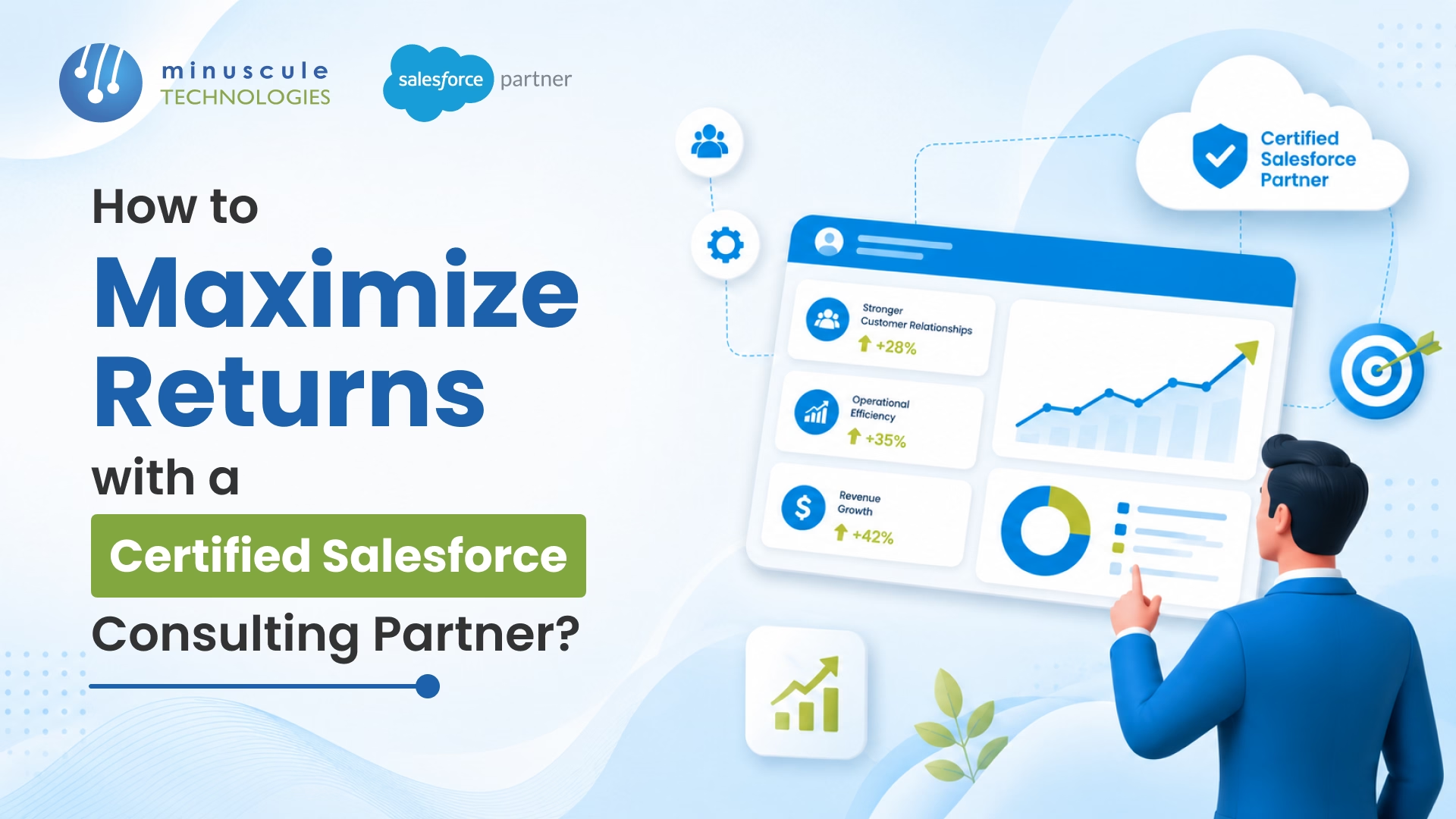
To maximize returns with a certified Salesforce consulting partner, follow six moves: define success metrics before you build, customize only what serves those metrics, connect Salesforce to your other systems, automate repeat work, train for adoption, and keep tuning after go-live. Firms that follow this path see measurable ROI in 6 to 18 months, and Forrester found small businesses report a 303% ROI over three years. The partner’s role is to engineer each step, so returns arrive faster and compound.
You have bought the license. Now what?
Most enterprises treat Salesforce like a checkbox. Deploy the software, call it done. Months later, adoption stalls. Users grumble. The promised return feels distant. Here’s the truth: Salesforce is not something you buy. It is something you engineer.
Between deployment and returns lies a critical gap. That’s where a certified Salesforce consulting partner operates. They turn a platform into a revenue engine built for your business.
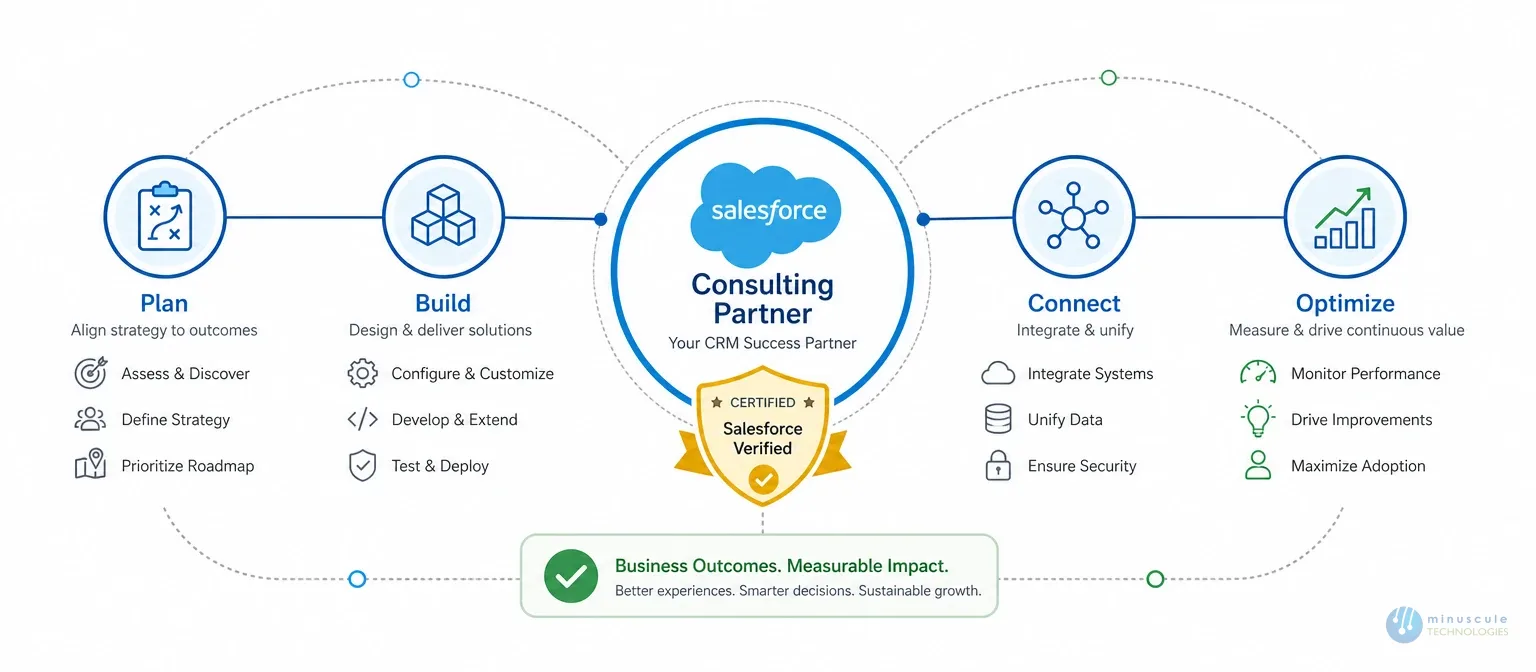
A certified Salesforce consulting partner plans, builds, connects, and tunes Salesforce for your business. Certified means Salesforce has vetted the firm: its consultants hold official credentials, and its project history is tracked. You can check any firm on the official Salesforce partner directory.
The partner’s job is not just setup. It is design: mapping your sales process, wiring Salesforce to your other tools, and proving the value with numbers. Here is a plain guide to what consulting partners do and why your business needs one.
What ROI Can You Expect?
The numbers make the case:
But those returns are not automatic. They depend on how well the platform matches how you sell. That’s the partner’s job.
The gap between what Salesforce can do and what your business needs calls for expert guidance. A certified partner brings three things:
Winning implementations start by defining what winning looks like. That means a structured discovery: map current processes, find pain points, set metrics, and agree on success criteria.
These are not wish-list targets. They are engineered outcomes, based on similar projects and your real operations. This alignment phase is where ROI is actually designed. When every customization serves a defined goal, nothing is wasted.
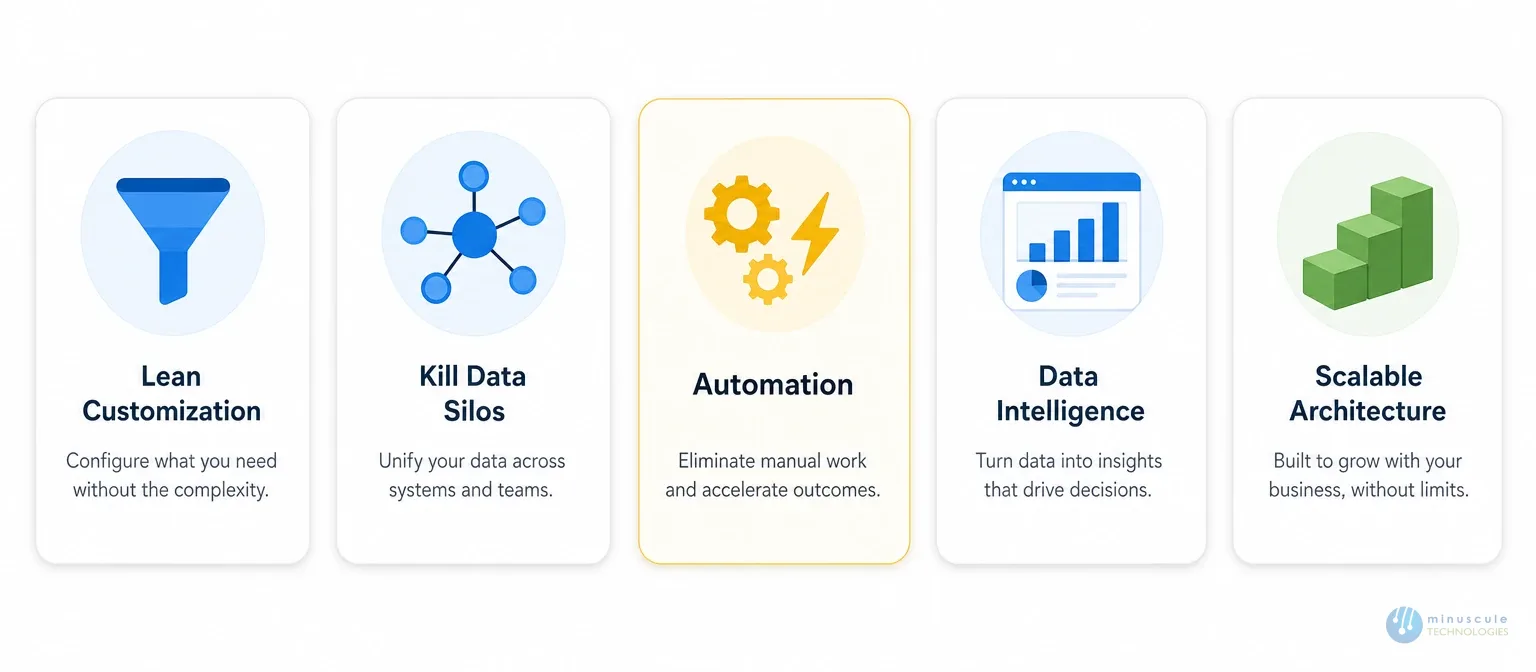
A common trap: overspending on custom features that eat budget and add little value. Certified partners apply one filter - does this feature serve a defined success metric?
They start with business outcomes, not technical possibilities. Simpler builds cost less to maintain, evolve faster, and pay back sooner.
Salesforce must talk to your ERP, marketing automation, accounting, and data warehouse. When systems don’t connect, silos breed conflicting data.
Certified consultants build a single source of truth: live data flow, automated cross-platform workflows, consistent customer records, and less manual entry. See how Salesforce integration services make this work.
Lead routing, follow-up reminders, case assignment, and report prep burn thousands of hours a year. Salesforce Flow can automate all of it - but spotting the right targets and building them well takes skill.
Partners map your workflows, find the automation wins, and ship them. The results: near-zero manual errors, faster response times, and more time for strategic work.
Clean data takes discipline: validation rules, dedupe routines, regular cleanup, and governance. Partners set up these habits, then build dashboards that turn clean data into decisions.
Leaders gain live views of pipeline health, customer trends, and revenue forecasts. Decision speed and quality both improve.
Many builds work fine at one hundred users, then break at scale. Certified consultants design for growth from day one. The system handles bigger loads, larger data volumes, new business models, and new clouds - without a rebuild.
That prevents the costly scenario where you outgrow your own implementation.
Even a perfect build fails if no one uses it. Adoption is not a technical problem. It is a human one.
Certified partners handle the people side: role-based training built on real workflows, screens that need minimal clicks, change management that explains the why, and fast support when issues appear. The same people-first approach helps teams adopt AI faster with a consulting partner.
Teams that get this right see high adoption. High adoption means high usage. High usage means faster returns.
Go-live is a milestone, not the finish line. Strong partnerships include:
Companies that keep tuning see ROI grow year over year - not fade.
Track a small set of KPIs before and after the build:
| Area | KPIs to Track |
|---|---|
| Sales | Win rate, deal cycle length, and revenue per rep |
| Efficiency | Hours saved through automation, data entry time, and case resolution speed |
| Data | Forecast accuracy, duplicate rate, and report usage |
| Cost | License usage rate, support ticket volume, and admin overhead |
Set the baseline during discovery. Review each quarter. If a number isn’t moving, the partner should explain why and fix it.
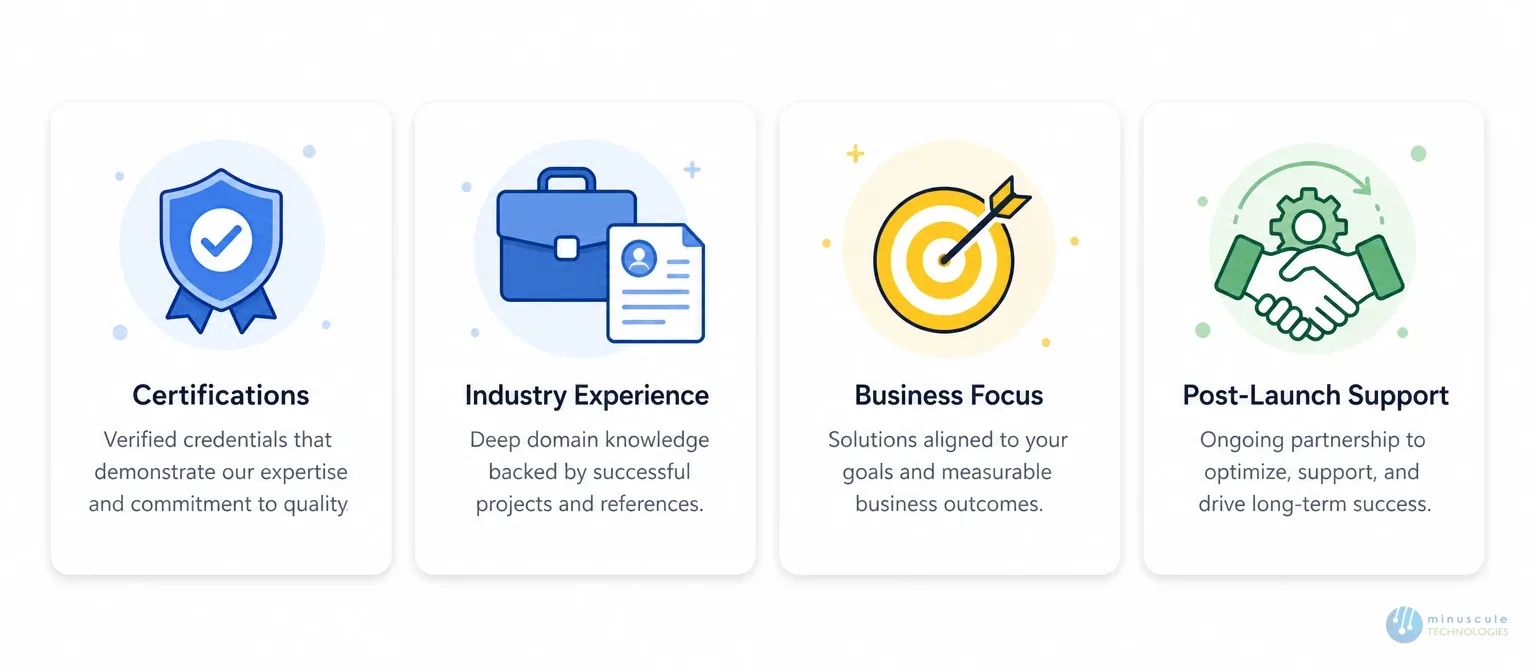
Keep the checklist short:
Want the full evaluation framework? Read our guide on 10 key things to look for when choosing the right Salesforce partner.
The path to returns follows a clear order: define success, tailor the platform, integrate systems, automate operations, enable users, then measure and refine. Each step builds on the last. Each is easier with a partner who has mastered the pattern.
Forrester found small businesses saw a 303% ROI over three years. Actual returns depend on adoption, data quality, and how well the build matches your sales process. Most firms with expert help see measurable gains in 6 to 18 months.
Yes, when the project has real complexity. A consultant speeds up delivery, prevents costly design mistakes, and lifts adoption. The fee usually costs less than the rework, wasted licenses, and lost time of a weak DIY build.
Salesforce reviews and tiers its partners: Base, Ridge, Crest, and Summit. Tiers reflect certified experts on staff, delivered projects, and client satisfaction scores. Certification means the firm’s track record is verified, not self-claimed.
With a strong partner and good adoption, most firms reach payback within 6 to 18 months. Quick wins from automation and better pipeline visibility usually land in the first quarter after go-live.
Salesforce is powerful. But power without precision is wasted potential. A certified Salesforce consulting partner turns platform capability into business reality. They compress timelines, prevent mistakes, drive adoption, and engineer for measurable returns.
If you are implementing Salesforce, no other factor shapes your outcome more than the partner you choose.
Choose strategically. Your return depends on it.
Ready to maximize your investment? The first step is an honest review of where you are and where you want to go. Whether you’re planning a new build, fixing an existing org, or scaling for growth, the right partnership turns Salesforce from a cost center into a competitive engine.
Contact us for a free consultation on your Salesforce strategy.
You've seen what's possible. Now, let's make it happen for your business. Whether you need an end-to-end Salesforce solution, a complex integration, or ongoing managed services, our team is ready to deliver.

Schedule a Free Strategic Call


Plot No. 4, Sridevi Amman Street, Perumal Nagar Extension, Old Pallavaram, Chennai, Tamil Nadu 600117, India.
