We are at Dreamforce 2026, Industry Pavilion at San Francisco


June 18, 2026
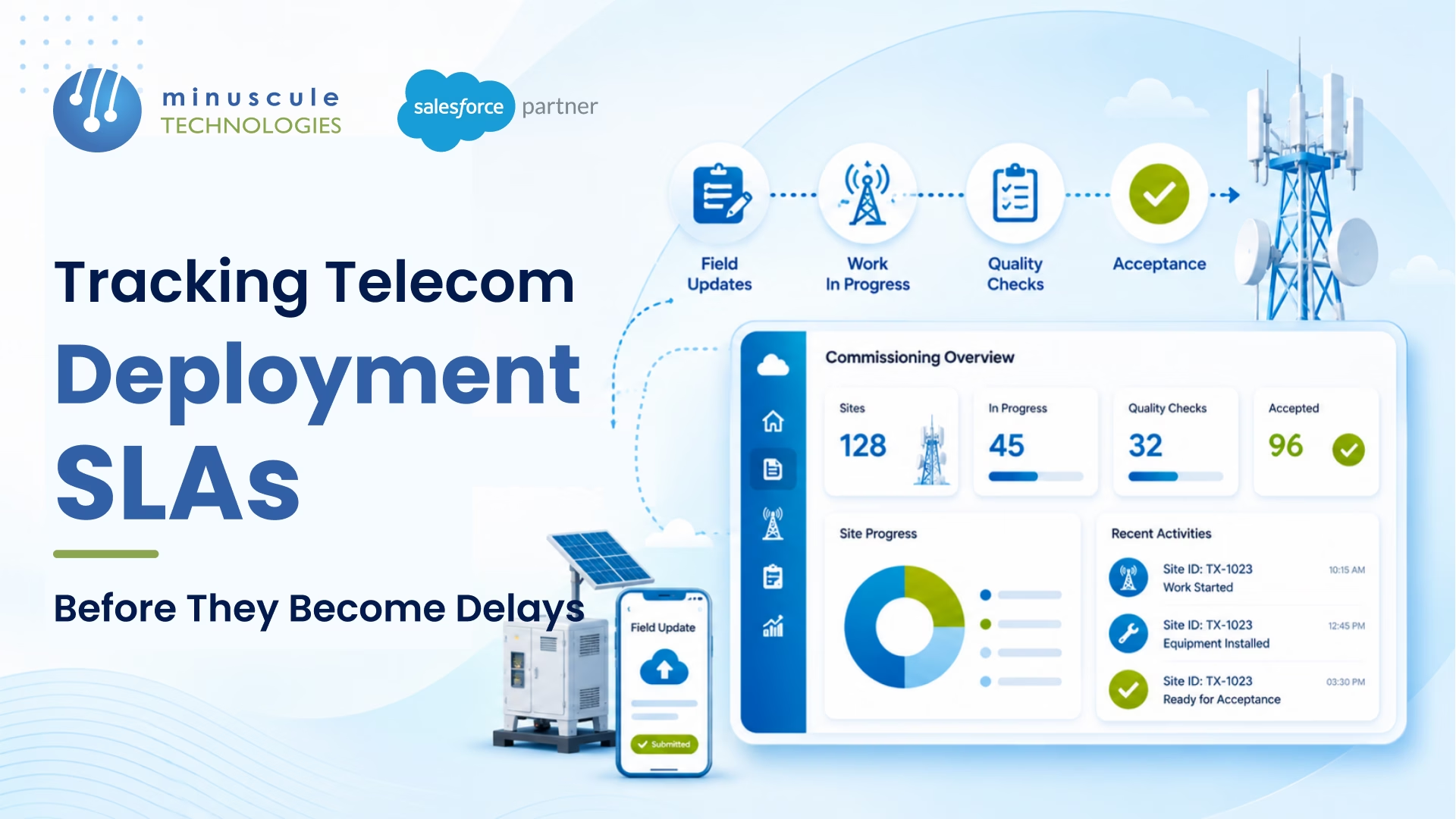
A program director at a telecom services group walked us through what he called his "Tuesday meeting" - the weekly escalation review where his team brought him the sites at risk. By the time those sites reached his agenda, the SLA breach was already real. The operator review had already exceeded its window. The customer was already asking. The damage was already in the system.
He didn't need a better escalation meeting. He needed to stop having them.
This is the structural failure in most telecom deployment SLA governance - risk is visible only after delays have already happened. By the time the program director sees it, the conversation isn't "how do we prevent this" - it's "how do we explain this." The shift to proactive process clock governance moves that conversation weeks earlier, when the delay is still preventable.
This post is for the program directors, COOs, and operations leads who are tired of escalation meetings where the only useful information is what already went wrong.
The structural problem with reactive escalation is that it only fires after a delay has happened. The site has already missed its design submission window. The operator review has already exceeded its SLA. The commissioning evidence has already been overdue for days.
By the time the program director hears about it, the only available actions are damage control: explain to the customer, request an extension, reassign resources, hope to recover. None of these prevent the delay - they manage its consequences. And every Tuesday meeting like this drains program credibility, customer trust, and team morale.
The process clocks that drive telecom deployment timelines are predictable, but they fail when tracked manually:
Most organizations think the fix is a better dashboard. It's not. Dashboards display data. They don't generate it. If your underlying process clocks aren't being captured automatically with stage transitions, escalation triggers, and SLA windows, your dashboard is just a prettier version of the same retrospective view.
This is the same fundamental issue we covered in why telecom deployment governance needs to move beyond spreadsheets - the failure isn't reporting, it's the data structure underneath. A real SLA governance model has to capture clock data as a side-effect of normal workflow, not as a separate reporting exercise. Otherwise, the data is either incomplete or always slightly out of date - and proactive visibility becomes impossible.
The shift from reactive escalation to proactive governance isn't about getting smarter at managing crises. It's about not having them - because the platform surfaces risk before it matures into a delay.
Process clock governance turns every stage transition into a tracked event. The clock starts automatically when a stage begins. The platform knows what the SLA window is for that stage, who owns it, and what the escalation path looks like if the window is breached.
The architecture handles five governance layers:
When a record moves from one stage to the next - survey scheduled to survey complete, RF design submitted to operator review, commissioning started to commissioning complete - the corresponding process clock starts automatically. No manual entry. No "remember to update the tracker." The clock is a side-effect of the workflow itself.
Each stage has its own SLA configuration - sometimes per deployment type, sometimes per operator, sometimes per customer. RAN design review may have a 10-day SLA with one operator and 14 days with another. Private 5G commissioning may have a different acceptance window than DAS. The platform handles this through configurable rules, not hardcoded logic. The same configurable model covered in Salesforce-native RAN deployment governance applies.
Before the SLA window closes, the platform surfaces risk. A stage that's at 80% of its committed window with the responsible action still open gets flagged. A multi-stage dependency where the first stage is slipping enough to compress the second gets flagged. This is the "before it becomes a delay" layer - and it's the layer dashboards alone can't provide.
When an SLA approaches breach, the platform doesn't just notify - it escalates. First-level notification to the responsible owner. Second-level escalation to their manager if the action isn't taken. Third-level to program leadership if it remains open. No relying on someone to "send a reminder." The escalation is part of the workflow.
Every clock event is captured as data. Over time, the platform builds a queryable history of stage cycle times by operator, vendor, system integrator, region, project type, and venue type. This isn't just retrospective reporting - it's input for forward planning. When you're scoping the next program, the data tells you which stakeholders consistently run late, which deployment types have predictable bottlenecks, and where buffer planning needs to be tighter. The multi-operator governance model makes this historical intelligence particularly valuable in shared deployments.
The platform foundation sits on the same Salesforce-native architecture covered in our Lead-to-Live telecom deployment governance pillar - custom objects, Flow-driven automation, configurable SLA rules, and executive dashboards built on live data.
When process clock governance works, the impact lands in three places that matter at the leadership level.
Escalation reduction. Programs running structured SLA governance typically see 50–70 percent fewer reactive escalations. The risks that used to surface in Tuesday meetings get caught and resolved during normal workflow - before they require leadership intervention.
On-time delivery improvement. Sites that hit SLA windows compound across a portfolio. A program that improves average stage cycle time by even 15–20 percent across its lifecycle stages typically pulls weeks of program delivery time forward - directly affecting customer commitments and revenue recognition.
Stakeholder accountability. When stakeholder performance is tracked as data - operator review cycle time, vendor responsiveness, SI delivery cadence - accountability conversations become factual rather than anecdotal. Renewals, contract negotiations, and partner reviews are informed by structured performance history, not by impressions.
For a program organization managing 50–200 concurrent sites, the combined impact of fewer escalations, better on-time performance, and data-driven stakeholder accountability shows up in margins, customer satisfaction scores, and leadership credibility - three metrics that compound with every program delivered.
At Minuscule Technologies, we build Salesforce-native SLA and process clock governance into the full telecom deployment lifecycle - covering every stage from prequalification through acceptance. Process clocks start automatically with stage transitions. SLA configurations are per-deployment-type and per-stakeholder. Approaching breaches surface proactively through dashboards and notifications. Escalation routes are automated through Flow. Historical performance data accumulates across operators, vendors, and project types.
The same governance architecture covered across our Lead-to-Live telecom deployment pillar and Salesforce-native RAN governance pillar extends naturally into SLA governance - because SLAs aren't a separate workflow, they're the time discipline that holds the entire lifecycle accountable.
Process clock governance is the automated tracking of stage-level time discipline across a deployment lifecycle. Clocks start automatically when a record transitions between stages, run against configured SLA windows, surface approaching breaches before they happen, and trigger escalation routes if action isn't taken. It turns SLA tracking from a manual reporting exercise into a workflow side-effect.
Reactive escalation by definition only fires after a delay has happened. The available actions become damage control — explaining, requesting extensions, reassigning resources. None of these prevent the delay. Proactive process clock governance moves the visibility weeks earlier, when the delay is still preventable. The shift isn't about better escalation — it's about preventing escalation from being necessary.
Every stage with a defined start and end date can have a process clock - prequalification, site survey scheduling, RF design submission, operator review, proposal generation, PO issuance, installation readiness, commissioning completion, closeout review, and acceptance approval. Each stage has its own SLA window, configurable per deployment type and per stakeholder.
Dashboards display data. Process clock governance generates it. A dashboard built on incomplete or retrospective data is just a prettier version of a manual tracker. Governance captures clock data automatically with stage transitions, runs SLA logic in real time, surfaces approaching breaches, and triggers escalation - all before the dashboard view even matters.
Configurable SLA rules let each stage have different windows based on stakeholder, deployment type, region, or contract. A RAN design review may have a 10-day SLA with one operator and 14 days with another. Private 5G commissioning may have its own acceptance window. The platform handles this through rule configuration, not hardcoded logic - so program scaling doesn't require platform redesign.
Approaching-breach detection surfaces risk before the SLA window closes. A stage at 80% of its committed window with the responsible action still open gets flagged. A multi-stage dependency where the first stage's slip will compress the second's window gets flagged. This is the layer that converts SLA tracking from retrospective reporting into proactive risk management.
Yes. Salesforce supports configurable SLA rules, Flow-driven automation for stage transitions and escalation routing, real-time dashboards built on live records, and queryable historical data for performance analysis. The same platform foundation used across Salesforce-native RAN deployment governance handles SLA governance natively — because process clocks are part of the deployment lifecycle, not separate from it.
Programs with structured process clock governance typically see 50–70 percent fewer reactive escalations, 15–20 percent improvement in stage cycle times across the portfolio, and significantly stronger stakeholder accountability conversations driven by historical performance data. For program organizations managing 50–200 concurrent sites, the combined impact translates to meaningful margin improvement and customer satisfaction gains.
Tuesday escalation meetings exist because risk becomes visible too late. If your program team is still discovering delays after they happen, the upgrade isn't more discipline or better dashboards - it's process clock governance that captures risk as a side-effect of workflow. Schedule an SLA governance walkthrough.
You've seen what's possible. Now, let's make it happen for your business. Whether you need an end-to-end Salesforce solution, a complex integration, or ongoing managed services, our team is ready to deliver.

Schedule a Free Strategic Call


