
June 28, 2026
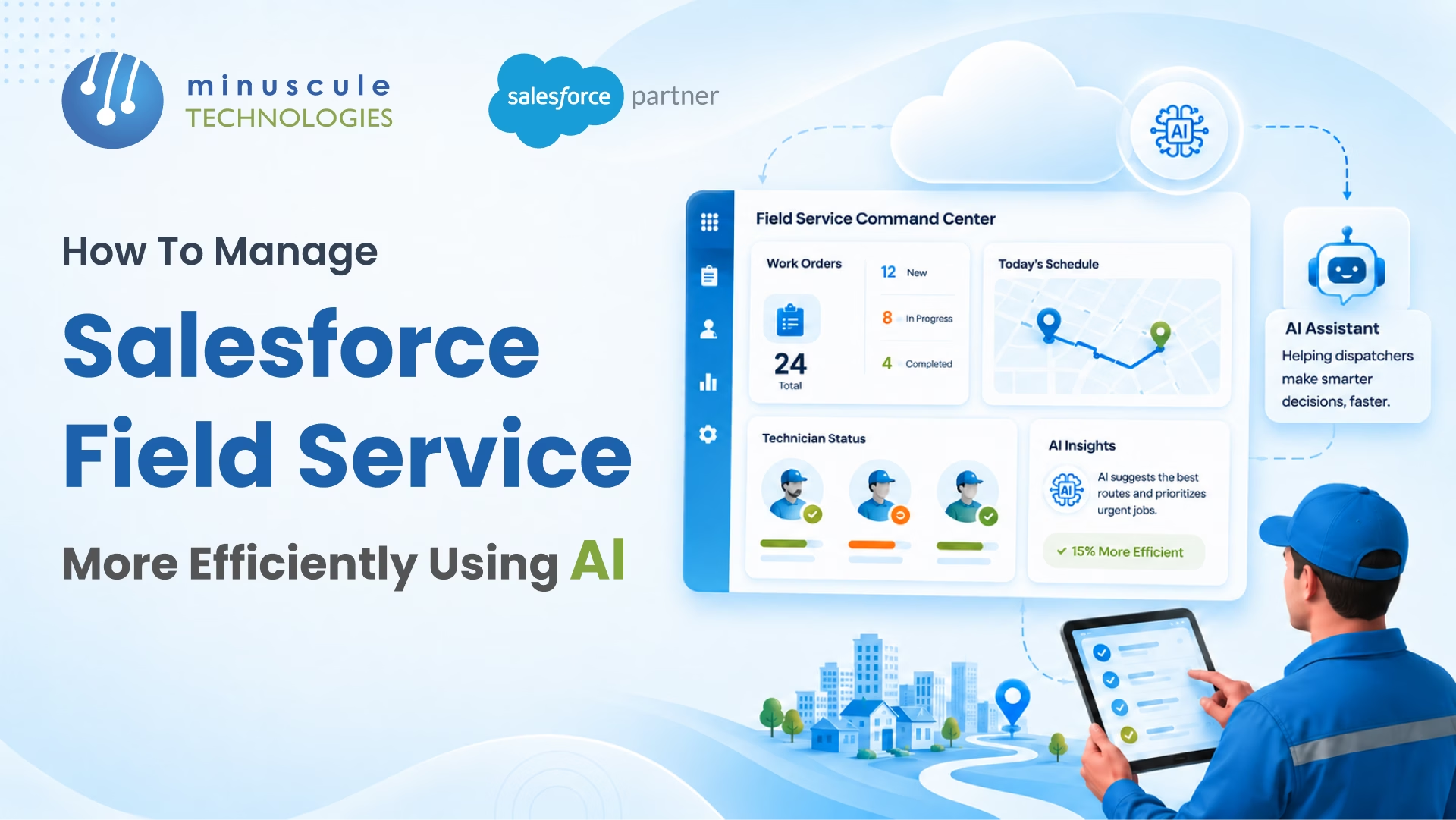
To manage Salesforce Field Service more efficiently using AI, you put AI to work on four jobs: optimizing the schedule automatically, predicting failures before they happen, handling routine service requests with Agentforce, and assisting technicians in the field. Each one removes manual effort and lets your team handle more jobs with the same headcount.
Field service runs hundreds of small decisions a day - who goes where, in what order, with which parts. Done by hand, those decisions eat dispatcher time and still leave gaps. AI takes the repetitive, data-heavy decisions off your team's plate and makes them faster and more accurately, so your operation moves from reactive scrambling to planned, predictable service.
Here's what this guide covers:
Field service has a math problem. A dispatcher juggling 40 technicians and 200 jobs can't compute the optimal assignment in their head - travel time, skills, parts, SLAs, and priority all interact. They make a reasonable guess, and reasonable guesses leave money on the table in extra drive time and missed windows.
AI solves math. It can weigh every variable at once and reassign work in seconds when a job runs long, or a technician calls in sick. That's the shift: from a person manually patching a plan all day to a system that keeps the plan optimal in real time, with the dispatcher supervising rather than calculating.
The payoff is concrete - more jobs per technician, less overtime, and fewer breached SLAs. For service-heavy industries like energy and utilities, those gain compounds across a large mobile workforce.
The first and biggest win is AI-driven scheduling. Salesforce Field Service includes Enhanced Scheduling and Optimization, which automatically assigns jobs based on technician skills, location, availability, and priority — then re-optimizes the whole schedule as conditions change.
This does two things for efficiency. It cuts drive time by grouping jobs sensibly by geography, and it fills schedules tighter without overbooking. A dispatcher who used to spend the morning building routes now reviews an optimized plan and handles only the exceptions.
A strong setup includes:
Tuning the optimization rules to your priorities - speed versus cost versus SLA - is where a Field Service Cloud implementation partner earns their keep, because the defaults rarely match your business exactly.
The second win moves you from fixing to preventing. By feeding asset data and usage signals into Salesforce, AI can flag equipment likely to fail and trigger a maintenance visit before a breakdown - predictive maintenance instead of emergency repair.
This is far more efficient than the reactive model. A planned visit costs less than an emergency call-out, avoids overtime, and lets you batch the work into an existing route. The customer avoids downtime, and your team avoids scrambling.
Predictive maintenance works best when asset and maintenance data flow cleanly into Salesforce. That often means connecting a maintenance management system, which is exactly the kind of integration our team handles - including with Cryotos CMMS, the AI-powered maintenance platform in the Minuscule family. Wiring those asset signals in is part of broader Salesforce integration work.
The third win is letting AI agents handle the routine. Agentforce can take on repetitive service tasks- answering scheduling questions, booking or rescheduling appointments, and drafting work order summaries - without a human touching everyone.
For a service operation, this clears a huge volume of low-value work. A customer asking to move an appointment gets handled by an agent in seconds, freeing your dispatchers and agents for the cases that actually need judgment. Behind the scenes, Einstein can generate a work order summary the moment a job closes, so records stay complete without manual write-ups.
Because these agents act on real CRM data, they need careful grounding and guardrails to stay accurate and compliant. Setting that up well is the focus of our Agentforce and AI services, and it's the same discipline we describe in our view of the GenAI era of Salesforce.
The fourth win reaches the technician directly. AI in the Field Service mobile app surfaces the next best action, recommends relevant knowledge articles, and can draft the post-visit report — so the technician spends time on the repair, not the paperwork.
This raises efficiency at the point of work. A technician who gets an AI-suggested fix for an unfamiliar asset solves it faster and avoids a callback. One who dictates a few notes and lets AI assemble the service report finishes the job and moves to the next one sooner. Small minutes saved per visit add up across thousands of jobs.
The mobile assist works offline-aware too, so a technician in a remote site still gets guidance. Capturing accurate field activity to feed these tools is something our Field Visit accelerator supports with verified location and structured visit data.
AI in field service works best when you introduce it in stages, not all at once. Start with scheduling optimization, because it delivers fast, measurable wins and builds trust with dispatchers. Then layer in predictive maintenance; agents, and technicians assist as your data and team mature.
A few practices keep the rollout smooth. Clean your asset and job data first, since AI amplifies whatever quality, it's given. Keep a human in the loop early, letting AI recommend while people approve. And measure before and after, so you can prove the gain. Ongoing tuning is where managed services keep the models and rules sharp as your operation changes. The Salesforce Admins blog and SalesforceBen both publish helpful rollout patterns worth reviewing.
AI optimizes scheduling and routing automatically, predicts equipment failures before they happen, handles routine requests through Agentforce, and assists technicians in the field. Together these cut drive time, reduce emergency callouts, and let teams complete more jobs with the same headcount.
It's the AI engine that automatically assigns and sequences jobs based on technician skills, location, availability, and priority. It re-optimizes the schedule in real time when conditions change, cutting drive time, and reducing the manual work dispatchers do.
Yes. Agentforce can answer scheduling questions, book and reschedule appointments, and draft work order summaries using your CRM data. This clears routine, high-volume work, so your dispatchers and agents focus on the cases that need human judgment.
Predictive maintenance feeds asset and usage data into Salesforce, so AI can flag equipment likely to fail and trigger a visit before it breaks. Planned maintenance costs less than emergency repair and reduce customer downtime.
Yes. AI amplifies whatever data quality it's given, so accurate asset, job, and skills data is the foundation. Most teams clean and connect their data first, then introduce AI features in stages starting with scheduling.
Managing field service with AI isn't a single switch - it's optimized scheduling, predictive maintenance; AI agents, and technicians assist working together on clean, connected data. That's the build Minuscule Technologies delivers as a trusted Salesforce engineering partner. We tune the scheduling engine to your priorities, wire in asset data for prediction, set up Agentforce with the right guardrails, and get AI assist into your technicians' hands. If you want to run a Salesforce Field Service learner and faster, talk to our team and we'll map the highest-ROI AI wins for your operation.
You've seen what's possible. Now, let's make it happen for your business. Whether you need an end-to-end Salesforce solution, a complex integration, or ongoing managed services, our team is ready to deliver.

Schedule a Free Strategic Call


