We are at Dreamforce 2026, Industry Pavilion at San Francisco


June 20, 2026
A VP of Sales at a regional telecom services firm walked us through a familiar pattern. Her team had closed a 47-site RAN deployment in Q1 - a strong win, with detailed account context, operator commitments, and venue data captured across months of pursuit work. Within two weeks of contract execution, she walked into a delivery kickoff meeting and watched her program manager open a blank project tracker.
Everything her team had captured - the customer's coverage expectations, the partner involvement details, the operator alignment notes, the commercial assumptions baked into pricing - was being re-collected. Re-asked. Re-documented. By the third week, her account team was getting questions from the delivery team that they had already answered during the sales cycle, and the customer was getting them too.
This is the sales-to-delivery disconnect most telecom organizations carry. When you extend Salesforce to telecom delivery execution, that disconnect disappears - because the commercial context never leaves the system.
This post is for the CROs, COOs, account directors, and program leaders whose teams keep paying the same handoff tax on every deal.
Salesforce is the system most telecom organizations already use for everything pre-contract — leads, opportunities, accounts, contacts, RFP responses, partner registrations, commercial commitments. By the time a deal closes, your CRM holds months of accumulated context about the customer, the deployment scope, the operator relationships, and the assumptions that shaped the commercial agreement.
Then the deal closes, and the execution moves somewhere else. The project tracker opens a new file. The shared drive gets a new folder. The delivery team builds a project plan from scratch - even though most of the inputs they need already exist in Salesforce.
This isn't just inefficient. It's where customer satisfaction starts eroding. The customer signed because they trusted what your sales team scoped. When delivery shows up asking the same questions, that trust starts to leak.
The failure modes in sales-to-delivery handoffs are predictable across telecom organizations:
Most organizations try to fix this with integration - syncing data between Salesforce and a project management tool. That helps with surface-level data flow, but it leaves the structural problem intact. Two systems means two definitions, two formats, two reporting layers, two sources of truth. Sync delays mean dashboards are always slightly behind reality.
This is the same fundamental issue we covered in how Salesforce governs RAN deployment execution end to end. The fix isn't better integration - it's eliminating the second system. When the deployment lifecycle lives inside Salesforce as native records, the opportunity, account, and delivery data share the same context without reconciliation. The Lead-to-Live telecom deployment governance model is exactly this - one continuous record from first qualification through final acceptance.
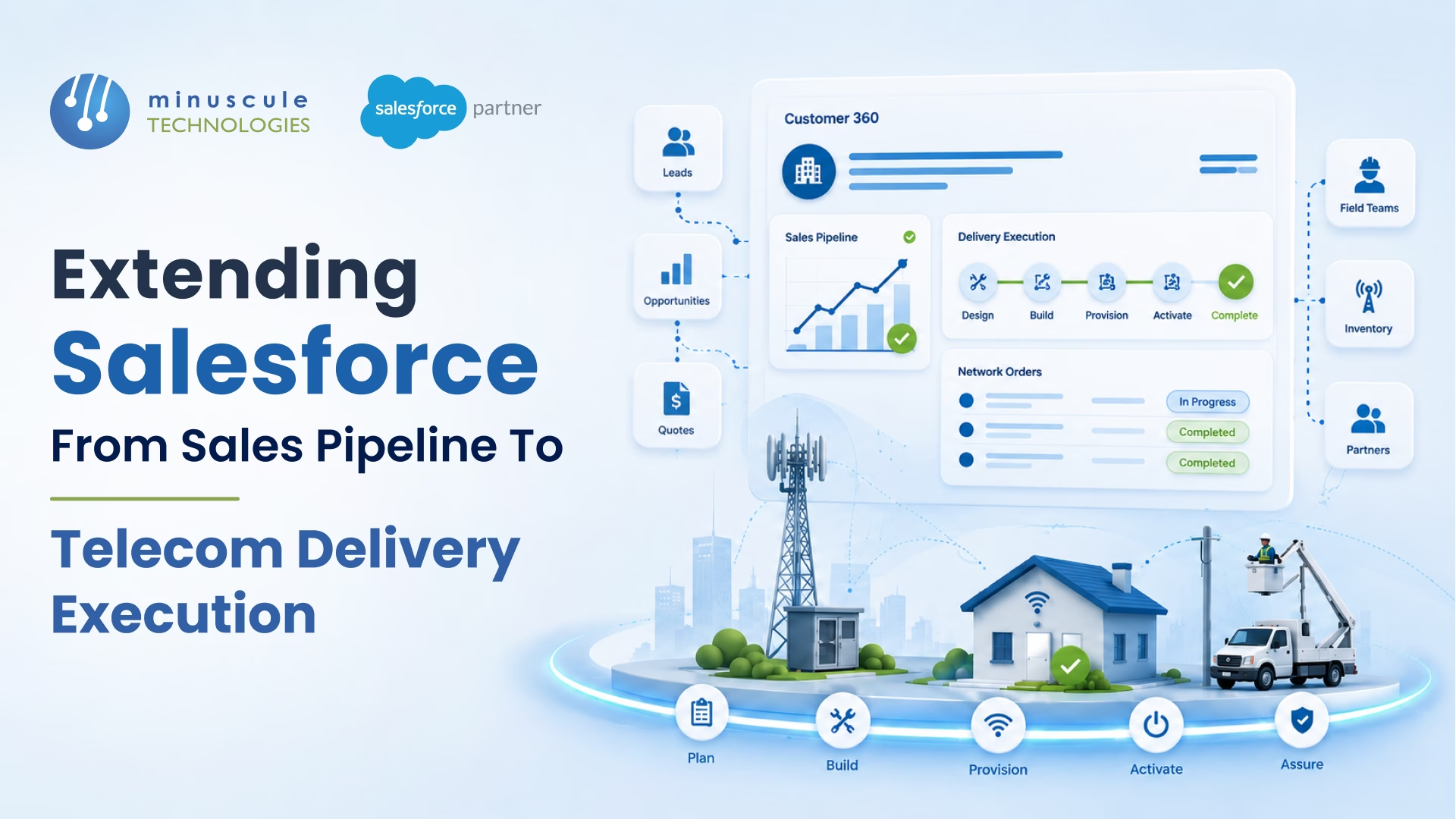
A connected Salesforce-native delivery model treats the opportunity record as the spine of the deployment lifecycle - not as a closed-won milestone. When the deal closes, the deployment project records are created as children of the opportunity, inheriting the account context, customer commitments, and commercial scope already captured.
The architecture connects four execution layers to the existing CRM:
When an opportunity moves to closed-won, the platform automatically creates the deployment record - venue, site, prequalification, and stakeholder participation - linked to the opportunity. No re-creation. No re-entry. The commercial context is the starting point for delivery, not a separate file that delivery teams have to reconstruct.
Venue data captured during pursuit, operator alignment notes from RFP response, stakeholder roles defined in the partner registration, pricing assumptions baked into the proposal - all of this becomes available to the delivery team as connected records. The same multi-stakeholder data model used across deployment governance extends backward into pursuit data.
What was committed in the proposal becomes a tracked attribute on the deployment record. Coverage expectations, SLA commitments, milestone dates, and contractual deliverables are all visible to both the account team and the delivery team. When delivery encounters a scope question, the answer is in the record - not in someone's memory of the sales conversation.
Account directors see real-time delivery status without calling program managers. Program managers see commercial context without asking account teams. Both work from the same Salesforce record with role-based visibility. The executive dashboard layer reports portfolio health that connects pipeline conversion to delivery performance.
Because deployment cycle times are tracked in the same system as opportunity stages, sales forecasting can be informed by actual delivery throughput - not by aspirational close-to-revenue assumptions. When the COO asks "can we commit to this customer's Q3 activation date," the answer is informed by historical cycle time data, not optimism.
The platform foundation sits on the Salesforce-native architecture covered in our pillar - custom objects for venue, site, deployment stages, and acceptance records, plus Flow automation that triggers delivery workflows from opportunity stage transitions. The same Salesforce instance that runs your pipeline runs your delivery.
When the handoff disappears, the impact shows up in three commercial-side outcomes.
Customer experience uplift. Customers stop being re-interviewed by delivery teams about details they already shared during pursuit. The trust earned by sales transfers to delivery - instead of starting from scratch. For complex deployments where customer satisfaction during execution drives renewal and expansion, this is meaningful.
Account performance visibility. Account directors can answer customer questions about delivery progress without involving program managers in every conversation. Quarterly business reviews are informed by real-time delivery data, not by week-old status summaries. Account-level deployment performance becomes a managed metric - not an afterthought.
Forecasting accuracy. When sales pipeline data and delivery cycle data live in the same system, forecasting reflects reality. CFOs and CROs get revenue projections that incorporate actual delivery throughput - not assumed conversion rates. For organizations where mid-quarter forecast adjustments are painful, this changes the conversation.
For telecom services organizations where customer retention and account expansion drive long-term value, eliminating the sales-to-delivery disconnect typically translates to measurable improvements in NPS, account growth rates, and forecasting confidence - three metrics that compound across every customer the organization serves.
At Minuscule Technologies, we extend Salesforce from pipeline management into full telecom deployment execution governance. Opportunity records connect to deployment lifecycle records. Pre-sales context carries forward into delivery. Account teams and program teams share visibility from a single platform. The same Salesforce instance runs the pursuit and the execution - eliminating the handoff tax most telecom organizations absorb as the cost of doing business.
The architecture aligns with our Salesforce-native RAN deployment governance pillar and the Lead-to-Live deployment lifecycle model - making sales-to-delivery continuity a structural outcome, not a coordination effort.
That's the difference between organizations where every closed deal pays a handoff tax, and organizations where the deal closes and execution starts on the same record.
Extending Salesforce to telecom delivery execution means modeling the full deployment lifecycle - prequalification, site survey, RF design, BOM, quote, contract, PO, implementation, commissioning, closeout, and acceptance - inside Salesforce as connected records linked to the original opportunity. The deal doesn't close and move to a separate system. The execution continues on the same record, inheriting the commercial context already captured.
The handoff problem creates four downstream costs: lost commercial context, re-collected data, definition drift between what was sold and what's being delivered, and account team blindness to delivery progress. Customers experience this as questions they've already answered being asked again — which erodes the trust that closed the deal in the first place.
Integration syncs data between two systems but leaves the structural problem intact - two definitions, two formats, two reporting layers, sync delays, and reconciliation overhead. Native extension means the deployment lifecycle lives inside Salesforce as custom objects, with no second system to integrate. The opportunity, account, and delivery records share the same context without reconciliation. This is the same architectural argument we make in how Salesforce governs RAN deployment execution end to end.
Venue information, coverage expectations, operator alignment notes, stakeholder roles, partner registration details, pricing assumptions, proposal scope, milestone commitments, and SLA terms. When all of this exists in Salesforce already, none of it needs to be re-collected by delivery - and the delivery team starts execution with the same context the sales team finished with.
When pipeline data and delivery cycle data live in the same system, forecasting can be informed by actual delivery throughput rather than assumed conversion rates. The CFO asking "can we commit to this customer's Q3 activation date" gets an answer informed by historical cycle time data - not by optimism. This typically improves forecasting accuracy significantly across mid-quarter and end-quarter projections.
Yes. With role-based visibility configured, account directors see delivery status updates, SLA risk indicators, stakeholder approvals, and milestone progress directly inside Salesforce - at the account and opportunity level. Quarterly business reviews stop being prep-intensive and start being conversation-ready, because the data is live and shared between commercial and delivery teams.
Salesforce supports custom objects for telecom-specific entities (venue, site, deployment stage, acceptance record), Flow automation for triggering delivery workflows from opportunity stage transitions, approval processes for stakeholder reviews, Experience Cloud for external stakeholder portals, and reports and dashboards built on live records. The same platform infrastructure used across Salesforce-native RAN deployment governance handles the sales-to-delivery extension natively.
Telecom services organizations with connected sales-to-delivery models typically see measurable improvements in customer NPS during execution, stronger account expansion rates driven by smoother delivery experience, and improved forecasting accuracy. The combined impact is meaningful — particularly for organizations where customer retention and account growth drive long-term value, not just one-off deal economics.
The companies running modern telecom programs aren't running two systems for one customer. They're running one continuous lifecycle - from first opportunity to live acceptance - inside the platform that already holds the commercial relationship.
If your delivery team still opens a blank project tracker every time sales closes a deal, you're operating with a structural handoff cost that compounds across every customer you serve. That's not how the next-generation telecom services organizations are operating - and increasingly, it's not how their customers expect them to. Connect your sales pipeline to your delivery execution - book a Salesforce extension walkthrough.
You've seen what's possible. Now, let's make it happen for your business. Whether you need an end-to-end Salesforce solution, a complex integration, or ongoing managed services, our team is ready to deliver.

Schedule a Free Strategic Call


