We are at Dreamforce 2026, Industry Pavilion at San Francisco


August 8, 2026
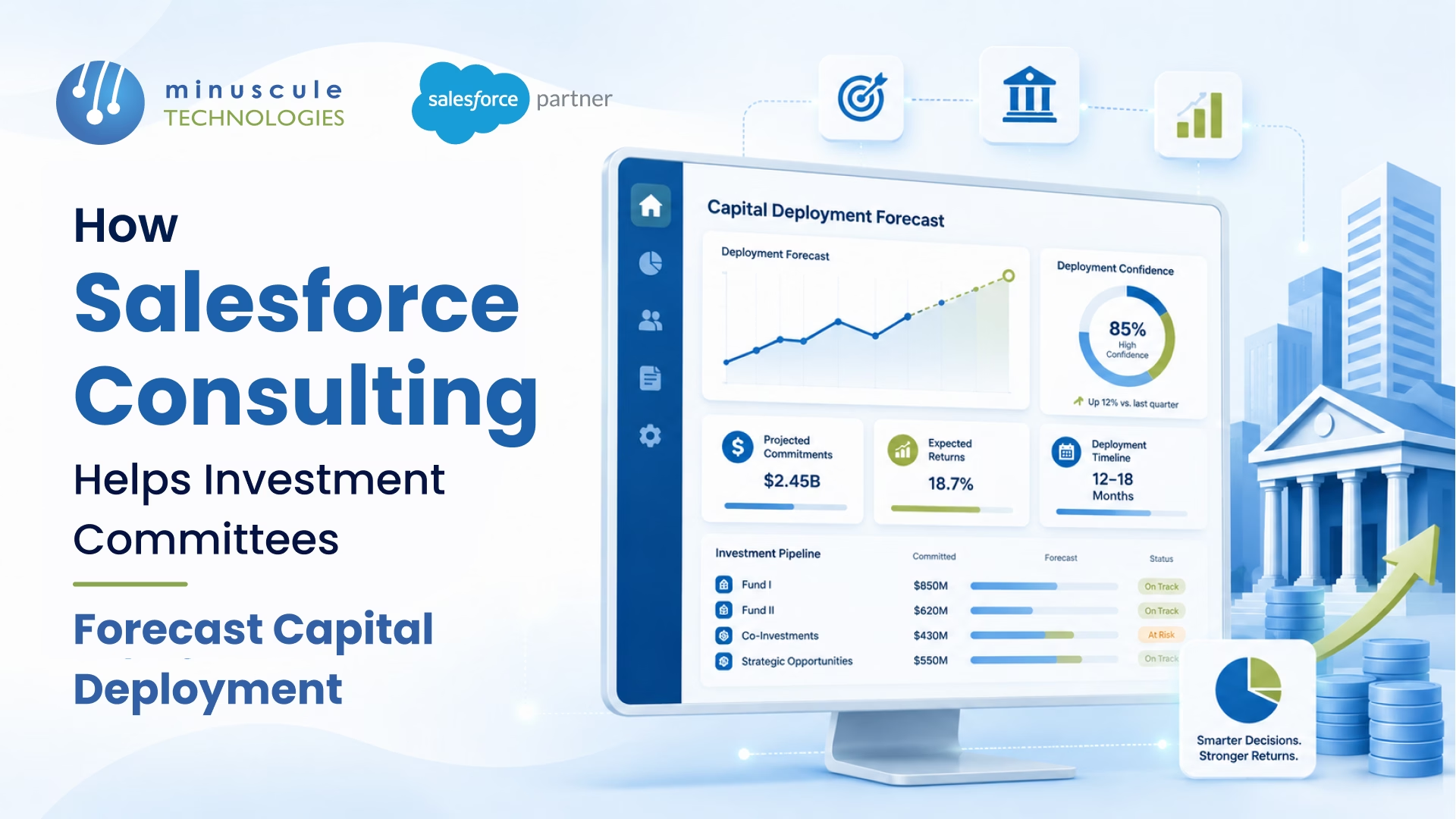
Salesforce consulting helps investment committees forecast capital deployment by swapping scattered spreadsheets for one live system. That system links deal pipelines, fund commitments, and timelines in one place. When a deal moves or a capital call is logged, the forecast updates on its own - so the committee always sees fresh numbers.
Picture a Tuesday IC meeting. The partner opens the forecast. It's a 14-tab spreadsheet the analyst fixed at midnight. How much capital is committed but not yet called? Are we on pace for the fund's investment period? Which deals close this quarter?
The analyst flips between tabs. The numbers don't match the deal team. Two deals moved stage last week, but the sheet still says "initial review." The CFO adds that the figure misses last month's recycling provision. Nobody trusts the data. The committee defers three decisions.
This is the problem Salesforce consulting solves. Here's how.
The issue isn't weak analysts. It's split data. Good forecasts need three data sets, and most firms keep them in three places:
Most firms track pipelines in a CRM, fund accounting in another system, and timing in email. The analyst pulls from all three, then checks it in Excel. The result is a snapshot that's already old.
Three failures repeat. Deals change stage faster than the sheet. Available-capital math misses recycling and fees. And pacing goes untracked, so the committee can't tell if it's ahead or behind.
A Salesforce consultant builds this on Sales Cloud or Financial Services Cloud. The choice fits your current stack. The setup uses three custom objects:
When a deal moves to "IC Approved," the forecast updates at once. No analyst refresh is needed. A dashboard shows committed capital, less called capital, less projected draws. That's your available capital, fresh to the minute.
Pacing works through a simple chart. Salesforce plots capital deployed against the fund's investment period. Say Fund III should be 60% deployed by month 30. If it sits at 45%, the dashboard flags the gap early.
Probability weighting adds one more layer. Each stage carries set odds - 20% at initial review, 80% once IC-approved. Salesforce multiplies the check by those odds. The committee sees both raw and weighted numbers side by side.
Not every firm fits this work. Weigh these before you sign:
For platform context, see Salesforce's Financial Services Cloud overview and its AppExchange consulting directory. Groups like the ILPA publish standards for fund reporting and capital calls.
It links deal pipelines, fund commitments, and call history in one system. When a deal moves or a call is logged, the forecast updates on its own. The committee sees available capital, pacing, and weighted pipeline in real time.
Yes. Salesforce plots capital deployed on a chart against the fund's investment period. If deployment falls behind target, the dashboard flags it early.
A core setup with fund tracking, deal pipelines, and dashboards takes about 6–8 weeks. Adding call automation, LP reporting, and multi-fund roll-ups extends it to 10–14 weeks.
Yes. Salesforce handles multi-fund structures natively. Each fund gets its own pool, timeline, and pacing target, with roll-up dashboards for a firm-wide view.
It's both. Good Salesforce CRM consulting starts with your process, then sets up standard clouds and custom objects - so you get a fund-ready system without extra custom code.
Your Investment Committee Deserves Better Than a Midnight Spreadsheet
Your analyst isn't the problem. The problem is making her reconcile three systems by hand each month. The committee that deferred three deals didn't lack conviction - it lacked trust in the numbers.
Minuscule Technologies builds the system that restores that trust. As a trusted Salesforce engineering and Salesforce consulting partner, we bring 160+ Salesforce engineers, 75+ delivered projects, and real experience building fund platforms - deal pipeline tracking, pacing dashboards, and fund-level forecasting, all on Salesforce.
Stop letting old spreadsheets delay your capital decisions. Schedule a free strategic Salesforce call with Minuscule Technologies - before your next meeting runs on midnight numbers again.
You've seen what's possible. Now, let's make it happen for your business. Whether you need an end-to-end Salesforce solution, a complex integration, or ongoing managed services, our team is ready to deliver.

Schedule a Free Strategic Call


