
April 13, 2026

A Salesforce implementation in banking wins or fails on a few key things. The biggest are a clear plan, clean data, legacy system links, tight security, and real user buy-in. Get these right and Salesforce Financial Services Cloud drives growth. Get them wrong and it turns into a costly drag.
Salesforce fatigue is real in finance. Banks buy CRM tools and expect quick wins in client insight and output. Then old systems, rigid workflows, and too much data slow things down. The good news: each risk has a fix. Face these head-on and your bank can unlock the platform's full value.
This guide covers the seven most common challenges in banking, and how to solve each one.
Banking isn't like other fields. The data is more sensitive. The rules are stricter. And the old systems run deeper. A generic rollout that skips these facts will stall. So banks need a plan built for their world, not a one-size-fits-all template.
Here are the seven challenges and their fixes.
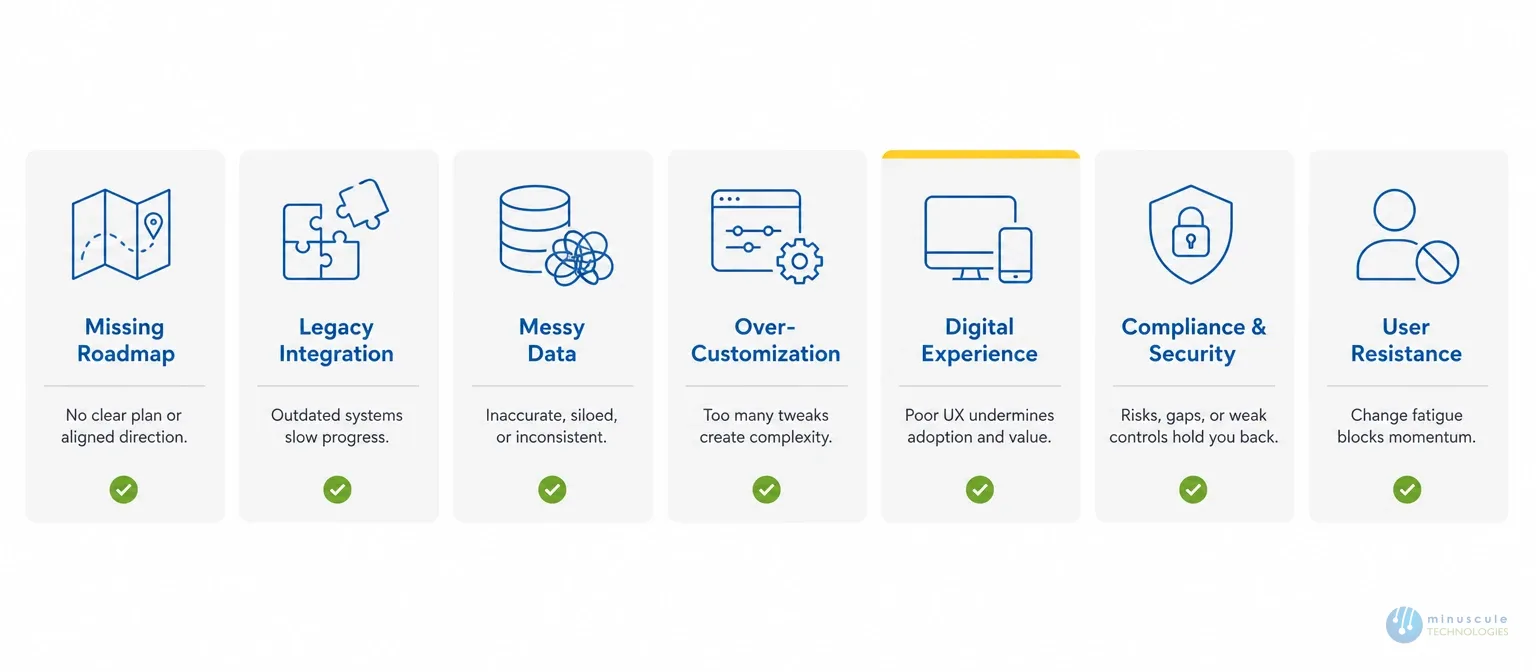
Most gaps come from a fuzzy view of success. When teams want different things, projects hit scope creep and license waste. That drives up long-term cost.
The fix: Set clear, measurable goals before setup starts. Write down what you want, like faster loan approvals or unified wealth data. Then build a clear roadmap that plans for your Salesforce edition and its running costs. Investment banks adding AI agents can follow this Agentforce roadmap for investment banking.
Banks often run on core systems that don't play well with the cloud. With no clear plan to link them, you risk broken records and duplicate data.
The fix: Treat integration as its own focused task. Audit your systems and rank the data worth moving. Use middleware, APIs, a tool like MuleSoft, or a central data store to move old data safely.
Many banks guess low on how messy their data is. Loading raw data into Salesforce raises risk and hurts trust in the system.
The fix: Clean your data first. Fix formats, drop duplicates, and check key fields before you move them. Set clear rules for data quality and add regular checks to keep it clean.
Some banks over-build to copy old ways of working. This piles up tech debt and slows down frontline advisors.
The fix: Pick setup over custom code. Use standard Financial Services Cloud features before you build new code. Use built-in Action Plans to automate work and Einstein Next Best Action to help cross-selling.
Bank clients now want fast, smooth digital service. Lean only on in-person meetings or manual email chains and clients get annoyed.
The fix: Build secure self-service client portals linked to Salesforce. Let clients upload ID documents and view their daily portfolio on their own.
Bank data needs tight security. One wrong access setting can cause a serious breach under rules like GDPR, SOX, or PCI DSS.
The fix: Build security in from the start. Use multi-factor login and role-based access so staff see only the data their job needs.
A CRM fails if loan officers see it as extra work. That risk grows when your build team doesn't know bank workflows.
The fix: Work only with specialists who have real finance experience. Bring frontline staff into the design early. Then name internal Super Users as change champions.
| Challenge | Type | Recommended Fix |
|---|---|---|
| Missing Roadmap | Strategy | Define measurable goals and create a cost-aware implementation roadmap. |
| Legacy Integration | Technical | Plan middleware and API integrations as a dedicated implementation work stream. |
| Messy Data | Technical | Clean, de-duplicate, and validate data before migration. |
| Over-Customization | Technical | Use standard Salesforce configuration first and customize only when necessary. |
| Weak Digital Customer Experience | Experience | Implement secure self-service client portals for a better user experience. |
| Compliance & Security | Risk | Enable multi-factor authentication (MFA) and role-based access controls. |
| User Resistance | Adoption | Partner with finance-focused Salesforce experts and empower internal Super Users. |
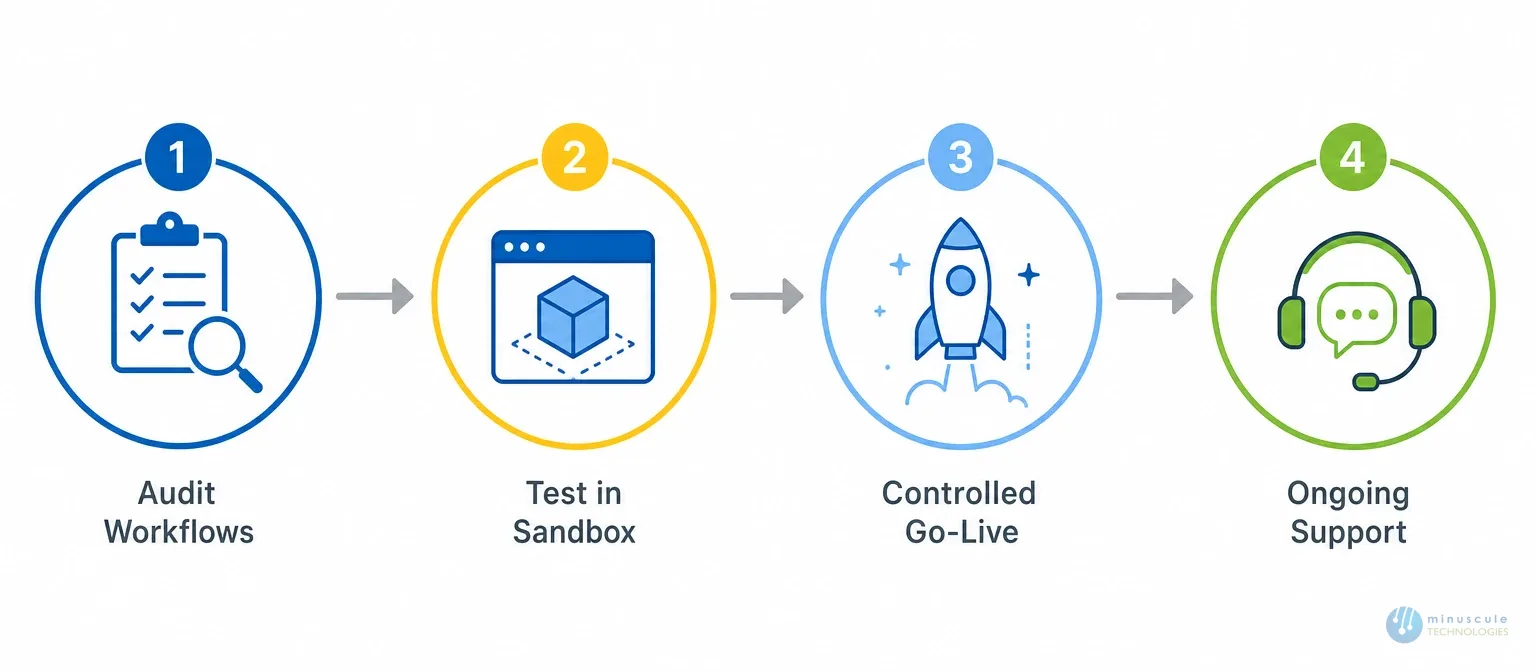
Dodging these pitfalls takes a steady, agile rollout. First, audit your account-opening and loan workflows to spot waste. Next, test hard with real staff running client cases in a sandbox. And plan for post-launch work, since go-live is only the start. Set up ongoing support to fix tech debt and refine the platform as your team grows.
A skilled Salesforce implementation partner is the single biggest factor in a strong bank rollout. Banks that hire generic developers, with no bank workflow skill, are the ones most likely to fail. The right partner brings proven methods, deep rules know-how, and a track record of clean, compliant work. Independent sources like Salesforce Ben make the same point: partner fit decides the outcome. Our Salesforce implementation guide walks through each stage from planning to user adoption.
A good partner helps you set a clear roadmap, link legacy systems safely, clean and move data, build in security, and drive buy-in with frontline staff. When you compare Salesforce implementation companies, rank real finance experience over the lowest bid. That's the standard Minuscule delivers as a Salesforce Engineering Partner - you can see how it fits across our Financial Services Cloud implementation and integration work.
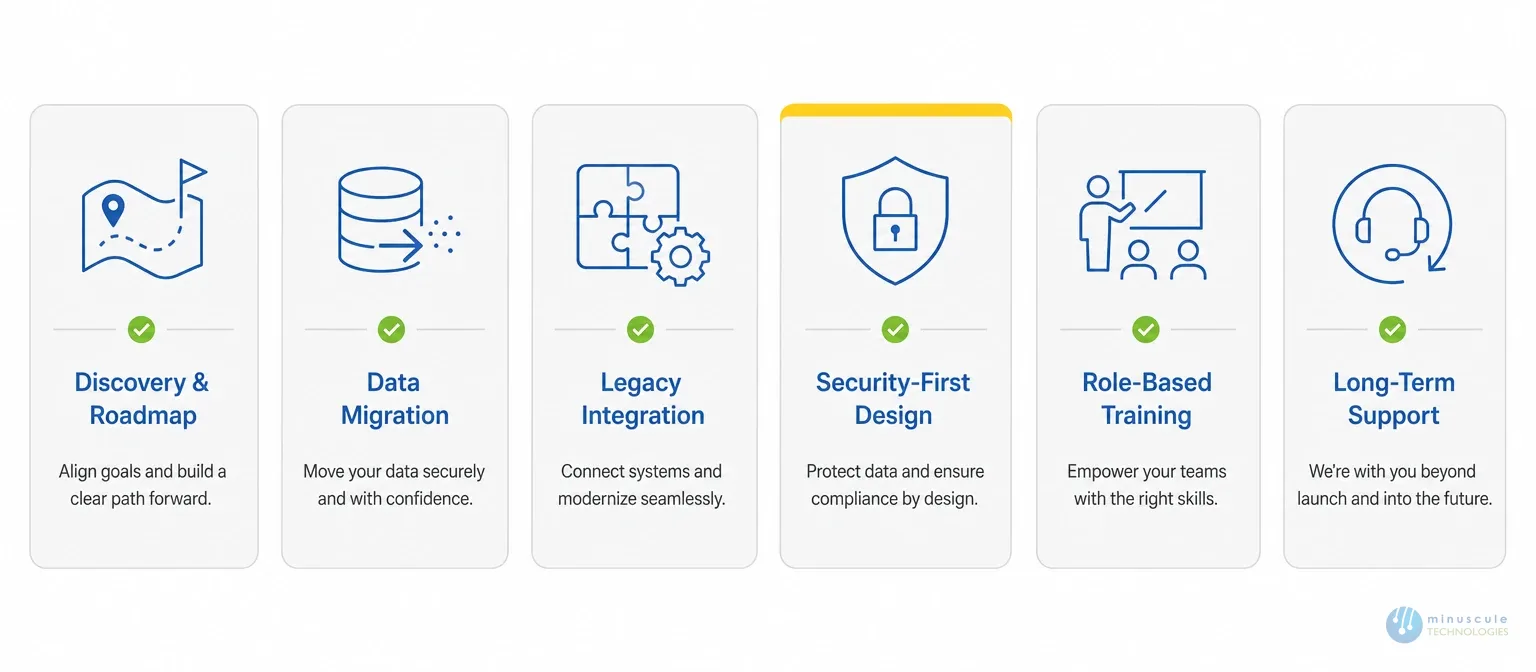
Strong Salesforce implementation services in finance cover the full journey, not just the build. Look for:
Most fail due to a missing roadmap, poor data quality, and hiring consultants who lack finance skill. Misaligned hopes and weak executive backing can turn a project into a cost center.
Firms must build strong security into the design, like data encryption and multi-factor login, so sensitive data stays safe under rules like FINRA and GDPR.
The hardest part is mapping old, complex data into Salesforce without making duplicates. Strong middleware and APIs are key to bridge legacy systems and your new CRM.
Salesforce's shared cloud is built to scale as your users and data grow. The real threat to scale is over-building. A setup-first approach with standard Financial Services Cloud objects keeps a Salesforce CRM implementation agile and easy to upgrade.
Bring frontline staff into the design phase. When the system maps to their daily work - like auto onboarding or one-click portfolio views — they see it as a tool, not a burden. Internal Super Users who give peer help can push buy-in past 90%.
Rolling out Salesforce Financial Services Cloud is a big move. It reshapes both client bonds and daily work. The fast-changing finance world needs more than old systems and manual steps - and the banks that win are the ones that turn rollout risks into an edge.
That's where Minuscule Technologies comes in. As a Salesforce Engineering Partner, we guide banks from old systems to flexible cloud tools. We build a clear roadmap, embed security at the core, and drive digital buy-in for clients and staff alike. Our team knows the rules and daily demands of banking, so your Salesforce implementation scales cleanly and stays compliant - the same engineering rigor we bring to enterprise clients across banking, manufacturing, logistics, and real estate.
Don't let old inefficiencies or messy data cap your growth. Partner with us to design a Salesforce ecosystem that delivers on your executive vision while empowering both advisors and clients.
Connect with our Financial Services Cloud specialists and start your roadmap today.
You've seen what's possible. Now, let's make it happen for your business. Whether you need an end-to-end Salesforce solution, a complex integration, or ongoing managed services, our team is ready to deliver.

Schedule a Free Strategic Call


Plot No. 4, Sridevi Amman Street, Perumal Nagar Extension, Old Pallavaram, Chennai, Tamil Nadu 600117, India.
