We are at Dreamforce 2026, Industry Pavilion at San Francisco


June 13, 2026
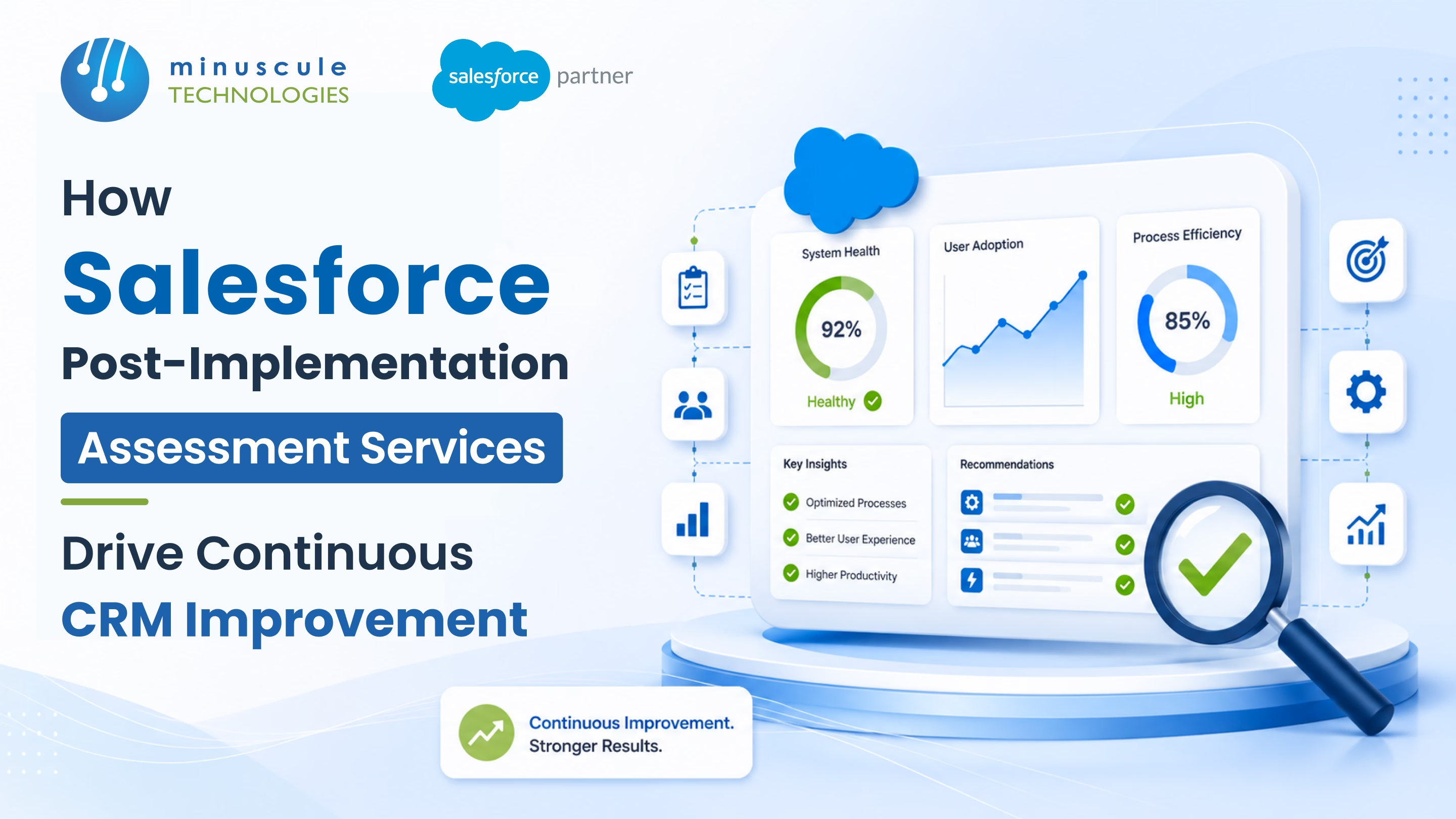
A Salesforce post-implementation assessment is a health check for your org after go-live. It looks at your structure, data, security, links, and user uptake. It surfaces tech debt and drift. Then it hands you a ranked list of fixes. Done well, it turns a stalling org into one that keeps gaining value. Here's how these assessment services drive steady CRM gains, and where strong Salesforce Implementation Services fit in.
Picture a new CIO who inherits a Salesforce org. On paper, all looks fine. It has 1,200 users, five clouds, and many links. Then the review begins. The Optimizer report finds 600 unused fields, 200 stale Flows, and 50 Apex classes nobody has touched in three years. Half the users haven't logged in for 90 days. Three links throw errors nobody watches. Forty custom objects have no clear purpose.
That's four years of admin changes, three years of consultant projects, and two years of drift. The org works, but barely. New features take six weeks, not two. Reports return numbers that don't match.
This is what happens when a Salesforce rollout is treated as a project with an end date. It's really a platform with ongoing health needs. The build ships. The team moves on. The org piles up tech debt, slow speed, security gaps, and low use - all hidden until someone asks for an honest look.
The fix is a structured post-implementation review. It covers your structure, data, speed, security, and user uptake. It shows what works, what's drifting, and what the roadmap should be.
Six drift patterns tend to erode value:
Each is fixable on its own. Together, they explain why old orgs often deliver less value per quarter than new ones.
A structured review covers six areas: a structure review (data model, objects, sharing) to find hidden debt; an automation audit (Flows, Apex, rules) for overlap, dead code, and limit pressure; a speed review (API use, storage, limits, page loads); a security review (profiles, permission sets, field security, MFA, Shield); a data review (duplicates, blank fields, drift); and an adoption review (logins, feature use, license use). A full review gives you findings, severity ratings, and a ranked roadmap.
The platform is only worth it if people use it - and AI readiness is where the next wave of value lives.
The review runs through six phases:
Six rules keep a review honest:
Targeted reviews of one cloud or area run two to four weeks. Full multi-cloud reviews run six to eight weeks. Most projects aim for six to eight weeks to balance depth and speed.
Your own team can run Optimizer and Health Check. A consulting partner adds an independent view, cross-client comparisons, deep structure experience, and a cross-team perspective internal teams rarely have.
Annual reviews are standard for multi-cloud orgs. A triggered review pays for itself before big decisions - a new cloud rollout, an M&A merge, a leadership change, or a compliance audit.
Yes, more and more. AI readiness checks your data base, Trust Layer, link structure, and adoption potential for Agentforce, Data Cloud, and Einstein. Most 2026 reviews add this on purpose.
When you compare Salesforce implementation companies for a review, favor an independent partner with deep audit and structure experience. The right Salesforce implementation partner turns findings into a clear, ranked plan you can act on.
Salesforce rollouts rarely fail at launch. They drift after launch - through field sprawl, automation overlap, stacked rules, silent link failures, and lost user trust. A post-implementation review surfaces that drift and turns it into a ranked roadmap. Seven health areas, six phases, five roadmap parts, and six rules. Built right, the review becomes your steady improvement habit, with an annual rhythm, executive ownership, and measurable ROI.
Minuscule Technologies is a Trusted Salesforce Engineering Partner with 160+ Salesforce experts and 75+ projects delivered worldwide, including Nasdaq-listed firms across BFSI, manufacturing, IT services, and higher education. We deliver Salesforce post-implementation assessment services - from structure and data audits to security, link health, AI readiness, and a 12-to-18-month roadmap - for firms that want their Salesforce investment to keep compounding value.
Schedule a post-implementation assessment with us. We'll look at your org footprint, drift patterns, and the review scope that fits your business.
You've seen what's possible. Now, let's make it happen for your business. Whether you need an end-to-end Salesforce solution, a complex integration, or ongoing managed services, our team is ready to deliver.

Schedule a Free Strategic Call


