We are at Dreamforce 2026, Industry Pavilion at San Francisco


September 15, 2026
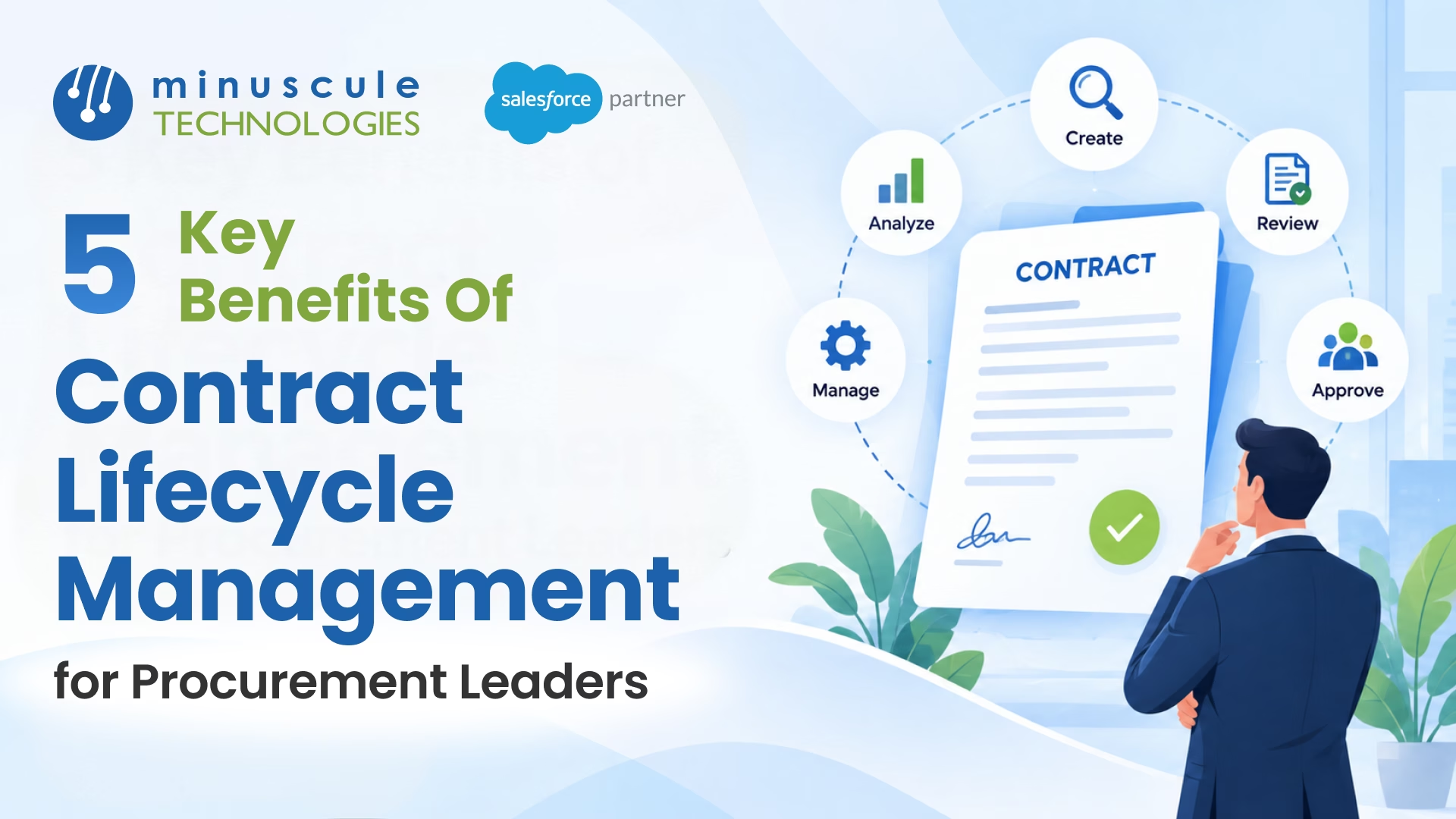
The benefits of contract lifecycle management for procurement come down to speed, visibility, and control. Contract lifecycle management (CLM) is software that handles a contract from request through creation, approval, signature, storage, and renewal. For a procurement team, that means every agreement lives in one place, moves faster, and carries less risk.
For procurement leaders, CLM delivers five clear wins:
Picture a procurement team that walks into renewal season calm. Every contract is in one place. Every renewal date is flagged weeks ahead. No price hike slips through because a notice window closed. That is what a CLM system makes normal, instead of rare.
This guide breaks down the five key benefits of contract lifecycle management for procurement leaders. It covers what CLM is, where it helps most, and how it connects to the tools your team already runs.
Contract lifecycle management is the process, and the software that manages a contract across its whole life. That life runs in stages: request, create, negotiate, approve, sign, store, and renew. CLM software puts all those steps into one system.
In procurement, CLM is the backbone of supplier agreements. It holds every contract, tracks every obligation, and flags every renewal. Instead of chasing files across email and drives, your team works from one source of truth. That shift is what turns contracts from static records into active, managed assets.
The role in procurement is simple to state. CLM helps you buy on the right terms, hold suppliers to those terms, and never miss a date that costs money. The rest of this guide shows how that plays out.
The benefits of contract lifecycle management show up across the whole procurement cycle. Here are the five that matter most to a procurement leader.
Manual contracts crawl. A draft waits in an inbox; an approval sits for days, and a signature takes a week. CLM removes that drag. Templates build the contract in minutes. Workflows route it to the right approvers on their own. Deals close sooner, so the savings and the supply start sooner too. Take supplier onboarding. What took two weeks of back-and-forth can close in days. Faster cycles also cut the risk of a deal stalling while a supplier waits.
You cannot manage what you cannot see. CLM keeps every agreement in one searchable place, tagged by supplier, value, and date. A procurement leader can see total spend by vendor, which contracts are active, and what is up for renewal. That visibility is the basis for every smart sourcing decision. Say that a category manager wants every contract with one vendor. In a CLM, that is one search, not a week of digging. Clean data also helps you spot duplicate suppliers and pull spend together.
Off-standard terms are where risk hides. CLM uses approved clause libraries, so contracts go out with language legal already trusts. It can flag a non-standard clause before it is signed, not after. Every action is logged, which gives you a clean audit trail when a regulator or an auditor asks. This matters most in regulated fields like banking and healthcare. A timestamped record turns a stressful audit into a routine one.
Value leaks in quiet ways. A missed renewal locks in a price rise. An unclaimed rebate goes unbilled. An autorenewal ties you to a supplier you meant to drop. CLM tracks these dates and terms and alerts the owner in time. The savings a team already negotiated actually reached the bottom line. Add that up across hundreds of contracts, and the numbers get big. CLM protects the value your team won at the table.
Good supplier management needs good records. CLM shows each supplier's obligations, performance, and history in one view. Reviews get easier; renewals get fairer, and disputes get shorter because the facts are right there. Suppliers notice when you run a tight, transparent process, and the relationship gets better for it. When a review comes up, you walk in with the full history in hand. That builds trust, and trust wins better terms next time.
The gap between manual contract work and a CLM system shows up in daily tasks. Here is the same procurement work handled in both ways.
Not every CLM fits a procurement team. When you compare tools, weigh the features that matter most for buying. A short checklist keeps the search focused.
Start with the workflows that cost you the most time today. Fix those first. Then grow the system from there, one process at a time.
Procurement does not work alone. Contracts often start on the sales side, where a quote becomes an agreement, and they touch finance and legal along the way. That is why the biggest gains come when CLM connects to the systems your company already runs, Salesforce included.
When CLM ties into Salesforce, a contract can generate the same data that built the quote. If your team uses Salesforce CPQ, the priced quote can feed the contract, so nothing gets retyped. Apex Hours' free CPQ training shows how that quoting step works. For the signature side, Forcetalks has a solid guide to Salesforce and DocuSign.
Most CLM tools install from the Salesforce AppExchange. Trailhead's AppExchange basics module is a good starting point. Beyond the basic connector, custom routing and automation run on Salesforce Flow, and the Flow considerations reference is worth a read first. Our team handles this kind of Salesforce integration work, so procurement, sales, and finance all see the same contract.
Contract lifecycle management is the process, and the software, for managing a contract across its whole life. That life includes request, creation, negotiation, approval, signature, storage, and renewal. CLM keeps all of those steps and all of your contracts in one system.
In procurement, CLM manages every supplier agreement in one place. It speeds up contract cycles, tracks obligations and renewals, and keeps terms compliant. That helps a team buy on the right terms and hold suppliers to them.
The main benefits of contract lifecycle management are faster contract cycles, full contract and spend visibility, lower compliance risk, real cost savings, and stronger supplier relationships. Procurement teams feel these gains most when contract volume is high or terms are complex.
A common way to describe the stages is to create, negotiate, approve, sign, and manage or renew. Some teams add a request stage at the front. CLM software supports each stage in one connected flow.
The four pillars are usually people, process, information, and technology. Strong contract management needs clear ownership, a defined process, accurate contract data, and the right tools to run it. CLM software supports all four.
For procurement, contract lifecycle management turns a scramble into a system. Contracts move faster; every agreement is visible, risk drops, savings stick, and suppliers get managed well. Those five benefits build on each other.
Minuscule Technologies builds these contract workflows as ready-to-deploy starter packs, tuned to your industry, so you go live in weeks. Our starter packs for manufacturing and banking and insurance cover the templates, approvals, and tracking that contract-heavy teams need. Our Salesforce consulting team starts with your process, not the software.
Want to see where your contract process is wasting time and money? Book a free strategic Salesforce call with our team. We will map your CLM and Salesforce setup and the fastest way to build it.
You've seen what's possible. Now, let's make it happen for your business. Whether you need an end-to-end Salesforce solution, a complex integration, or ongoing managed services, our team is ready to deliver.

Schedule a Free Strategic Call


