
August 13, 2026
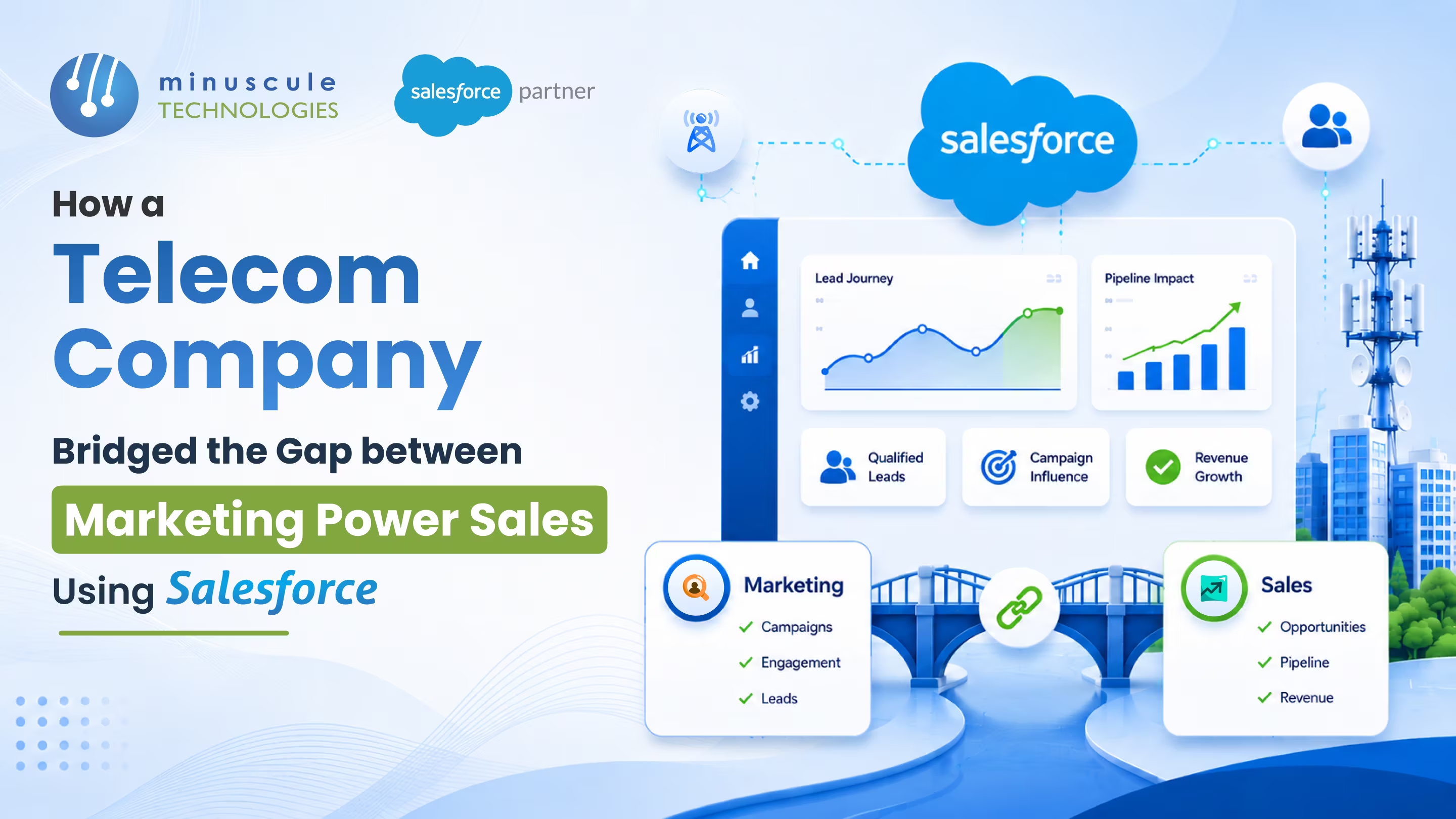
Salesforce marketing and sales alignment is the practice of connecting marketing and sales on one Salesforce platform so leads, data, and goals flow between the two teams without gaps. When a leading telecom provider used it to bridge a broken handoff, marketing and sales finally shared the same records, the same lead definitions, and the same view of what actually closed. The result: fewer leads lost between the teams, faster follow-up, and marketing spend that could finally be tied to real revenue.
Here's what alignment on Salesforce gave them:
The telecom company's problem was one most growing businesses know well. Marketing ran campaigns and celebrated lead volume. Sales complained the leads were junk and worked their own list instead. Each team had its own spreadsheet, its own numbers, and its own version of the truth — and thousands of prospects quietly slipped through the crack in between. Nobody could say which campaigns actually made money.
This post walks through how the telecom provider closed that gap on Salesforce — the challenge, the exact build, the before-and-after, and a playbook you can follow to align your own teams.
Salesforce marketing and sales alignment means both teams work from a single source of truth on the Salesforce platform, with shared goals, shared lead definitions, and a clean handoff between campaigns and the sales floor. It's often called "smarketing" — treating marketing and sales as one revenue engine instead of two departments that hand off and hope.
The mechanics are simple to describe and hard to fake. Marketing runs campaigns in Salesforce Marketing Cloud; sales works deals in Sales Cloud; and because both sit on the same CRM, a lead's full history travels with it. When a prospect opens an email, downloads a plan comparison, or fills out a form, sales sees it on the same record they use to make the call.
Alignment isn't only a technology fix — it's an agreement. Teams define together what a qualified lead looks like, who owns follow-up, and how fast it happens. The platform then enforces that agreement automatically. If you want the deeper mechanics of the sales side, our guide to accelerating lead qualification with Sales Cloud pairs well with this story.
The telecom provider was spending heavily on demand generation — search ads, plan promotions, device-upgrade campaigns — and generating plenty of leads. On paper, marketing looked successful. In the pipeline, something was clearly broken.
The gap came down to a few familiar failures:
The cost wasn't just wasted ad spend. It was friction between two teams that blamed each other, and a customer experience where a person asked about a plan online and heard nothing back. In a market where switching carriers takes minutes, that silence is lost revenue.
The fix wasn't a single feature — it was connecting marketing and sales into one workflow on Salesforce. Here's what the build actually involved.
The first move was putting marketing and sales on the same CRM. Marketing Cloud and Sales Cloud were connected so every lead became a single shared record. Marketing could see what sales did with a lead; sales could see every campaign touch that came before. The dueling spreadsheets went away.
Next, the teams agreed on what qualified means. They built lead scoring in Salesforce so a marketing qualified lead (MQL) only became a sales qualified lead (SQL) once it hit an agreed threshold — the right plan interest, region, and engagement. Sales trusted the handoff because they helped define it.
With definitions set, routing became automatic. The moment a lead crossed the scoring threshold, Salesforce assigned it to the right rep by territory and product, and started a follow-up task. Response time dropped from days to minutes, which in telecom is the difference between a sale and a competitor's sale. Our guide to Salesforce lead management covers the full process.
Not every lead is ready to buy. Instead of dumping those on sales, marketing kept them in automated nurture journeys until they re-engaged. Sales stopped wasting time on cold leads, and marketing stopped losing warm ones. Our overview of what's new in Marketing Cloud shows how these journeys have matured.
Finally, the loop closed. Because campaign data and won deals lived on the same platform, the telecom company could trace revenue back to its source campaign. For the first time, marketing could prove which programs drove contracts, and budget moved to what worked.
The clearest way to see the change is the lead's journey before and after the Salesforce build.
| Stage | Before alignment | After alignment on Salesforce |
|---|---|---|
| Lead capture | Sits in marketing's separate tool | Lands on a shared CRM record instantly |
| Qualification | No agreed definition, sales distrusts leads | Shared scoring decides MQL to SQL |
| Handoff | Manual, delayed by days | Auto-routed to the right rep in minutes |
| Not-ready leads | Dropped or dumped on sales | Held in automated nurture until warm |
| Reporting | Campaigns and revenue never connected | Closed-loop: revenue traced to campaign |
No single product creates alignment. It came from a few Salesforce tools working together on shared data.
| Salesforce tool | Its role in the alignment |
|---|---|
| Sales Cloud | Home for leads, opportunities, and rep follow-up |
| Marketing Cloud | Runs campaigns and automated nurture journeys |
| Lead scoring and assignment rules | Turns engagement into a qualified, routed lead |
| Campaign influence reporting | Ties won deals back to the campaigns behind them |
| Shared dashboards | One set of numbers both teams trust |
The change showed up fastest in the handoff. Leads stopped falling through the cracks because there was no longer a crack to fall through — every lead lived on one record that both teams could see and act on.
Sales began accepting far more of marketing's leads, because they trusted a definition they had helped write. Follow-up that used to take days happened within minutes, so prospects heard back while they were still interested. And for the first time, the marketing team could point to specific campaigns and show the contracts they produced, which turned budget debates into data conversations.
Just as important, the friction eased. The two teams shared one dashboard and one goal — revenue — instead of defending separate numbers. That cultural shift, backed by the platform, is what made the alignment stick.
You don't need to be a telecom company to use this playbook. The sequence works for most businesses running separate marketing and sales motions.
The technology is the easy part; the shared definitions and shared dashboard are what make it real. That's usually where an experienced partner speeds things up. Practical Salesforce resources like Salesforce Ben and Apex Hours are good for the how-to detail, and communities such as Forcetalks and Salesforce Geek cover the automation patterns behind lead routing.
It's the practice of connecting marketing and sales on one Salesforce platform so they share data, lead definitions, and goals. Marketing runs campaigns in Marketing Cloud, sales works deals in Sales Cloud, and both act on the same lead record — which removes the gap where leads and revenue usually get lost.
Salesforce aligns the teams by keeping their data on one CRM, automating lead scoring and handoff, and tying campaigns to closed revenue through closed-loop reporting. Instead of separate systems and separate numbers, both teams see the same records and the same results.
A marketing qualified lead (MQL) has shown enough interest — opens, downloads, form fills — for marketing to consider it promising. A sales qualified lead (SQL) has met the agreed bar for sales to actively work it. Alignment is defining, together, exactly when an MQL becomes an SQL.
The core pair is Sales Cloud and Marketing Cloud, working on shared data with lead scoring, assignment rules, and campaign influence reporting on top. Because they sit on one platform, a lead's marketing history and sales activity live on the same record.
Common measures include lead response time, the share of marketing leads sales accepts, conversion from MQL to SQL to closed deal, and revenue traced to source campaigns. When both teams report from one shared dashboard, those numbers stop being disputed.
The telecom company's real win wasn't a new tool — it was ending the blame game between marketing and sales by giving them one record, one definition of success, and one dashboard. Salesforce marketing and sales alignment doesn't just tidy up a handoff; it turns two teams that used to point fingers into a single engine that can prove what drives revenue.
Minuscule Technologies builds exactly this kind of connected setup. We link Sales Cloud and Marketing Cloud, design the lead scoring and routing that makes handoffs automatic, and can extend campaigns to channels customers actually use with the WhatsApp Salesforce Accelerator. If you're weighing your marketing platform, our comparison of Marketing Cloud vs. HubSpot is a useful starting point.
Tired of watching leads die between marketing and sales? Book a Salesforce alignment consultation with our team, and we'll map your funnel to a connected Salesforce setup that turns campaigns into closed deals.
You've seen what's possible. Now, let's make it happen for your business. Whether you need an end-to-end Salesforce solution, a complex integration, or ongoing managed services, our team is ready to deliver.

Schedule a Free Strategic Call


Plot No. 4, Sridevi Amman Street, Perumal Nagar Extension, Old Pallavaram, Chennai, Tamil Nadu 600117, India.
