We are at Dreamforce 2026, Industry Pavilion at San Francisco


July 10, 2026
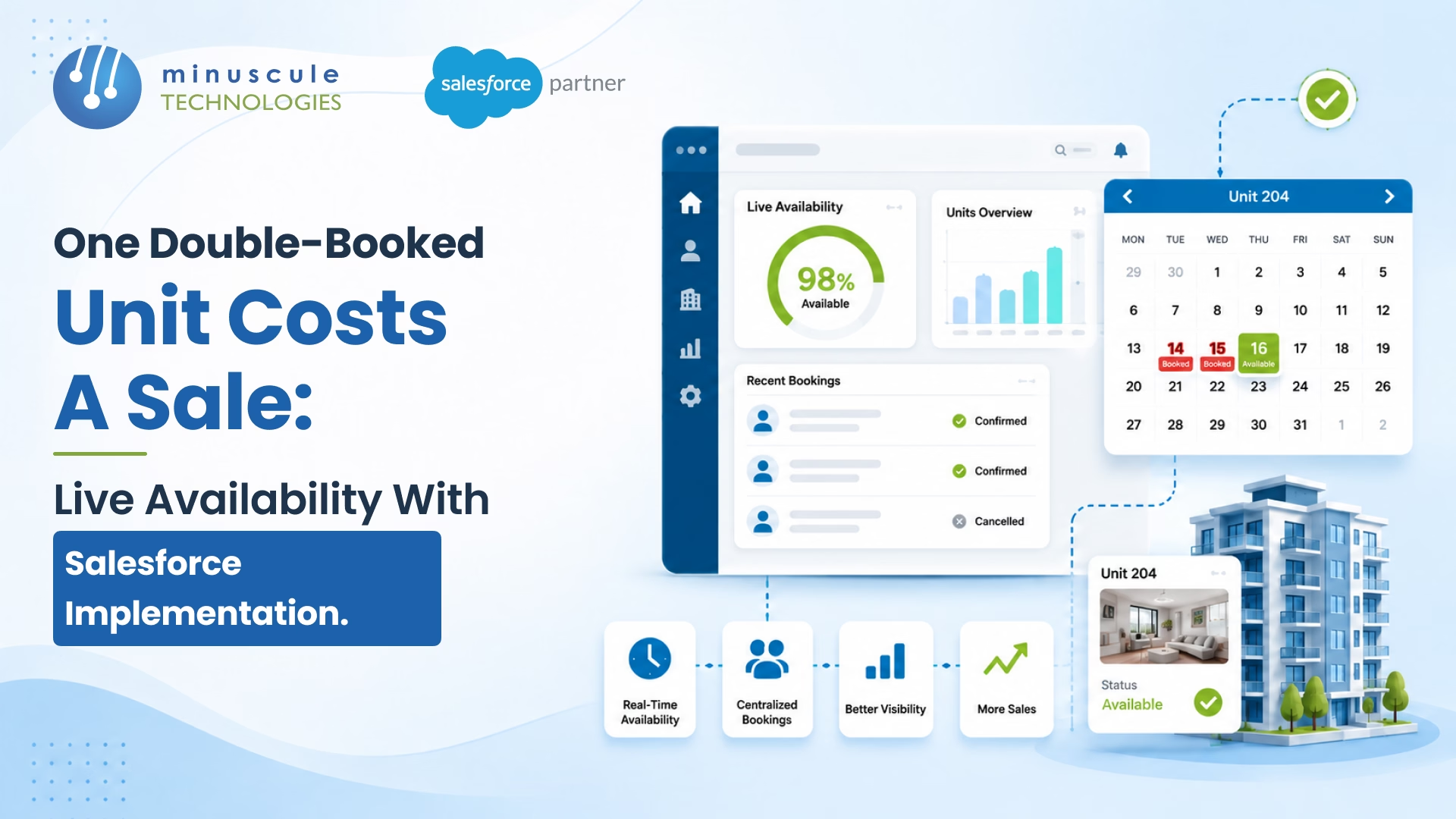
Saturday afternoon. Your top sales agent is in the model apartment with a couple who're ready to buy Unit 14B - a corner unit, south-facing, the one they've visited three times. The agent opens her laptop, pulls up the floor plan, and walks them through the payment schedule. They shake hands. She sends the booking form to the back office. Twenty minutes later, her phone buzzed. Unit 14B was already reserved - two hours ago, by another agent working on the broker channel. The couple gets a call suggesting Unit 14D instead. They don't call back.
That's not a system error. That's a revenue leak. One double-booked unit costs you the sale, the buyer's trust, the agent's credibility, and every referral that couple would have sent your way. In a 200-unit project, even three double-bookings per quarter can mean six figures in lost revenue.
Live availability tracking with Salesforce stops this. Here's how.
Double bookings rarely come from carelessness. They come from speed. In an active launch weekend, a 200-unit project might have 15 agents working across a sales office, a website, and four broker partners - all selling from the same inventory. Nobody sees the same numbers at the same time.
The sales office works from a printed floor plan updated every few hours. The website shows availability synced from a spreadsheet that marketing updates once a day. Broker partners get a PDF unit list emailed on Monday morning. By Saturday, that PDF is five reservations behind reality.
Two agents promise the same unit to two buyers in the same hour. Neither knows until the back-office cross-checks booking forms. By then, one buyer has already celebrated with their family.
The root cause isn't the agents. It's the gap between when a unit's status changes and when everyone sees it. If that gap is five minutes, you might get away with it. If it's five hours, double-bookings become inevitable.
Live availability means every person selling your inventory - sales office, broker's phone, website - sees the same unit status at the same moment. When an agent places a hold on Unit 14B, that unit turns orange on every screen within seconds.
In Salesforce, this works through a custom data model built around four objects: Project, Tower (or Building), Floor, and Unit. Each Unit record holds a Status field with controlled values: Available, On Hold, Reserved, Booked, and Sold. When a sales agent clicks "Hold," a Salesforce Flow fires immediately - stamps the agent's name, logs to a timestamp, starts a 30-minute hold timer, and changes the status.
Every other agent sees the update because they're all looking at the same Salesforce dashboard. No spreadsheet. No phone call to the back office.
The hold timer matters. If the agent doesn't convert the hold to a reservation within 30 minutes, the Flow releases the unit back to Available automatically. This prevents agents from hoarding units during high demand launches.
A well-built Salesforce implementation tracks every unit through a defined lifecycle. Each stage has clear rules about who can move the status forward and what fires automatically.
Each transition fires a Salesforce Flow that handles notifications, timestamps, and downstream actions - a single source of truth for every unit, updated in seconds, visible to everyone.
Salesforce uses a unit locking mechanism. When an agent places a hold, a Flow immediately changes the status and blocks other agents from holding that unit. The hold is time-limited, so units don't stay locked indefinitely.
Yes. Brokers access unit availability through a Salesforce Experience Cloud portal or a shared dashboard — the same real-time data the internal sales team sees. They never sell outdated inventory lists.
The hold expires automatically. A Salesforce Flow monitors timestamps and releases units back to Available after a set period — usually 30 to 60 minutes. The agent gets a notification before expiry, so they can extend if the buyer needs more time.
A basic system with hold management and dashboards takes 4-6 weeks. Adding broker portals, Docusign integration, and payment tracking extends the timeline to 8-12 weeks depending on project count and custom requirements.
That couple from the intro? They didn't lose interest in buying. They lost interest in buying from you. The double-booking told them your process isn't ready for their money - and they went to a developer whose process was.
Minuscule Technologies builds the system that prevents this. We're a Trusted Salesforce Engineering Partner with 160+ Salesforce engineers, 75+ successful projects, and direct experience building property reservations and booking systems with live unit status tracking. We've delivered real-time inventory dashboards, timed hold management, DocuSign integration for automated status updates, and broker portal access - all on Salesforce.
Stop losing buyers to stale floor plans. Talk to Minuscule Technologies about live availability with Salesforce - before your next launch weekend turns into a double-booking weekend.
You've seen what's possible. Now, let's make it happen for your business. Whether you need an end-to-end Salesforce solution, a complex integration, or ongoing managed services, our team is ready to deliver.

Schedule a Free Strategic Call


