
April 18, 2026
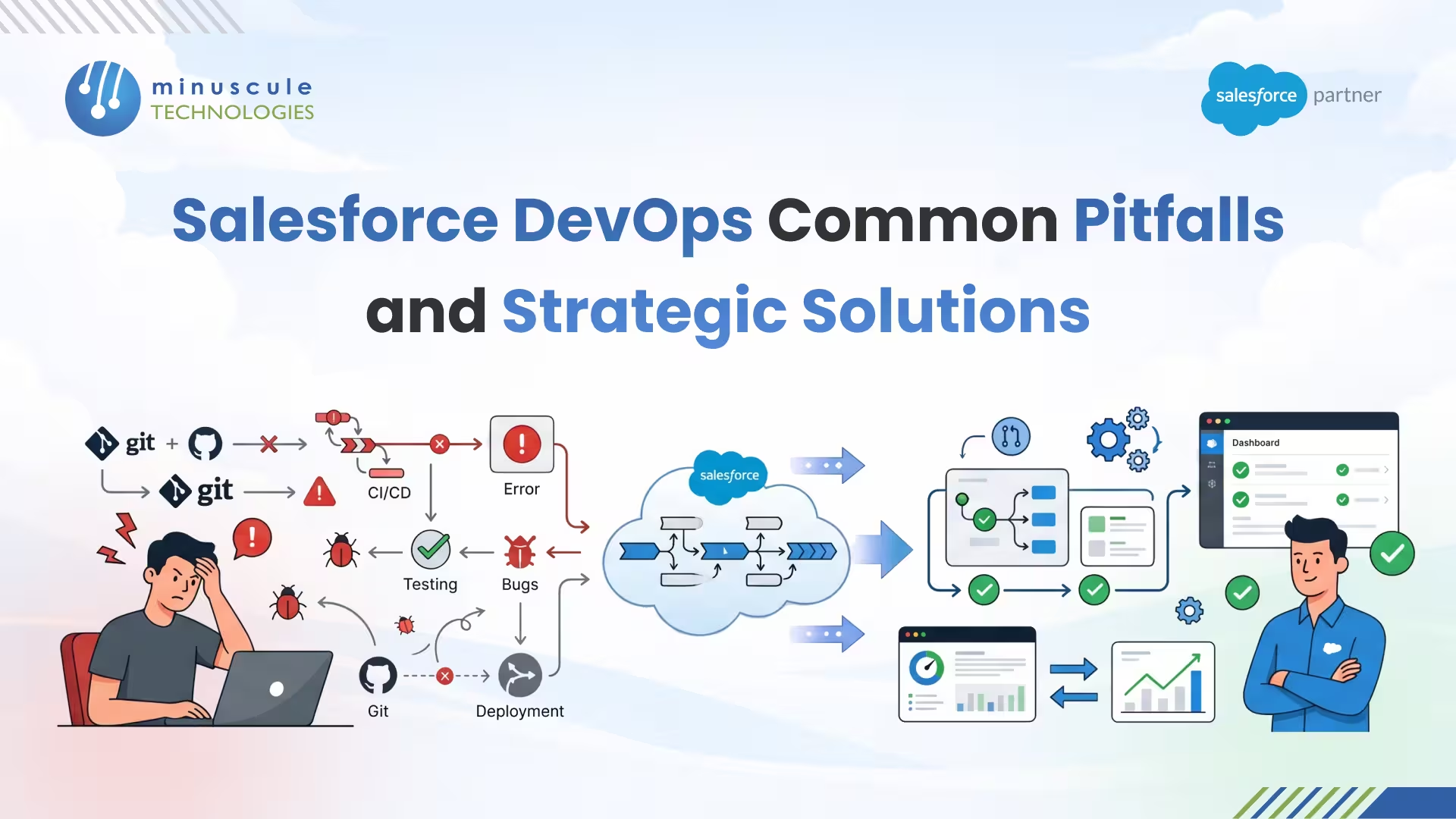
Salesforce is a premier CRM software leader, powering enterprise operations with solutions such as Service Cloud, Health Cloud, and Marketing Cloud. To meet unique business needs, organizations rely on Salesforce Developers and Architects for custom development.
Salesforce DevOps is the operational culture and automated processes that use Continuous Integration and Continuous Delivery (CI/CD) to securely transition custom code from development environments into the hands of end users. While adopting Salesforce DevOps yields faster time-to-market and better product quality, organizations regularly encounter roadblocks.
Until recently, many teams relied heavily on basic native tools. However, these lack the sophistication of contemporary software delivery standards, creating severe bottlenecks:
The Solution: Leverage third-party DevOps tools that provide automated version control, secure metadata backups, and deep deployment insights. If you run Marketing Cloud, these DevOps practices for Marketing Cloud show where to begin.
DevOps is not a job title or an isolated department; it is a holistic cultural approach.
The Solution: Master the CALMS principles (Culture, Automation, Lean, Measurement, and Sharing) and adopt a phased, incremental approach.
In the rush to compete, IT departments often release software that is not production ready.
While temporary applications can flow through pipelines quickly, high-volume data applications require accurate data snapshots through different environments. Failing focusing on database automation can severely hinder the deployment and overall performance of data-centric applications.
While they are a starting point, they lack version control, static code analysis, and deployment reporting. This slows down productivity and increases the risk of human error and compliance gaps.
These are ways to manage risks. Blue/Green involves two identical production environments to switch traffic instantly, while Canary rolls out updates to a small subset of users first to monitor performance.
Trying to overhaul everything at once usually fails due to complexity. A phased, step-by-step implementation is much more sustainable and allows for constant education.
"Shift-Left" means moving security checks to the earliest possible stage of development. Instead of waiting for a final audit, we integrate Static Code Analysis directly into your Git commits. In 2026, this prevents security gaps from reaching production, saving your team from costly post-release hotfixes.
The Agentforce Testing Center allows teams to plan and observe new features 30% faster by using AI to simulate user activity. This ensures your AI agents and complex Salesforce Flows behave predictably before they ever interact with a real customer.
Implementing a highly effective Salesforce DevOps strategy is not optional; it is essential to keep competitive. However, true success demands more than just installing software - it requires organizational readiness and a major cultural shift. Rather than fighting against the limitations of native tools, modern Salesforce teams must embrace comprehensive DevOps practices that support robust version control, secure metadata backups, and deep deployment insights.
By moving away from a siloed "Dev vs. Ops" mentality and mastering the technical elements of CI/CD, your organization can deliver high-quality code to production quickly and safely. This all-encompassing approach doesn't just fix bugs faster; it streamlines your entire software lifecycle, providing a faster go-to-market timeline and a sustainable competitive advantage.
At Minuscule Technologies, we specialize in joining complex development cycles with high-performance Salesforce environments. We don’t just implement pipelines; we engineer reliable, automated DevOps ecosystems that enable your architects and developers to build with confidence. Our mission aims to transform your deployment struggles into a continuous, high-velocity engine for innovation.
Don't let manual deployments and version control gaps hold back to your engineering team. Partner with Minuscule Technologies to architect a modern DevOps strategy that drives security, speed, and success. Connect with our DevOps Strategists today to start your roadmap.
You've seen what's possible. Now, let's make it happen for your business. Whether you need an end-to-end Salesforce solution, a complex integration, or ongoing managed services, our team is ready to deliver.

Schedule a Free Strategic Call


Plot No. 4, Sridevi Amman Street, Perumal Nagar Extension, Old Pallavaram, Chennai, Tamil Nadu 600117, India.
