We are at Dreamforce 2026, Industry Pavilion at San Francisco


June 5, 2026
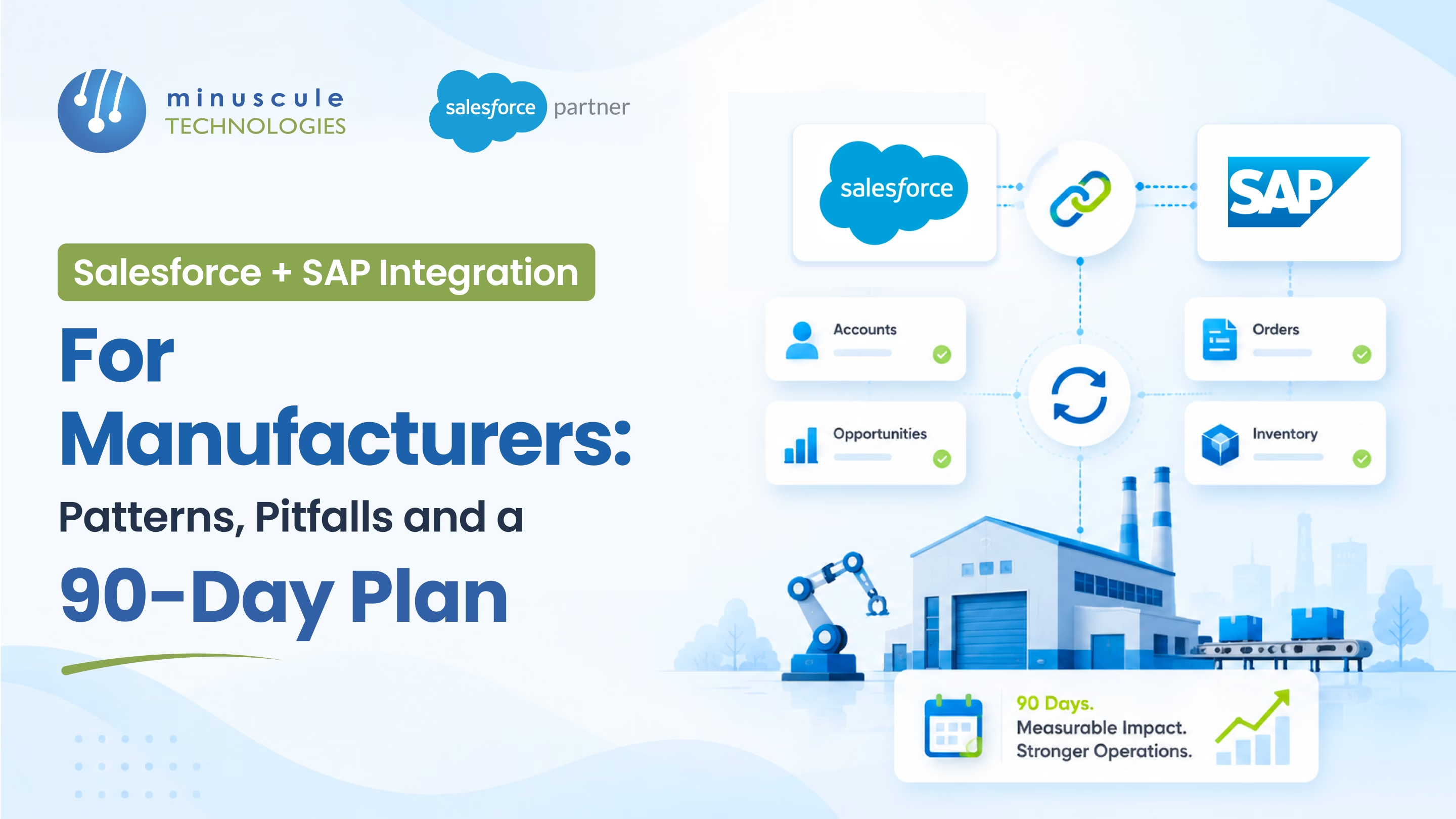
A Salesforce SAP integration connects your CRM and your ERP so customer, order, pricing, and inventory data flow between them on their own. For manufacturers, this link keeps a quote in Salesforce and a shipment in SAP in step. Done right, it stops dropped orders, pricing errors, and the manual re-keying that slows your order-to-cash cycle.
To see why it matters, it helps to know what each system does. Salesforce is your front office - it runs leads, quotes, CPQ pricing, service cases, and the dealer relationships your sales team manages every day. SAP is your back office it runs production planning, materials, inventory, finance, and the plant-level data that decides whether an order can actually ship.
Apart, each system is strong but blind to the other. Sales can promise a delivery date with no view of SAP stock. Finance can invoice a price that sales never quoted. Someone ends up re-typing orders from one screen into the other, and every manual step adds a chance for error.
Connect the two, and that gap closes. A deal closed in Salesforce creates the order in SAP on its own. Quotes pull live SAP pricing and stock. Every team works from one set of numbers, from first quote to final invoice.
For manufacturers, the stakes are higher than for any other CRM and ERP pair. Master data, the order-to-cash path, CPQ pricing, and a large dealer network each add a way to fail. But it doesn't have to be that way. A strong Salesforce SAP manufacturing integration protects master data, automates order-to-cash, and ships value in about 90 days when scoped well. The rest of this guide shows the patterns that work, the pitfalls to avoid, and a 90-day plan to get there.
For the broader overview, see our guides on how Salesforce and SAP integration streamlines business and data-sync best practices.
Most CIOs think SAP integration is a connectivity problem. It's not. The middleware almost always works. What breaks is everything around it.
There are dozens of ways to wire Salesforce to SAP. Five patterns hold up in manufacturing.
The right pattern depends on three things: your SAP edition, your existing integration footprint, and whether you optimize for AI-readiness or pure reliability. The Salesforce Ben blog has good architectural breakdowns, and our Salesforce integration overview covers the general ERP-to-CRM context.
We've audited Salesforce SAP integrations across heavy equipment, automotive, industrial, and consumer makers. The same six failures show up everywhere.
Most Salesforce SAP programs stretch to 12 or 18 months. That's not the integration's fault - it's the scope's fault. Ninety days work when you scope right.
Compression comes from scoping hard: one scenario, not five.
Two AI shifts are changing Salesforce SAP integration in 2026. First, Agentforce reads SAP data through Data Cloud - instead of copying SAP data into Salesforce, it queries Data Cloud, which pulls live from SAP. That means less replication and fewer sync errors. Second, Einstein monitors the integration - anomaly detection on logs spots silent drops before complaints, and it flags risky schema changes before they ship. These don't replace the middleware. They make it more resilient and easier to watch.
The Apex Hours community has post-mortems from manufacturers that hit each of these the hard way.
No. MuleSoft is one of five common patterns. Direct REST/OData works for newer S/4HANA. IDoc still ships for ECC. iPaaS tools like Boomi work for mid-market. Pick based on your SAP edition and existing footprint, not vendor preference.
If your integration layer still runs the older PI/PO, SAP Integration Suite is the recommended target. The move can be phased without breaking existing IDoc flows.
Yes, through Data Cloud or a direct integration layer. Agentforce can read material availability, credit limits, open orders, and pricing from SAP, and write updates back. Real-time depends on your architecture.
The first high-value scenario ships in 90 days when scoped right. A multi-scenario program runs six to nine months. Full enterprise rollouts run 12 to 18 months.
The integrations that fail loudest across manufacturing aren't broken - they're almost working, with silent drops nobody sees until a distributor calls. The makers winning the order-to-cash race didn't buy the most expensive middleware. They scoped right, built monitoring first, and shipped value in 90 days.
Minuscule Technologies is a Trusted Salesforce Engineering Partner that engineers SAP Salesforce integration for manufacturers. Since 2014 we've delivered SAP integrations across heavy equipment, automotive, industrial, and consumer manufacturing - MuleSoft with S/4HANA, direct OData, IDoc replatforming, and Data Cloud - across the US, India, and Malaysia. See our integration and managed services offerings.
Your next silent order drop is one custom field away. Book your free Salesforce + SAP integration audit and let's catch it before your CRO does.
You've seen what's possible. Now, let's make it happen for your business. Whether you need an end-to-end Salesforce solution, a complex integration, or ongoing managed services, our team is ready to deliver.

Schedule a Free Strategic Call


