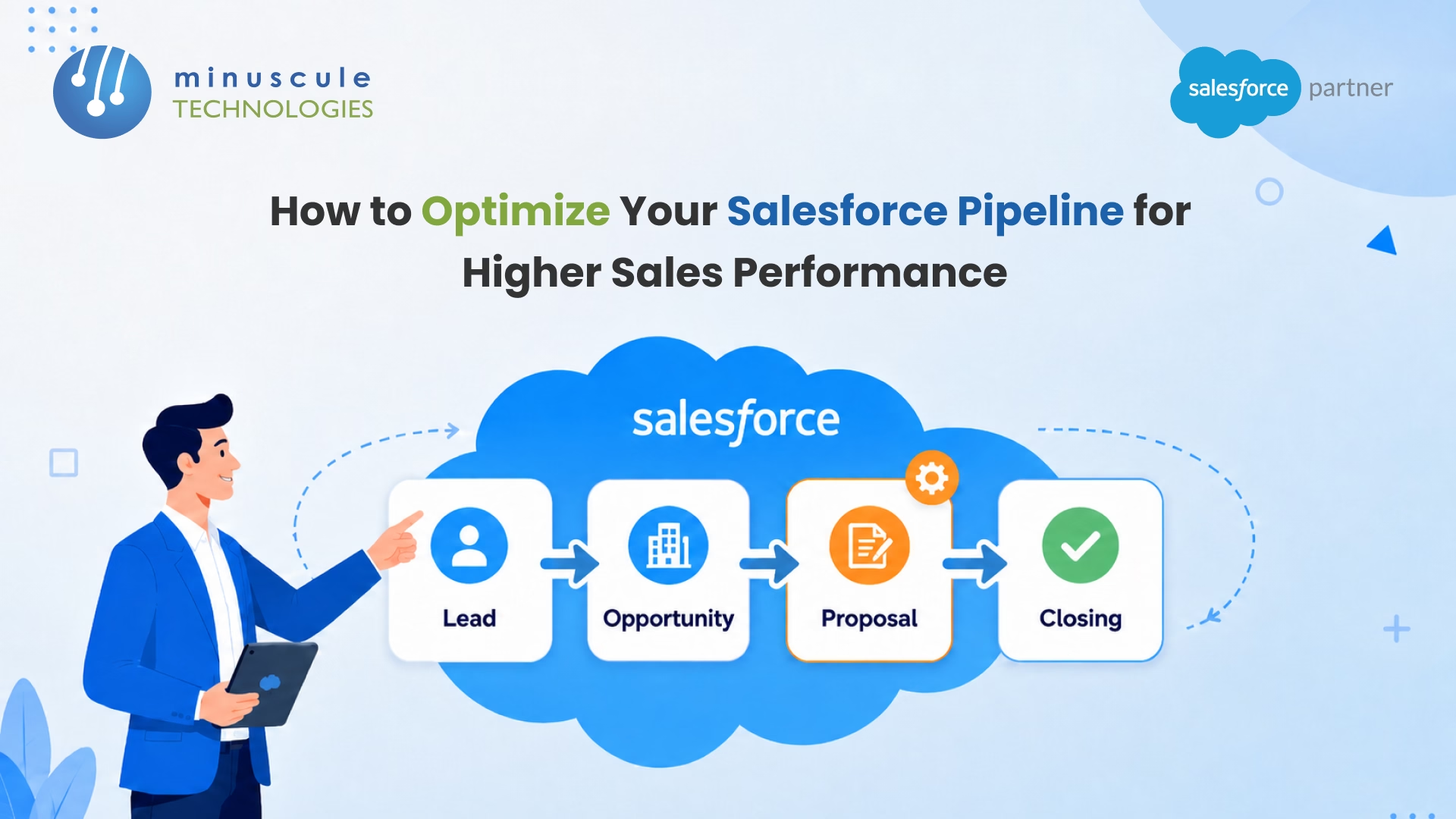
How to Optimize Your Salesforce Pipeline for Higher Sales Performance

Article Written By:
Anantharaman Veeraraghavan
Created On:
Salesforce pipeline optimization dashboard showing stage conversion, win rate, forecast accuracy, and Einstein deal scoring

Salesforce pipeline optimization is the practice of tuning your CRM data, stages, automation, and AI tooling so reps spend less time updating records and more time closing the deals most likely to win. Done right, it lifts win rate, shortens sales cycle, and gives leaders a forecast they can trust within ±5%. Done poorly - bloated stages, dirty data, no scoring — the pipeline becomes a list of stalled deals that nobody believes.

What good pipeline optimization gives sales leaders in the first 90 days:

  • Forecast accuracy moving from ±20% to ±5–10%
  • 25–40% reduction in deal-stage skipping and stuck Opportunities
  • A 15–25 point lift in win rate on stage-3 deals
  • Reps gaining 4–6 hours a week back from manual CRM updates
  • AI scoring that highlights the deals worth working today

1. What Pipeline Optimization Actually Means

Pipeline optimization isn't a single project. It's a discipline that touches five parts of your Salesforce setup:

  • Stage definitions - clear, exit-criteria-based stages with no ambiguity about when a deal moves
  • Field hygiene - required fields that capture decision-maker, budget, timeline, and competition
  • Automation - Flows that update stage, send reminders, and surface stuck deals to managers
  • Scoring - Einstein Lead Scoring or custom logic that ranks deals by close probability
  • Visibility - dashboards and Pipeline Inspection views that make the data scannable in 30 seconds

The teams getting outsized results don't run all five projects in parallel. They start with stage and field hygiene, layer in automation, and finally turn on AI scoring once the data underneath is clean.

2. Seven Pipeline Health Metrics That Matter

These are the metrics every sales leader should see on a single dashboard:

  • Pipeline coverage ratio - total open pipeline ÷ quota. Healthy B2B SaaS sits at 3x–4x; high-velocity inside sales needs 5x–6x
  • Win rate by stage - measure how many Opportunities entering each stage end up Closed Won
  • Average sales cycle by deal size - segment by ARR band; one-size-fits-all benchmarks lie
  • Stage conversion velocity - average days each Opportunity sits in each stage
  • Stuck deal count - Opportunities older than 1.5x median cycle that haven't moved a stage
  • Forecast accuracy - submitted forecast vs actual close, measured quarter over quarter
  • Activity-to-Opportunity ratio - calls, meetings, and emails logged per Opportunity won

If your team can't see these seven in a single Salesforce dashboard right now, that's where optimization starts.

3. Five Tactical Optimization Moves

Five changes we've seen deliver measurable lift inside 60 days:

  • Tighten stage exit criteria. Replace "qualified" with "decision-maker identified, budget confirmed in writing, timeline within 90 days". Reps can no longer move deals on a hunch.
  • Add a "next step" required field on every Opportunity past stage 2. No next step on file = the deal goes back to the pre-stage. Stalled deals reveal themselves immediately.
  • Build a stuck-deal Flow. Any Opportunity that hasn't changed stage in 30 days auto-tasks the rep and pings the manager. Stale pipeline either revives or moves to Closed Lost.
  • Use Pipeline Inspection in Lightning. Sales managers get a single screen showing changes, deals slipping the quarter, and AI-suggested actions. The Salesforce admin documentation has a setup guide.
  • Run a quarterly pipeline scrub. Every quarter, every Opportunity older than the median cycle gets a yes/no decision - keep working, push to next quarter with a real new close date, or move to Closed Lost. No fourth option.

Done together, these five moves typically lift win rate 10–20 points within two quarters. They also make AI scoring work - because AI on dirty data is just confident garbage.

4. AI Tools That Actually Move the Needle

The 2026 Salesforce stack has three AI layers that matter for pipeline performance:

  • Einstein Opportunity Scoring - predicts close probability based on engagement, history, and similar past deals. Surfaces the deals worth working today versus the ones quietly dying
  • Einstein Activity Capture - auto-logs emails and calendar activity against the right Opportunity. Removes a major chunk of admin time
  • Agentforce for Sales - proactive AI agent that drafts next-step emails, summarizes deal history before a manager review, and flags deals at risk based on signal patterns

The order we recommend turning these on: Activity Capture first (frees up rep time), Opportunity Scoring second (better prioritization), Agentforce third (only valuable once the data foundation is solid). Teams that flip this order often kill the AI before it has a chance to work because rep adoption stalls. The Salesforce Ben blog has good case studies on Agentforce rollouts that landed and the ones that didn't.

5. Data Hygiene - The Foundation

AI scoring, accurate forecasts, and clean dashboards all sit on top of one thing: clean Salesforce data. Three rules our team applies on every Salesforce integration project:

  • Required fields enforced through validation rules, not user goodwill. Decision-maker, MEDDPICC stage, competitor, and next step should fail save if blank past stage 2.
  • Duplicate prevention at the Lead and Account level using matching rules and duplicate rules. Pipeline scoring is worthless when the same deal exists three times.
  • Monthly automated audit reports that flag Opportunities with missing data, mismatched stages, or impossible close dates. Hand them to the rep, not the manager, with a 5-day fix window.

This kind of CRM hygiene work is unglamorous but compounds. The forecast lift in quarter 3 comes from data work done in quarter 1.

6. Common Mistakes That Kill Pipeline Performance

Five patterns we see kill more pipeline than any competitor:

  • Too many stages. Pipelines with 9+ stages create ambiguity. Most B2B sales orgs work better with 5–7 clearly defined stages.
  • Stage definitions that mean different things to different reps. "Negotiation" without an exit definition is interpreted differently by every rep on the team.
  • Required fields that nobody enforces. Validation rules without consequence get ignored.
  • Manager-only dashboards. Reps need their own pipeline view with personalized actions, not just leadership reports.
  • Quarterly pipeline reviews instead of weekly. A 13-week-old data point isn't actionable. Weekly cadence is the minimum.

Fix any two of these and pipeline performance climbs.

Frequently Asked Questions

1. What's the difference between pipeline management and pipeline optimization?

Pipeline management is the day-to-day work of tracking Opportunities through stages. Pipeline optimization is the strategic discipline of redesigning the stages, fields, automation, and scoring so the management work becomes easier and the outcomes become better.

2. How long does it take to see results from Salesforce pipeline optimization?

Quick wins (stage discipline, required fields, stuck-deal alerts) show up in 30–45 days. Forecast accuracy improvements show in 60–90 days. AI scoring and Agentforce ROI typically need 1–2 full sales cycles to prove out, so plan a 6-month measurement window.

3. How many Opportunity stages should we have?

Most B2B sales orgs work best with 5–7 stages. Fewer than 5 hides important transitions; more than 7 creates ambiguity and stage-skipping. Always define exit criteria for every stage in writing.

4. Will Einstein Opportunity Scoring work on a small dataset?

Einstein needs a minimum of 200 Closed Won and 200 Closed Lost Opportunities in the prior 24 months to produce reliable scores. Below that volume, custom rule-based scoring or formula fields work better until you have the data history.

Tighten Your Salesforce Pipeline Without Adding Headcount

Pipeline optimization is one of those projects that looks easy in a planning meeting and quietly fails when nobody owns the data hygiene work. At Minuscule Technologies, we've helped Nasdaq-listed enterprises across BFSI, manufacturing, and SaaS lift forecast accuracy from ±25% to single-digit variance - with the same headcount, just cleaner data and tighter automation.

Our team brings 160+ Salesforce engineers, deep Sales Cloud and Agentforce experience, and DevOps automation that protects the optimization work across upgrades. Book a free strategic call and we'll audit your current pipeline setup, identify the three highest-impact fixes, and ship a realistic 90-day plan. For ongoing reference, the Salesforce Developer Blog has good patterns for advanced pipeline automation, and the Apex Hours community is worth bookmarking for working Flow examples.

Contact Us for Free Consultation
Thank you! We will get back in touch with you within 48 hours.
Oops! Something went wrong while submitting the form.

Recent Blogs

Ready to Architect Your Salesforce Success?

You've seen what's possible. Now, let's make it happen for your business. Whether you need an end-to-end Salesforce solution, a complex integration, or ongoing managed services, our team is ready to deliver.

Schedule a Free Strategic Call