We are at Dreamforce 2026, Industry Pavilion at San Francisco


July 11, 2026
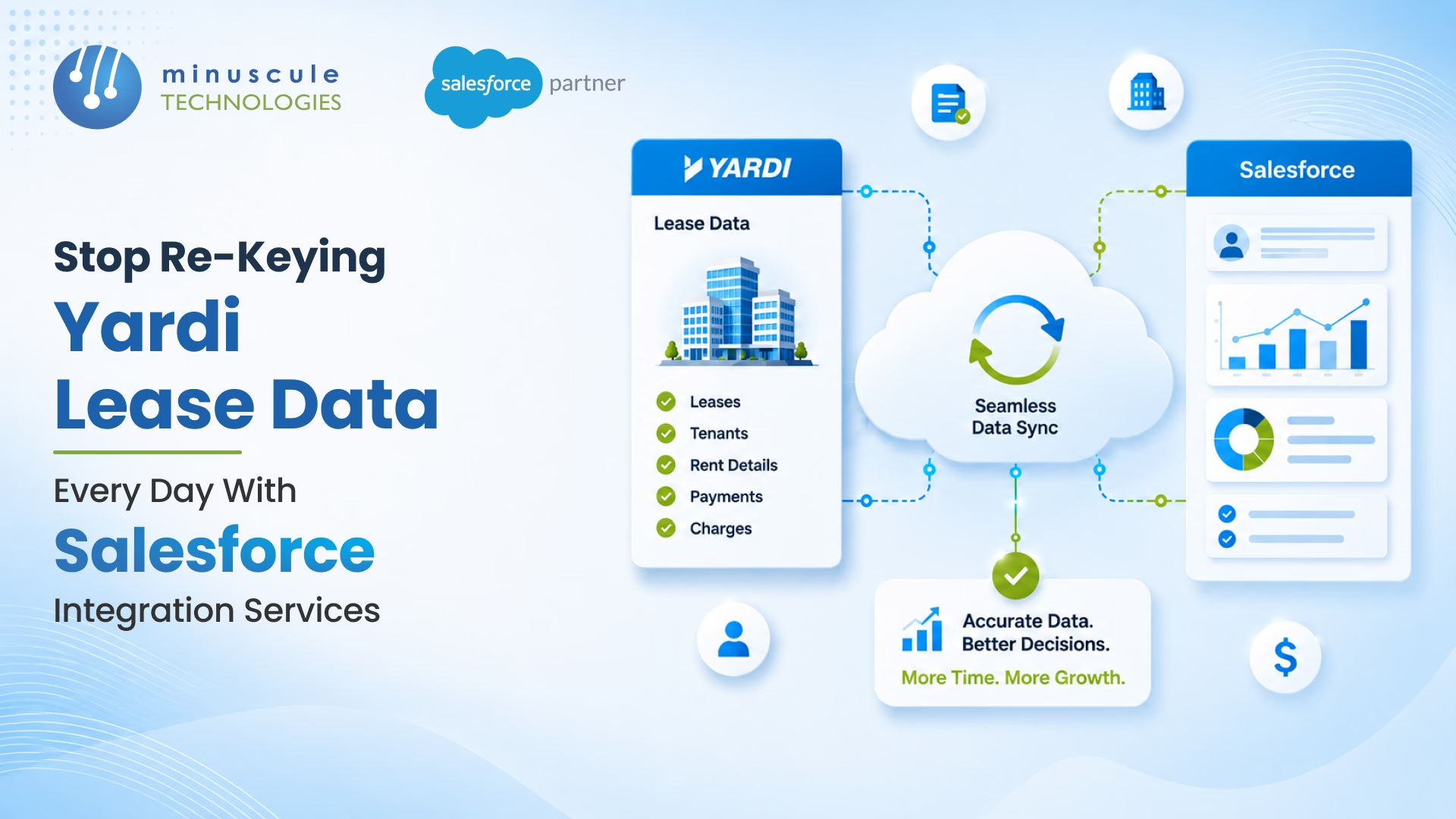
Salesforce integration services connect Yardi and Salesforce so lease data flows once and stays accurate everywhere. A two-way bridge syncs tenant records, lease terms, rent amounts, and occupancy status between both systems - ending manual re-keying, cutting error rates to near zero, and keeping your rent roll and CRM in agreement. Builds take 4 to 12 weeks, depending on the method.
Here's the daily reality without it. It's 9:14 AM. Your leasing coordinator opens Yardi, copies a tenant name, switches to Salesforce, and pastes it in. Then the unit number. Then the lease start date. Then the rent amount. She does this 47 more times before lunch.
By 2 PM, she's transposed two rent figures, skipped a security deposit, and entered the wrong move-in date for a corporate tenant who's about to escalate. Nobody catches the errors until the quarterly rent roll doesn't match - and now your CFO wants answers.
Manual entry between disconnected systems introduces a 1–4% error rate per field. For a portfolio with 500 active leases, that's dozens of corrupted records every month. Each error ripples into bad NOI numbers, missed renewals, and tenant relationships that slip away.
The fix isn't hiring another data entry person. It's salesforce integration - connecting Yardi and Salesforce so data flows once. This guide shows you how.

No - they do different jobs. Yardi handles lease accounting, rent rolls, and property financials. Salesforce manages prospect tracking, deal stages, and tenant communications. Neither replaces the other, and neither talks to the other out of the box.
So a leasing agent closes a deal in Salesforce, then opens Yardi to enter the same lease terms. A property accountant updates rent escalations in Yardi, but nobody copies the change to Salesforce.
Three factors keep teams stuck:
A properly built integration creates a two-way data bridge. Lease records updated in Yardi appear in Salesforce automatically. Deal stage changes in Salesforce push back to Yardi. Enter data once, and both systems stay current.
Here's what changes day to day:
This salesforce crm integration closes the visibility gap that costs property firms renewals and deals.

The right method depends on your Yardi edition, data volume, and budget.
| Factor | In-house Admin | Managed Services Team |
|---|---|---|
| Coverage | Single skill set with limited availability during leave | Year-round access to administrators, developers, integration specialists, and architects |
| Cost | $90,000+ per year, plus hiring and training expenses | $2,000–$10,000 per month, scaled to business needs |
| Depth | Handles routine administration and day-to-day requests | Provides expert architects and specialists for complex challenges |
| Continuity | Knowledge leaves when the employee resigns | Processes are documented and supported by a dedicated team |
Not every Yardi field belongs in Salesforce. Focus on what your teams use:
| Data Category | Key Fields |
|---|---|
| Tenant Information | Tenant name, contact details, company, lease signer |
| Lease Terms | Unit number, lease start/end dates, rent amount, escalation schedule, security deposit |
| Financial Metrics | NOI, Net Effective Rent, rent roll summaries, payment status |
| Occupancy | Unit status, move-in and move-out dates |
| Maintenance | Open work orders, request type, resolution status |
| Property Details | Property name, address, unit count, property type |
Map these fields before you build anything. A common mistake is syncing everything - 200+ Yardi fields pushed into Salesforce creates clutter. Start with 15–20 fields your team checks daily, then expand based on real usage. Good salesforce data integration is selective, not total.
| Factor | Manual Re-keying | Automated Integration |
|---|---|---|
| Time per Day | 2–4 hours for a 500-unit portfolio | No manual effort — scheduled or real-time synchronization |
| Error Rate | 1–4% per field due to manual entry | Near-zero errors with automated validation rules |
| Data Freshness | Data may lag by several hours or days | Updated within minutes or in real time |
| Scalability | Becomes inefficient beyond 300–500 units | Easily supports thousands of units |
| Staff Dependency | Relies on a specific employee to maintain the process | Runs automatically regardless of staff availability |
| Audit Trail | No built-in tracking unless maintained manually | Complete synchronization logs with timestamps |
Yes. Yardi Voyager supports API integration through the Yardi Interfaces Program - SOAP-based web services with per-interface licensing. Yardi Breeze doesn't offer an open API for custom third-party builds; Breeze firms typically use SFTP file exports or RPA bots, or weigh a move to Voyager.
Yes, but it requires a separate license and isn't enabled by default. You request access from Yardi and choose which modules expose endpoints. The API supports both REST and web services, depending on the module.
A straightforward API build with 15–20 mapped fields takes 4–8 weeks. Middleware builds run 6–12 weeks. Complex projects with multiple Yardi modules and two-way sync can take 3–6 months.
Data integrity. If the integration pushes wrong lease amounts into Yardi's financial modules, it corrupts rent rolls, NOI, and investor reporting. Build validation rules, run parallel testing, and start with a read-only sync before enabling write-back.
That leasing coordinator from the intro? She's not slow. She's not careless. She's trapped in a workflow that broke the day your company started using two systems that don't talk. Every hour she spends re-keying costs your firm tenant relationships, faster renewals, and portfolio growth.
Minuscule Technologies fixes this. We're a Trusted Salesforce Engineering Partner with 160+ Salesforce engineers, 75+ delivered projects, and hands-on Yardi-Salesforce experience. Our Salesforce integration services cover API configuration, two-way data mapping, KPI automation for NOI and Net Effective Rent, and ongoing sync monitoring. We've built property reservation systems with live unit tracking, capital deployment pipelines, and multi-language document workflows - all on Salesforce.
Stop burning staff hours on copy-paste. Talk to Minuscule Technologies about connecting Yardi and Salesforce the right way - before your next rent roll comes back with numbers that don't add up.
You've seen what's possible. Now, let's make it happen for your business. Whether you need an end-to-end Salesforce solution, a complex integration, or ongoing managed services, our team is ready to deliver.

Schedule a Free Strategic Call


