We are at Dreamforce 2026, Industry Pavilion at San Francisco


April 30, 2026
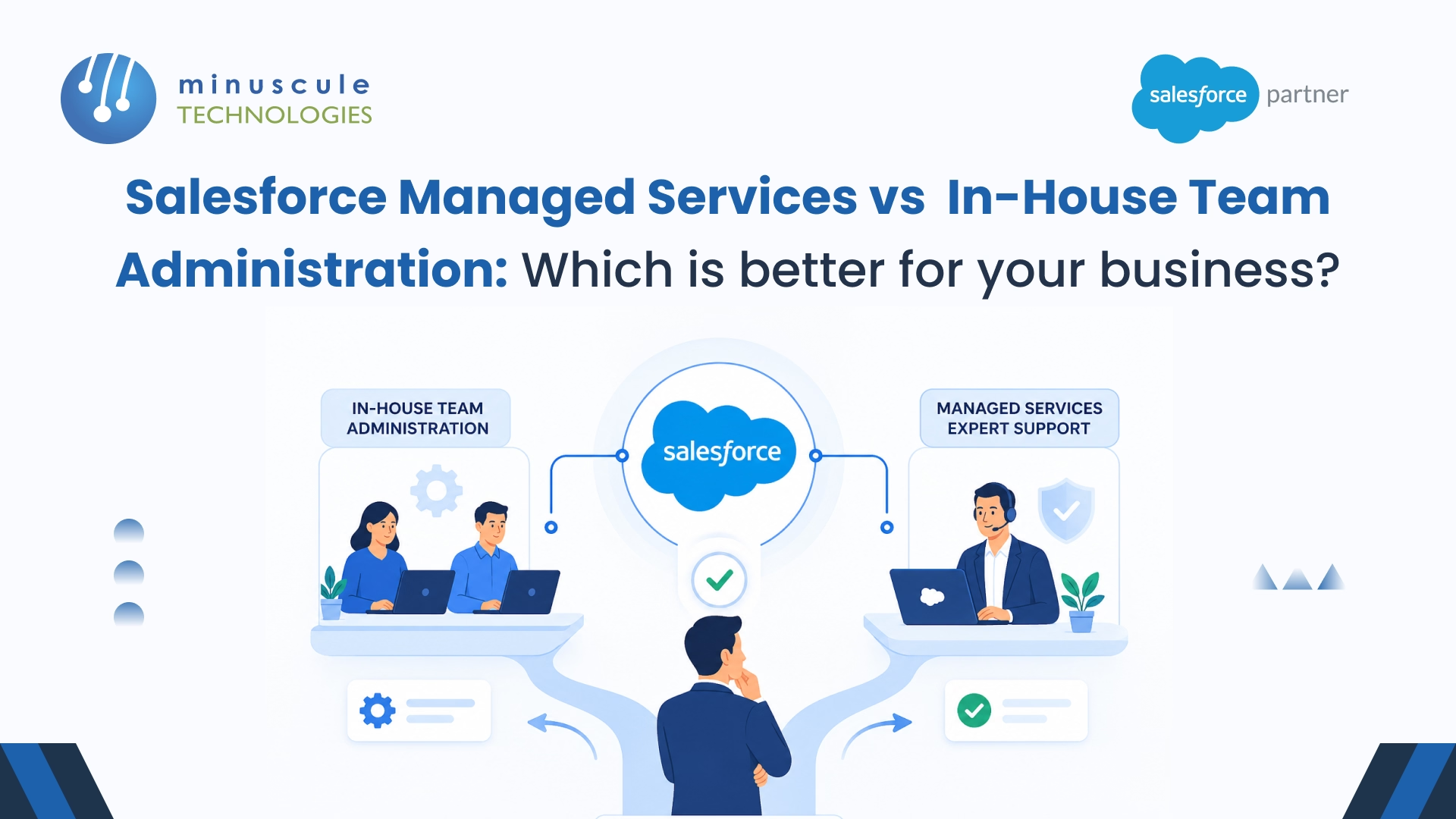
The choice between Salesforce managed services and an in-house team comes down to one question: do you want to own the talent or subscribe to it? Owning means hiring, training, and retaining people - full control, full cost, full risk. Subscribing means a managed team on a monthly contract - broader skills, faster start, less say in who does the work. Neither wins everywhere. This guide shows you which wins for you.
Start with a scene every Salesforce leader knows. The job posting says "Salesforce Administrator, 5+ years." It has been open for eleven weeks. Two candidates ghosted after the offer stage. Meanwhile, the org limps: reports nobody trusts, an integration that hiccups on Mondays, and a release preview nobody has opened.
That gap - between the platform you bought and the people who can run it - is the real subject of this comparison.
Hiring your own admin or team means the person learning your business sits inside your business.
A salesforce managed services provider takes ongoing responsibility for your org - administration, development, and improvement - under a contract.
Comparing an admin's salary to a retainer misses most of the picture. Do the math on totals:
A retainer with salesforce management services typically lands at a fraction of one fully loaded senior salary — and the fee covers the provider's training, tooling, and coverage for absences.
The deeper difference is what economists call risk transfer. In-house, you carry the risk of resignation, sickness, and skill gaps. Subscribed, the provider carries it — that's what the contract is for.
This decision looked different two years ago. Today, boards want Agentforce agents in production - and the skills behind them are scarce: prompt design, agent guardrails, data readiness.
Hiring that skill set full-time is a luxury few mid-market firms can justify. Renting it through a salesforce managed services partner is exactly what the fractional model was built for. For many companies, this single factor now settles the debate.
Go hybrid when both are half-true: keep one internal owner for context and priorities, and let managed support services carry the engineering weight behind them. In practice, this is where most growing companies land.
Still unsure which way you lean? Our companion guide on whether managed services fit your business walks through a fuller self-assessment.
Frame it as insurance plus breadth. The retainer buys protection against resignation risk and access to four skill sets for the price of one. Bring your last hiring timeline as evidence — the empty-seat weeks are the hidden cost leadership forgets.
No - and that's the test. A real provider runs release previews, integration monitoring, and a roadmap conversation each quarter. If all you get is a ticket queue, you bought support, not management.
A structured handover runs two to eight weeks depending on how documented your org is. Ironically, the messier the org, the more the transition itself proves the value: the audit alone often surfaces months of silent problems.
Ask a certified Salesforce managed services partner for three things: their credential listing on the official Salesforce directory, a sample of the documentation they deliver with changes, and a reference running an org about your size. Any hesitation on the third is your answer. A serious salesforce managed service provider volunteers all three.
Own the talent when Salesforce is your differentiator and your data can't leave the building. Subscribe to it when you need breadth, speed, and a budget that doesn't flinch every time someone resigns. Blend the two when you're growing.
Whichever way you lean, decide before the next resignation letter decides for you.
Minuscule Technologies runs Salesforce managed services engagements built on a simple promise: everything we touch gets documented, everything we deliver you own, and nothing locks you in. Our engineering-first team covers admin work through agentic AI - so your org never again depends on one person's memory.
Talk to our team for a candid read on which model fits your org - even if the honest answer is "stay in-house for now."
You've seen what's possible. Now, let's make it happen for your business. Whether you need an end-to-end Salesforce solution, a complex integration, or ongoing managed services, our team is ready to deliver.

Schedule a Free Strategic Call


