We are at Dreamforce 2026, Industry Pavilion at San Francisco


June 15, 2026
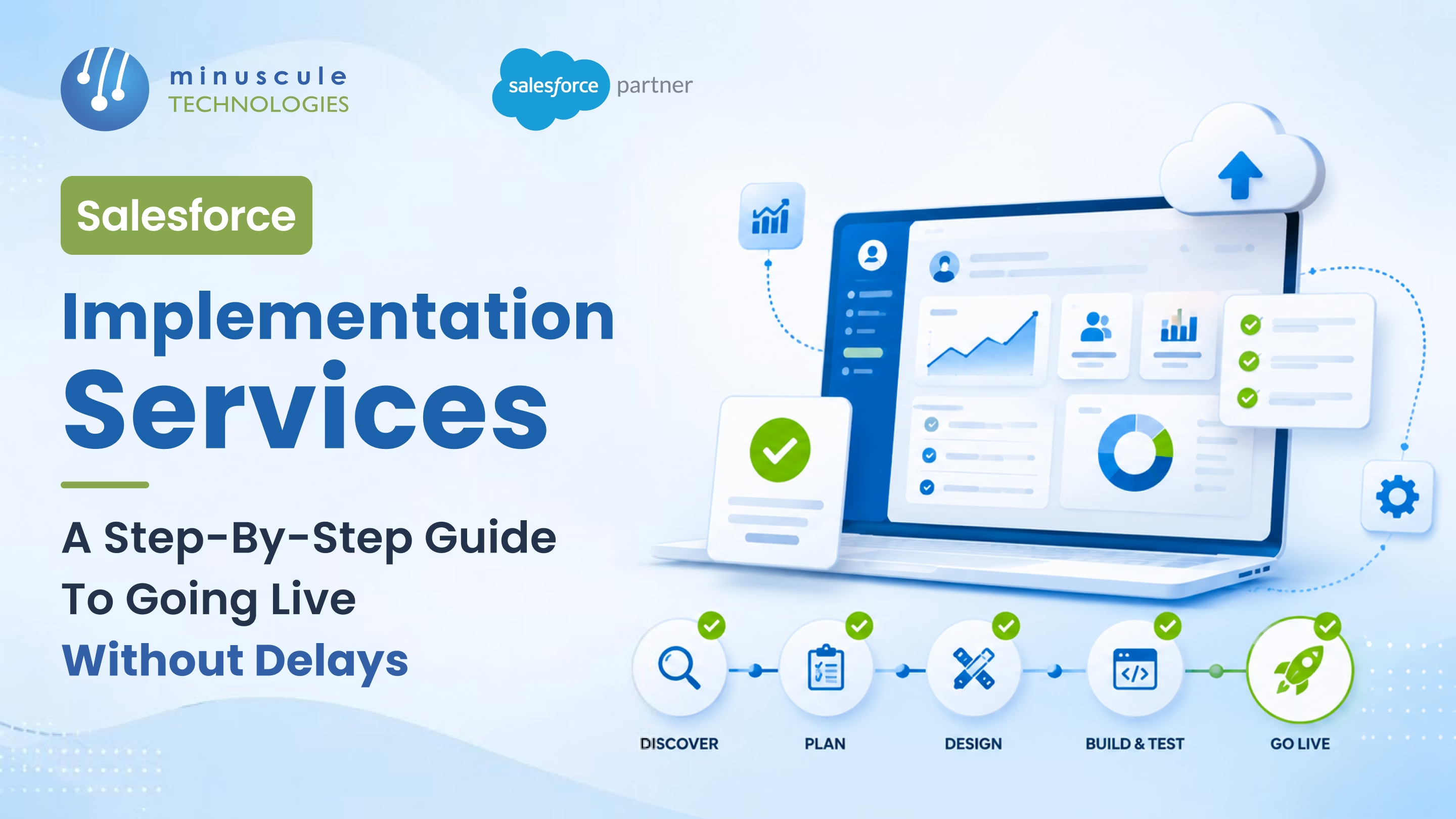
Salesforce Implementation Services take you from a signed contract to a smooth go-live, without the delays that sink most projects. They run through five phases. These are discovery, data migration, setup and integration, UAT and training, and go-live with hypercare. Most delays trace back to a phase that got rushed or skipped. This guide breaks down each phase and shows where the right Salesforce implementation partner keeps you on track.
The manufacturing company had done everything right on paper. They had a signed contract with a Salesforce partner, an executive sponsor, a clear timeline, and a budget. Their go-live date came and went as planned. Salesforce was live.
But six months later, they were in trouble. Three different account naming formats sat in the system, because no one had standardized the data before the move. The ERP integration pulled in pricing that was 18 months out of date. And the sales team had quietly gone back to spreadsheets, because nobody had trained them before launch.
On paper, the rollout was done. In practice, it had barely started.
This outcome is more common than any partner likes to admit. Rollouts fail not because of bad tech. They fail because phases got rushed, skipped, or scoped too small. Here is what every Salesforce implementation really needs, and where delays most often start.
Every rollout begins with discovery. And every delayed one had a discovery phase that was not taken seriously enough.
Discovery is where the partner maps your current processes and finds gaps. It defines what Salesforce will and will not do in version one. And it documents the integrations and data moves you need. For manufacturing and distribution firms, this phase must scope the ERP. You confirm what data from SAP, PeopleSoft, or Oracle must flow in, how it stays current, and who owns the link.
The costliest discovery mistakes are the ones you miss. Take an integration you assumed was simple, like pulling customer data from the ERP. It often needs field mapping, data transforms, and sync logic. That adds weeks. Finding this in Phase 3 hurts far more than finding it in Phase 1.
A strong discovery phase gives you four things: a confirmed scope, a ranked needs list, an integration map, and a data migration check.
Data migration is the most under-planned part of a rollout. Most plans budget time for the move itself, but not the prep. That prep means checking data quality, removing duplicates, lining up formats, mapping old fields to Salesforce, and handling records that do not fit.
For firms moving off a legacy CRM, an ERP, or spreadsheets, the source data is almost always messier than expected. Duplicate accounts. Contacts on the wrong accounts. Opportunities with missing dates. Activities with no owner.
Moving this data without cleaning it first just imports problems into Salesforce. That is exactly what happened to the manufacturer above. Plan data migration in parallel with configuration, not after it. Our data migration practice covers source assessment, field mapping, migration scripts, and post-move validation before go-live.
With discovery done and data mapping underway, the build begins. This is where Salesforce is shaped to fit your process. That means objects, page layouts, record types, automation, approvals, reports, and dashboards.
For most firms, at least one integration runs in parallel. It might link Salesforce to the ERP, a marketing tool, a service system, or a partner portal. Our integration services cover MuleSoft and API-native links to SAP, PeopleSoft, and other systems.
The key rule here is to build for the MVP, not the ideal future. Many rollouts slip because scope grows during the build. New requests pile up, edge cases multiply, and the date moves. A tight Phase 1 and a clear MVP are your best defense.
UAT is where the business confirms that what was built matches what was agreed. It is not a tech QA phase. It is a business sign-off. It needs time from the people who will use Salesforce.
This is where many timelines slip. UAT is booked for two weeks. The team is too busy. Feedback comes late. Fixes need more testing. The date moves.
The fix is not to compress UAT. It is to plan for it. Block time on calendars during discovery. Define test cases in advance. And build buffer for the feedback cycle. Per Salesforce Ben, under-scoping and over-customization are two leading causes of delayed projects - both traceable to Phase 1.
Train after UAT confirms the system is stable, not before. Reps trained on a system that then changes will fall back on workarounds. Train close to go-live, using real scenarios from your business.
Go-live is not the end. It is the start of the most critical period. The first 30 days, called hypercare, are when real issues surface. Edge cases in live data. User habits that differ from the config. Integration errors that only show under load.
Firms that plan for hypercare absorb these issues. They keep support ready. They set a clear escalation path. And they capture change requests. Firms that treat go-live as the finish line find problems with no structure to fix them. Our managed services team provides hypercare, ongoing admin, and release management after launch.
Salesforce implementation services cover discovery, setup and custom work, data migration, integration, UAT, training, and post-launch support. The scope depends on which clouds you deploy and what systems must connect. A good partner documents what is and is not included in each phase before work begins.
A focused Sales Cloud or Service Cloud rollout for a mid-size firm usually runs a few months. It depends on integration complexity, data volume, and custom work. ERP integrations, multi-cloud, and large migrations add time. Rushing discovery or UAT is the top cause of delays.
The main causes are incomplete discovery, scope creep during the build, UAT that starts late or lacks team input, and data quality issues found only at migration. Most delays are preventable with strong Phase 1 planning and a tight MVP scope.
Yes. Data quality is one of the most important and most overlooked inputs. Moving dirty data creates problems that are far harder to fix after go-live. A proper plan includes a source audit, deduplication, field mapping, and post-move validation.
Look for real experience in your industry, a documented method, clear data and integration skills, and a clear post-launch support model. When you compare Salesforce implementation companies, avoid any partner willing to skip discovery to hit a deadline, or who treats go-live as the end.
A rollout is only as good as the planning behind it. The tech is reliable. What varies is the rigor of discovery, the quality of data prep, the depth of integration scoping, and a partner who will not skip phases to hit a date.
Minuscule Technologies has delivered 75+ Salesforce implementations across manufacturing, distribution, automotive, BFSI, and more. Our 160+ certified engineers have worked through every kind of go-live risk - from late ERP surprises to data quality issues, thin UAT, and scope creep. We cover the full lifecycle, from discovery to hypercare, including SAP, PeopleSoft, and Denodo integration where the ERP is the source of truth.
If you're planning a Salesforce implementation and want a realistic, delay-resistant plan for your firm, talk to our team.
You've seen what's possible. Now, let's make it happen for your business. Whether you need an end-to-end Salesforce solution, a complex integration, or ongoing managed services, our team is ready to deliver.

Schedule a Free Strategic Call


