
November 19, 2025
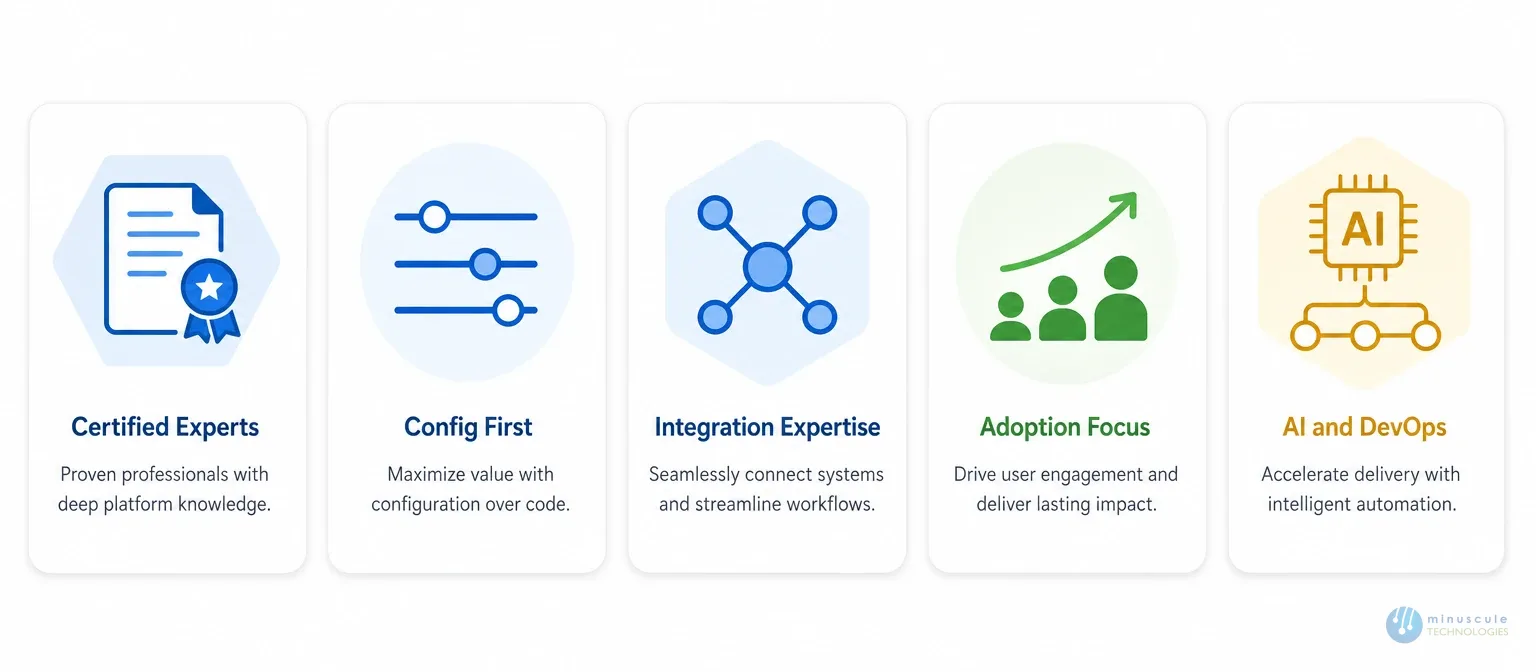
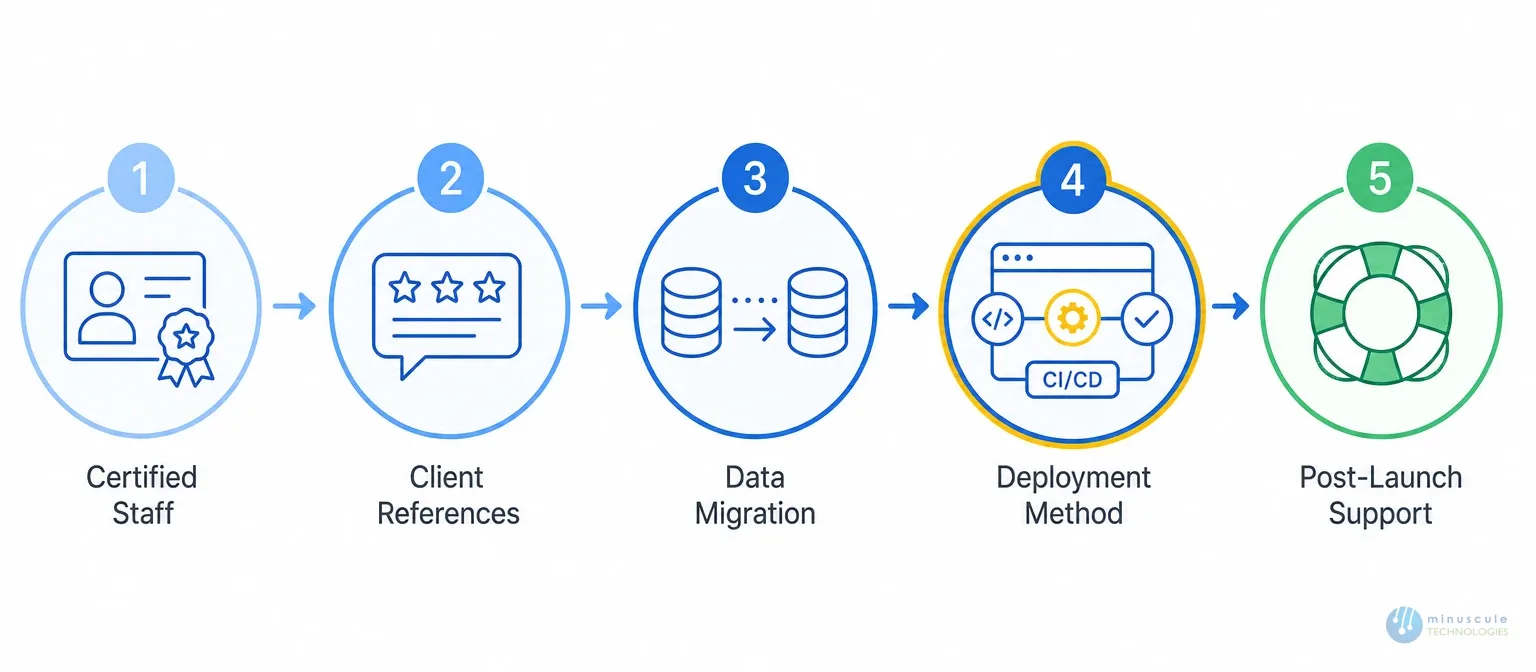
The ideal Salesforce Sales Cloud consulting partner has five marks: certified Sales Cloud experts on staff, proven integration work, a clear discovery process, honest pricing, and support that lasts past go-live. Get those five right, and your CRM will drive revenue instead of gathering dust. This guide covers what a Sales Cloud partner does, what one costs, the questions to ask, and the red flags that should make you walk away.
This guide walks you through each step. You'll see what a Sales Cloud partner does, what one costs, the questions to ask, and the red flags that should make you walk away.
Here's the stake. The gap between buying Salesforce and using it well is where most projects fail. You've secured the budget. Leadership expects results. Then reality hits: hundreds of settings, integration needs, and data migration risks. The right partner is the difference between a system that sits idle and one that grows revenue.
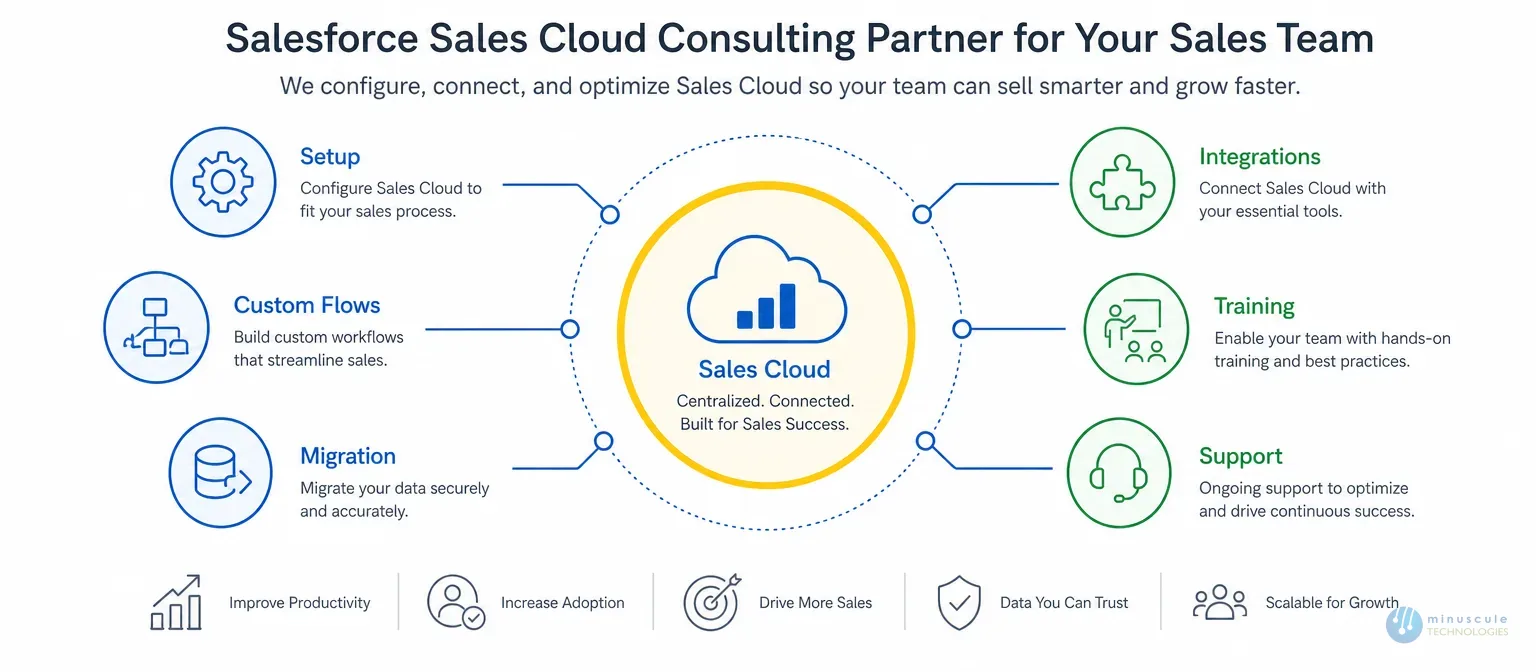
A Salesforce Sales Cloud consulting partner designs, builds, connects, and tunes Sales Cloud for your sales team. The work covers setup, custom flows, data migration, links to your ERP and marketing tools, user training, and ongoing support.
Good partners staff Salesforce Certified Sales Cloud Consultants. That certification means they can design solutions that fit real business needs and scale with growth. You can verify any firm on the official Salesforce partner directory.
Sales Cloud looks simple on the surface. It seems like basic contact management. Under the hood, it's a dense web of Opportunities, CPQ (Configure, Price, Quote), Forecasting, and Territory Management.
A "DIY" build usually fails in three ways:
A true specialist turns vague goals like "grow revenue" into real designs. Think about automated territory rules or AI-driven lead scoring.
Many teams try to build Sales Cloud in-house or with mixed-skill staff. The results follow a pattern:
These are not edge cases. They're the most common reasons Salesforce spends disappointments.
Most firms face this choice: hire an in-house Salesforce specialist or bring in a consulting firm.
| Factor | In-House Hire | Consulting Partner |
|---|---|---|
| Skill breadth | One person’s skill set | Architects, developers, admins, and project managers |
| Speed to start | 2–4 months to recruit | Days to weeks |
| Cost shape | Salary, training, and certification upkeep | Project- or retainer-based |
| Knowledge risk | Knowledge walks out if the employee leaves | Team continuity across releases |
| Best when | Daily, long-term platform care is required | Fast builds, scarce skills, and scalable delivery are needed |
The in-house path. A dedicated hire offers long-term focus and deep business context. They're on hand for quick fixes. But skilled people find it hard to find and costs more than salary. If they quit in two years, the knowledge walks out the door.
The partner paths. A Salesforce consulting partner gives you a full bench and proven playbooks, with coverage through every Salesforce release. This path fits teams that need fast change, part-time support, or lack the staff to vet in an in-house hire.
Many firms land on a hybrid: a partner for the build, one internal admin for daily care.
Rates vary by seniority and region. Typical 2026 ranges:
| Engagement | Typical Range |
|---|---|
| Junior consultant | $50–$150/hr |
| Mid-level consultant | $150–$250/hr |
| Senior / top-tier firm | $275–$500/hr |
| Small implementation | $15,000–$40,000 |
| Mid-size build + integrations | $40,000–$100,000 |
Offshore and hybrid teams, such as firms in India, often cut these rates by 40–60%.
One caution: the lowest bid often costs the most. Cheap, rushed builds create the tech debt you'll pay someone else to fix.
A clean setup is not the same as a changed business. The difference is strategic engineering.
A Sales Cloud consultant is a certified expert who designs, builds, and tunes to Salesforce's sales platform. They map your sales process into the CRM, connect it to other systems, and train your team to use it well.
Hourly rates run $50–$150 for junior consultants, $150–$250 for mid-level, and $275–$500 for senior firms. A small Sales Cloud build costs $15,000–$40,000. Offshore or hybrid teams can cut costs by 40–60%.
A basic setup takes 4–8 weeks. A mid-size build with integrations takes 3–6 months. Phased rollouts deliver quick wins first, so you see value early.
Hire in-house when you need daily, long-term platform care and can attract strong talent. Use a partner when you need speed, breadth, or scarce skills. Many firms use both: a partner builds; an internal admin maintains.
Choosing a Salesforce Sales Cloud consulting partner is a decision that compounds. The wrong choice wastes budget frustrates your team and burns your credibility with leadership. The right choice speeds up growth and builds an edge that lasts.
So, look past badges and tier logos. Judge partners on their thinking, their team, their delivery method, and their commitment after go-live. Pick one who engineers solutions instead of copying templates. Pick one who thinks about your business five years out.
Minuscule Technologies is a Salesforce Engineering Partner. We help teams decide whether an in-house hire, a partner, or a hybrid model fits best - then we deliver the build with certified Sales Cloud experts, DevOps discipline, and clean data at the core.
Ready to test your Sales Cloud strategy? Contact us for a free consultation. Bring your challenges. We'll map the right path forward.
You've seen what's possible. Now, let's make it happen for your business. Whether you need an end-to-end Salesforce solution, a complex integration, or ongoing managed services, our team is ready to deliver.

Schedule a Free Strategic Call


Plot No. 4, Sridevi Amman Street, Perumal Nagar Extension, Old Pallavaram, Chennai, Tamil Nadu 600117, India.
