
July 5, 2026
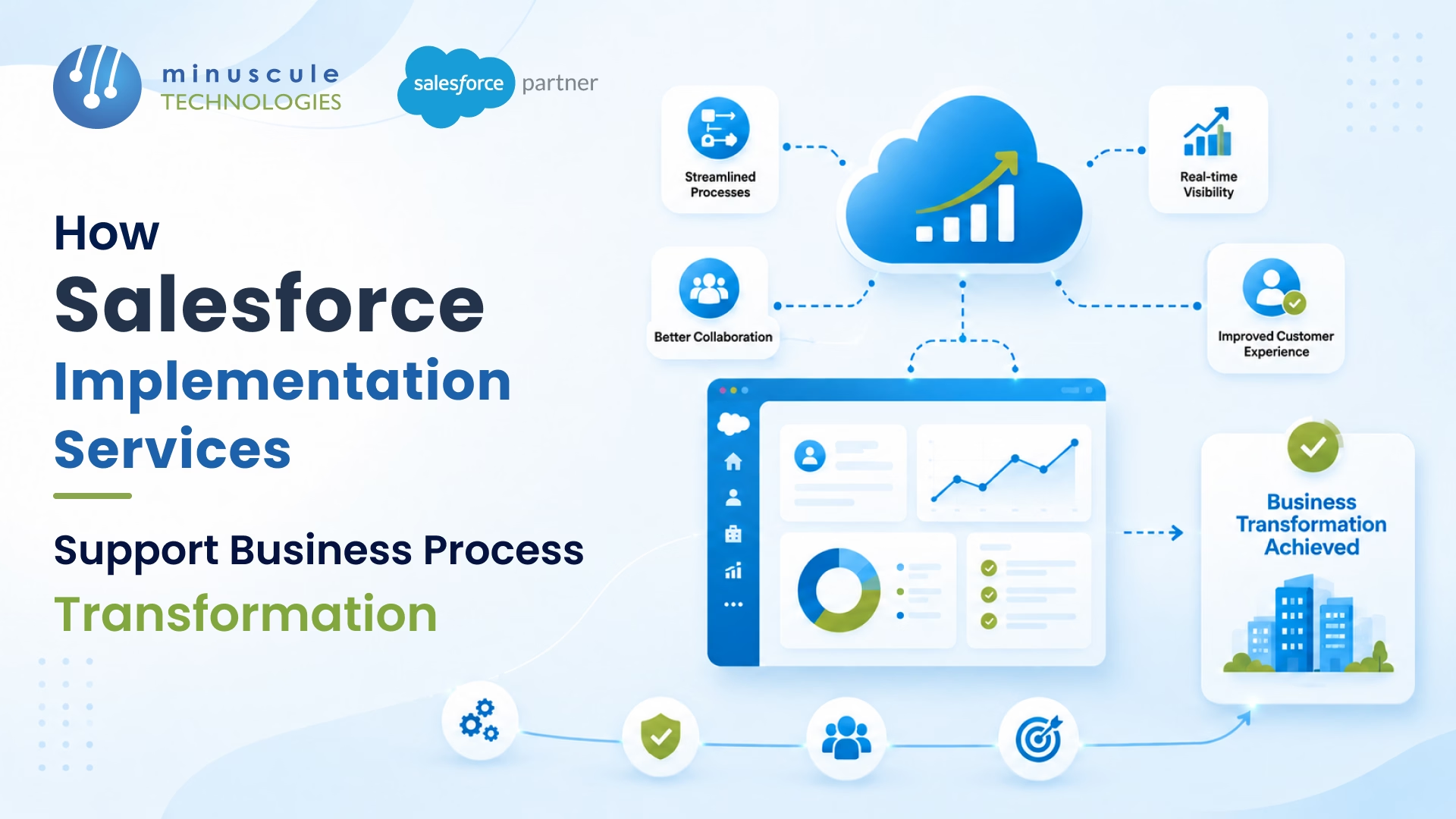
Salesforce implementation services support business process transformation by turning scattered, manual workflows into one connected, automated system built around how your business should run. Rather than copying old processes into new software, implementation experts map your operations, redesign them around clean data and automation, and roll out the change so people actually adopt it. The result is a Salesforce CRM implementation that shortens sales cycles, removes handoffs, and gives leaders a single view of the business.
To see why that matters, picture this. Two years and a seven-figure budget into their Salesforce rollout, one operations lead finally said the quiet part out loud: her sales team still ran the "real" pipeline in a spreadsheet. The system was live, but nothing had actually changed — the same manual approvals, the same double data entry, the same Monday report nobody trusted. That's how most CRM investments quietly die: not in a dramatic crash, but in a slow drift back to old habits while the license bills keep arriving.
What real transformation delivers over a basic setup:
Transformation is where implementation stops being an IT project and becomes a business one. That's why the right Salesforce implementation services start with process, not features.
Business process transformation with Salesforce means redesigning how work flows across your teams, then rebuilding it on the platform - not just moving existing steps online. It's the difference between automating a broken process and fixing it first.
A basic rollout replicates what you already do. Transformation asks a harder question: what should this process look like if we designed it today? Salesforce implementation experts use that question to cut steps, remove duplicate data entry, and connect teams that used to work in silos.
Done well, it changes outcomes you can measure: faster lead-to-cash, quicker case resolution, and cleaner reporting leaders can trust.
Professional Salesforce implementation services turn transformation from a slogan into a delivery plan. Here's how a strong Salesforce implementation partner does it, step by step.
Transformation starts by understanding the current process, warts and all. Implementation teams map every step, owner, and handoff, then flag the bottlenecks and duplicate work.
That map becomes the blueprint for the future-state design. Skipping it is how teams end up automating inefficiency.
Once the process is mapped, the real work is redesigning it. Salesforce implementation consultants replace manual approvals, spreadsheets, and email chains with automated flows, guided paths, and validation rules.
Each removed step is a small win that compounds across thousands of transactions. Careful DevOps and automation practices keep those changes safe to ship, using the automation tools covered in Salesforce's developer resources.
Transformation fails on messy data. A capable Salesforce implementation company consolidates records from legacy tools, removes duplicates, and sets governance rules so every team sees the same customer.
That single source of truth is what makes automation and reporting reliable. Salesforce's admin best practices put data quality at the center of any healthy org.
Real transformation connects Salesforce to the tools around it. Salesforce implementation companies link ERP, finance, marketing, and support systems so data flows without re-keying.
When systems talk to each other, whole categories of manual work disappear. Structured integration services make those connections dependable.
In 2026, transformation increasingly means AI-ready workflows. With clean, unified data in place, teams can layer in predictive insights and agentic automation that handle routine work.
The order matters: fix the process and the data first, then add intelligence. Experienced partners build toward Agentforce and AI capabilities instead of bolting them on, and Salesforce Ben tracks where the platform is heading.
A transformed process only counts if people use it. Strong implementation services pair the technical build with training, clear documentation, and stakeholder buy-in from day one.
Adoption is treated as the real measure of success. A redesigned workflow nobody follows is just expensive shelfware.
Transformation touches the workflows that span teams and cost the most time. Common targets and their outcomes:
Live dashboards from one data source, not reconciled spreadsheets
Not every project is transformation, and that's fine - but it's worth knowing the difference. A basic implementation gets you live on Salesforce. Transformation changes how the business runs.
The best Salesforce implementation companies are honest about which one you need. Sometimes a clean setup is enough; often the bigger prize is fixing the process underneath.
A few patterns signal it's time to redesign rather than reconfigure:
If two or more sound familiar, a transformation-focused engagement will return far more than a basic rebuild.
Salesforce implementation services are the end-to-end work of planning, configuring, customizing, migrating data, integrating, testing, and deploying Salesforce so it fits how your business runs. Delivered by a certified Salesforce implementation partner, they also cover process redesign, training, and post-go-live support.
They map your current processes, redesign them around automation and clean data, integrate the surrounding systems, and drive adoption through change management. Instead of digitizing old workflows, they rebuild them for better outcomes - faster cycles, fewer manual steps, and reliable reporting.
Digitization moves an existing process online as-is. Transformation redesigns the process first, then builds it on Salesforce. Digitization makes a slow process faster to click through; transformation removes the slow parts entirely.
For true transformation, yes. Salesforce implementation consultants bring process expertise, architecture skills, and change management that most internal teams don't have in-house — which is what turns a technical rollout into a business result.
It depends on scope and how many processes you're redesigning. A single process can transform in weeks, while an enterprise-wide effort runs several months. A phased approach delivers value in stages instead of one high-risk launch.
Remember that operations lead with the shadow spreadsheet? Her story doesn't have to be yours. Salesforce is only ever as good as the processes you build on it - you can keep patching a workflow that fights your team every day, or redesign it once and watch the friction fall away.
That's the work Minuscule Technologies does best. As an engineering-led Salesforce implementation partner, we combine consulting, process redesign, integration, DevOps automation, and managed support to turn your busiest, messiest process into your most reliable one.
Don't let another quarter slip by running your business on workarounds. Tell Minuscule Technologies the process that slows you down most and book a free consultation - we'll map the future state and the exact path to get there, whether or not we're the right fit.
You've seen what's possible. Now, let's make it happen for your business. Whether you need an end-to-end Salesforce solution, a complex integration, or ongoing managed services, our team is ready to deliver.

Schedule a Free Strategic Call


Plot No. 4, Sridevi Amman Street, Perumal Nagar Extension, Old Pallavaram, Chennai, Tamil Nadu 600117, India.
