We are at Dreamforce 2026, Industry Pavilion at San Francisco


June 5, 2026
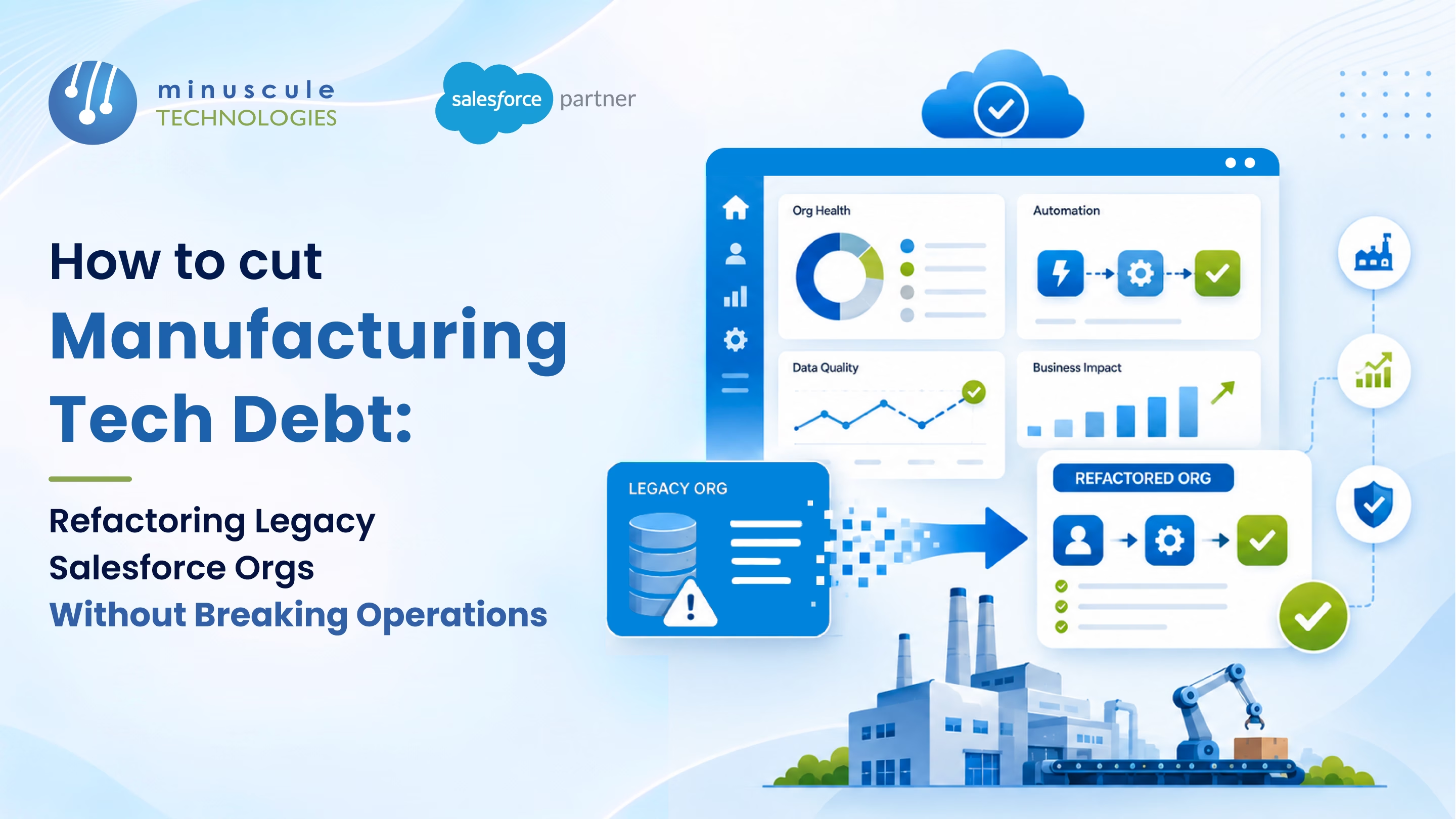
Tuesday morning. A heavy-equipment manufacturer pushes a routine release. Two hours later, dealer quote generation breaks across two hundred and forty dealers worldwide. CPQ Flows fail silently when fault monitoring is not configured. Sales reps revert to spreadsheets. Three days of quarterly close slip into the next quarter.
The post-mortem traces it to a single Apex class written by a contractor long gone - chained to four downstream automations, with no tests and no documentation.
This is tech debt in a manufacturing Salesforce org. Hundreds of Apex classes nobody understands. Overlapping Flows. Layered customizations from five partners across a decade. Every deployment is a coin toss. Eventually the org becomes too risky to change - and the business is too slow to compete.
Salesforce re-engineering cuts tech debt out of a legacy org without breaking the operations running on top of it.
Here's how to refactor a manufacturing org while dealers keep selling and the quarterly close lands on time.
Most CIOs underestimate it. We've audited orgs where leadership thought debt was "manageable" and found four thousand Apex classes, eight hundred Flows, and three teams running parallel automations on the same Opportunity object without knowing about each other.
Manufacturing orgs accumulate debt faster than any other industry. Five forces push them there:
Each force is manageable. Combined, they produce an org nobody owns end-to-end.
"The Apex class that fired three times today and saved someone's quarter? Nobody can tell you who wrote it. That's the actual risk."
Not all debt is equal. Some you can live with for years. Some take the dealer channel down on a Wednesday afternoon.
Five categories cause the most production outages:
The one that costs you first? Usually overlapping automations. They produce silent failures that surface during a quarter-close rush - exactly when you can't afford them.
Here's the part most refactor projects get wrong. They start by writing new code.
What works:
"If you can't roll back a refactor in under five minutes, you're not refactoring - you're gambling."
We've shipped this sequence across heavy equipment, automotive, and industrial manufacturers. The order matters more than speed.
Done in this order; a manufacturer can refactor a multi-year legacy org without a single dealer downtime event. Done out of order; the refactor itself becomes the next outage.
This is where 2026 gets interesting. The work that used to take an architect two weeks now takes Agentforce a weekend.
Four AI tools we use on every manufacturing refactor:
The Salesforce Ben blog has good comparisons of these tools. The right combination is usually Optimizer plus one third-party metadata tool plus Agentforce-assisted code review. AI doesn't replace the architect - it makes one architect as productive as three.
We've watched the same five mistakes derail otherwise-solid programs:
The Apex Hours community has post-mortems from manufacturers that fixed each of these the hard way.
Run a Salesforce Optimizer report, layer in a third-party metadata scan, and have an architect review the highest-risk areas (Apex with low coverage, overlapping automations, integration code older than two years). Most manufacturing orgs have more debt than they think. The Salesforce admin documentation has reference checklists for the audit.
Yes - but only with discipline. We run refactors and feature work in parallel streams with strict change-management rules. Refactor changes ship in their own releases. Feature changes ship in separate releases. Regression tests run on every deployment.
Yes, for code review and documentation. Agentforce reads legacy Apex, generates documentation, suggests refactoring patterns, and flags dependencies. It doesn't replace human architects - it gets them past the slow part of refactor work in days instead of weeks.
A focused refactor on two or three core processes runs four to six months. Full org refactors across CPQ, dealer management, lead routing, and integration run nine to twelve months. Manufacturers sequencing by process beat manufacturers trying big-bang every time.
The manufacturer in the opening scene isn't unique. Across heavy equipment, automotive, industrial, and consumer manufacturing, the orgs shipping features fastest aren't on the newest Salesforce edition - they paid tech debt before it paid them back. Re-engineering a manufacturing Salesforce org is one of the highest-ROI projects a CIO can run in 2026.
Minuscule Technologies is a Trusted Salesforce Engineering Partner that is an engineer's tech-debt refactor for manufacturers. Since 2014 we've delivered re-engineering across heavy equipment, automotive, industrial, and consumer manufacturing - dealer-quote refactor, CPQ rule consolidation, MuleSoft integration replatforming, and Agentforce-assisted code review across the US, India, and Malaysia.
When we engage, you get an audit of your org, debt scored by business impact, and a realistic plan that refactors what hurts most without breaking what's running. No deck-only pitch. Just working refactors from people who've shipped this into production.
Your next dealer outage is being written right now - in code nobody on your team understands. Book your free Salesforce engineering audit and let's find it before your dealers do.
You've seen what's possible. Now, let's make it happen for your business. Whether you need an end-to-end Salesforce solution, a complex integration, or ongoing managed services, our team is ready to deliver.

Schedule a Free Strategic Call


