
January 31, 2023

Salesforce CPQ helps both B2B and B2C businesses turn a slow, error-prone quoting process into a fast, accurate one that closes more deals. It configures the right products, applies your pricing and discount rules automatically, and generates clean quotes in minutes. For B2B teams, that means handling complex pricing with confidence and protecting margins; for B2C teams, it means quick, personalized offers that keep buyers moving. Either way, your sales team spends less time on paperwork and more time selling.
Quoting is where many sales cycles stall. Reps juggle spreadsheets, chase approvals, and risk pricing mistakes that cost deals or margin. Salesforce CPQ, short for Configure, Price, Quote, removes that friction by building quoting rules right into your sales process. A well-planned Salesforce CPQ implementation shapes those rules around how your business actually prices and sells, so the tool fits your team rather than the other way around.
This guide walks through what Salesforce CPQ does, then the specific benefits it brings to B2B and B2C businesses, with a side-by-side look at how the two differ. You will see the core features, the gains for each model, and how to decide where CPQ fits your sales process. By the end, you will know whether it is the right move for your team.
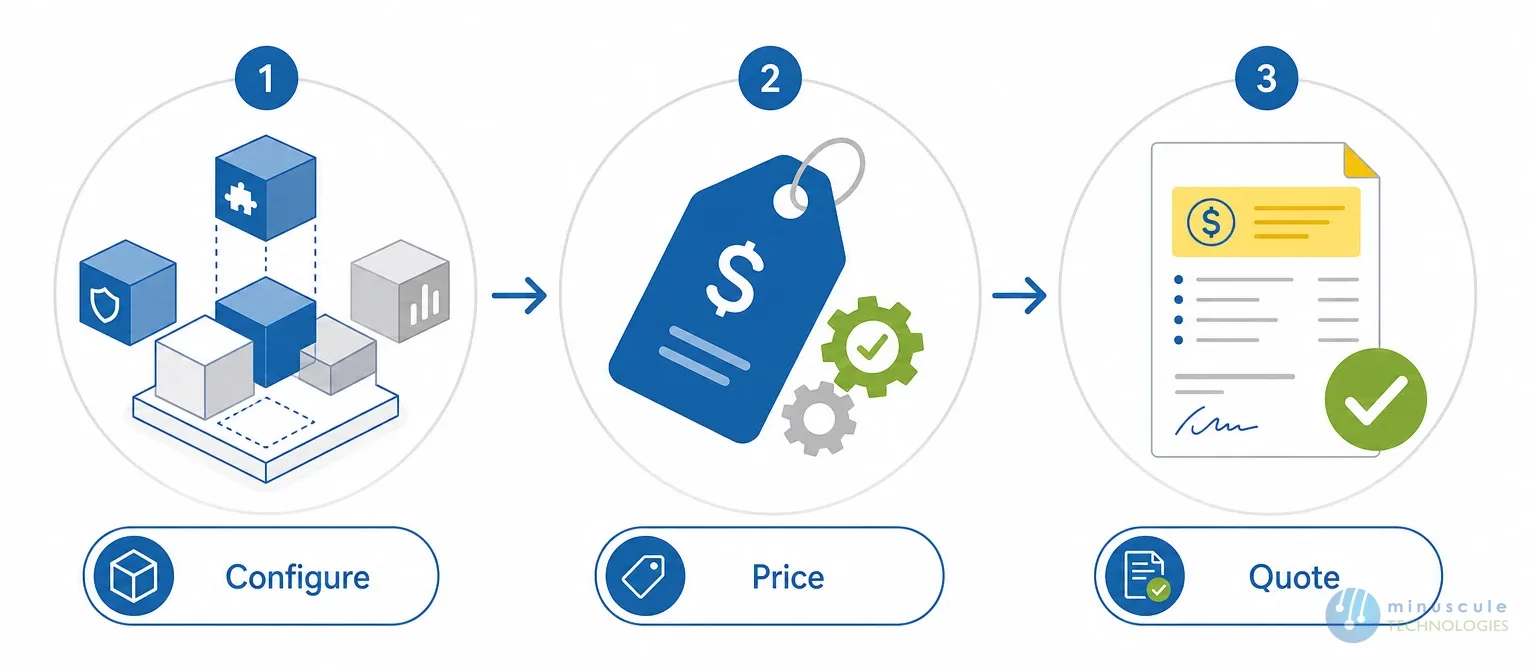
Salesforce CPQ is software that automates the way you configure products, set prices, and create quotes, all inside Salesforce. Instead of building quotes by hand, your team answers a few guided questions, and CPQ assembles the right products, applies the correct pricing, and produces a professional quote. It is now part of Salesforce Revenue Cloud, the broader suite for quoting, billing, and revenue, so it connects cleanly to the rest of the sales and finance process.
The core features work together to cover the whole quoting journey. The table below shows what each one does so you can see how CPQ fits your sales process.
| Salesforce CPQ feature | What it does |
|---|---|
| Product configuration | Builds the right product, bundle, or plan by rule |
| Pricing and discounts | Applies your pricing and discount rules automatically |
| Quote generation | Creates clean, branded quotes in a few clicks |
| Approval workflows | Routes quotes for sign-off before they go out |
| Contract and renewals | Tracks terms, subscriptions, and renewal dates |
| Reports and insights | Shows quote, discount, and pipeline trends |
Because all of this lives in Salesforce, quotes draw on the same customer and product data your team already uses. Our overview of how Salesforce CPQ and Revenue Cloud shape the quoting customer experience shows how these pieces come together in practice. You can also explore the product details on the Salesforce site.
B2B sales often involve complex pricing, long cycles, and several people signing off on a deal. Salesforce CPQ is built for exactly that kind of complexity, and it removes much of the manual work that slows B2B teams down. The table below sums up the main gains.
| B2B benefit | What your team gains |
|---|---|
| Handles complex pricing | Rules manage tiers, bundles, and volume deals |
| Faster, accurate quotes | Less manual work and fewer pricing errors |
| Protected margins | Guardrails on discounts keep deals profitable |
| Smoother approvals | Quotes route to the right people automatically |
| Clear pipeline view | Leaders see quote and deal health in real time |
| Team alignment | Sales, finance, and legal work from one quote |
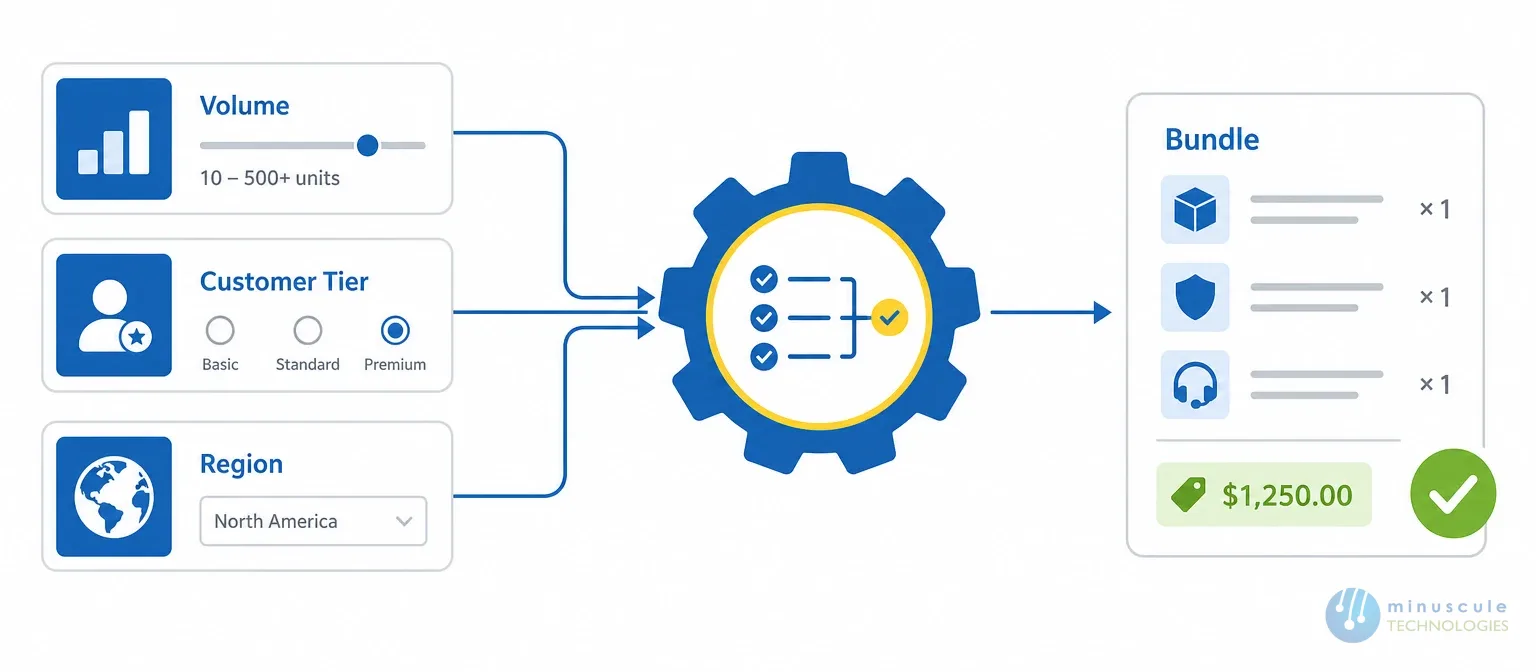
B2B deals rarely use a single list price. You may have volume discounts, customer-specific rates, bundles, and multi-year contracts, all of which are hard to manage by hand. Salesforce CPQ handles this with pricing rules that account for factors like quantity, customer tier, and region, and it configures products into valid bundles automatically. Reps get the right price every time without digging through spreadsheets or asking for help.
That accuracy pays off across the whole cycle. Because the rules are built once and applied everywhere, a new rep can quote a complex deal correctly on day one, and pricing stays consistent no matter who builds the quote. This is one of the clearest reasons B2B teams adopt CPQ, and our guide on best practices for Salesforce CPQ implementation covers how to set these rules up well. Free learning paths on Trailhead are also a good way for new reps to get comfortable with the tool.
Speed matters in B2B, where a slow quote can lose a deal to a quicker competitor. CPQ generates accurate quotes in minutes by calculating pricing and discounts automatically, so reps respond while interest is high. Built-in guardrails keep discounts within approved limits, which protects your margins, and any quote that needs a sign-off routes to the right person on its own. Reps never have to guess whether a discount is allowed, and managers no longer chase approvals by email.
These approval and margin controls also reduce risk. Quotes can include validation rules, required fields, and expiry dates, and they can be locked once approved. That means fewer errors, less rework, and quotes you can trust, which keeps finance and legal teams comfortable with the whole process. To take it further, our guide on how Salesforce CPQ and DocuSign automate the quote-to-signature workflow shows how quoting connects straight through to a signed deal.
Salesforce CPQ gives leaders a real-time view of quotes, discounts, and deals in progress, so bottlenecks are easy to spot and fix. Because sales, finance, and legal all work from the same live quote, everyone sees the latest numbers, and no one wastes time reconciling versions. That shared view keeps deals moving and helps the whole team pull in the same direction.
Over time, this visibility also sharpens your pricing strategy. Reports on quotes, discounts, and win rates show which offers land and which give away too much margin, so leaders can adjust the rules with real evidence rather than guesswork. For a complex B2B business, that steady feedback loop is often worth as much as the day-to-day time savings.
B2C sales look different, with higher volumes, shorter cycles, and buyers who expect fast, personal service. Salesforce CPQ supports that pace by automating quotes and pricing at scale, so B2C teams can respond quickly without losing the personal touch. It consistently ranks among the leading quoting tools in software reviews on sites like G2, and the table below highlights the main benefits.
| B2C benefit | What your team gains |
|---|---|
| Personalized offers | Products and prices match each buyer |
| Quick, consistent quotes | Fast responses keep buyers engaged |
| Self-service options | Customers configure and order on their own |
| Easy scaling | Handles high volumes as you grow |
| More upsells | Smart bundles lift average order value |
| Better experience | A smooth buying journey builds loyalty |
B2C buyers respond to offers that feel made for them, and CPQ makes that easy at scale. It can tailor products and pricing to each customer using the data you already hold, then generate a clear quote in seconds. That combination of speed and personalization keeps buyers engaged at the moment they are ready to act, which lifts conversion.
Personalization also opens the door to more revenue per sale. CPQ can suggest the right add-ons and bundles for each buyer, so upsells and cross-sells feel helpful rather than pushy. Over many transactions, those smart suggestions add up to a meaningful lift in average order value. For more ideas, read how to increase sales with Salesforce CPQ.
Many B2C customers prefer to help themselves, and CPQ supports that with self-service options where buyers configure products, view quotes, and place orders on their own. That lowers your support load and gives customers a smooth, around-the-clock experience. As your volumes grow, CPQ scales with you, handling many customers and orders without extra manual effort.
The end result is a better buying journey. Fast, accurate quotes and an easy path to purchase build trust and keep customers coming back. In a crowded B2C market, that experience is often what sets a brand apart, and CPQ helps you deliver it consistently.
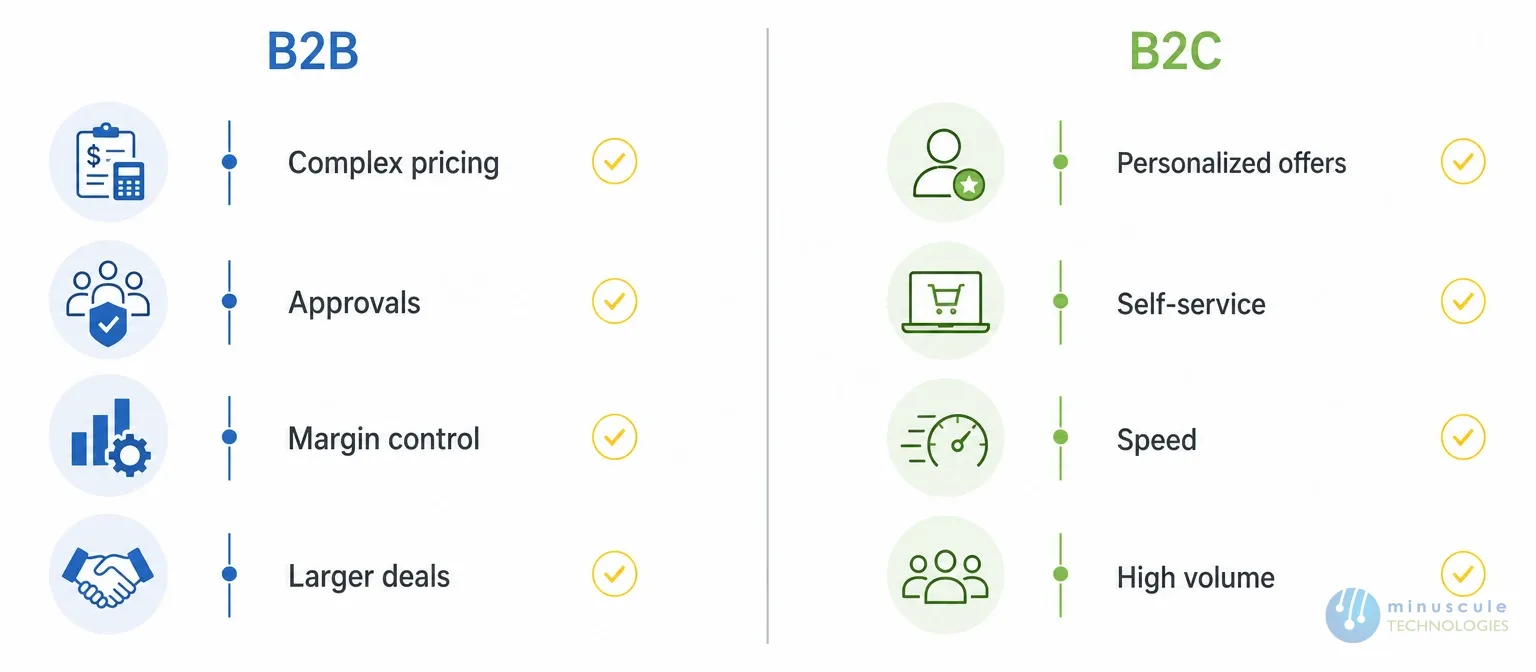
While the core features are the same, B2B and B2C businesses tend to lean on different strengths of Salesforce CPQ. Seeing them side by side makes it easier to picture where the tool fits your model. If you are moving from an older setup, our 4-step migration strategy for legacy CPQ to Revenue Cloud lays out a clear path to the current platform. The table below lays out the main differences between the two models.
| Aspect | B2B focus | B2C focus |
|---|---|---|
| Deal size | Larger, fewer deals | Smaller, higher volume |
| Pricing | Complex tiers and contracts | Personalized, fast-moving offers |
| Buyer journey | Longer, multi-stakeholder | Short, often self-service |
| Top CPQ win | Accuracy and margin control | Speed and personalization |
| Key feature | Approvals and bundles | Self-service and upsells |
Many businesses actually operate in both worlds, selling to companies and consumers at once, and CPQ handles that mix on one platform. A single setup can apply strict approval rules to large B2B deals while offering fast, self-service quotes to consumers, all from the same product and pricing data. Community resources such as Apex Hours are a useful place to see how other teams configure this.
The key is to set up the rules and features that match how you sell, which is where expert guidance makes the difference. A setup tuned to your pricing, products, and approval process will pay off far more than a generic install, whether you sell to businesses, consumers, or both.
Getting real value from Salesforce CPQ depends on setting it up around the way your business prices and sells. Our Salesforce consulting team has helped businesses across many industries turn messy, manual quoting into a fast, accurate process, for B2B, B2C, and companies that do both. We start by learning your pricing, products, and approval rules, then build a CPQ setup that fits them exactly.
What sets our work apart is a focus on outcomes you can measure, like faster quote turnaround, fewer pricing errors, and healthier margins. We handle configuration, pricing rules, approvals, and integration with the rest of your Salesforce org, and we stay on to support and refine the setup as your business grows. We also train your team and document how the rules work, so your own people can run and adjust the system with confidence. That means CPQ keeps delivering long after go-live, not just on launch day.
If you want quoting that helps your team sell faster and smarter, we are ready to help. Reach out through our contact page, and our certified team will walk you through a clear, practical plan built around your products and your buyers.
Salesforce CPQ is used to configure products, set prices, and generate quotes automatically inside Salesforce. It replaces manual, spreadsheet-based quoting with fast, accurate quotes, helping sales teams respond quickly and close more deals.
Yes. B2B teams use it to handle complex pricing, approvals, and margins, while B2C teams use it for personalized offers, self-service, and speed at scale. Many businesses that sell to both run it all on one platform.
Salesforce CPQ is now part of Salesforce Revenue Cloud, the wider suite for quoting, billing, and revenue. CPQ covers the configure, price, and quote steps, and Revenue Cloud connects those to billing and the rest of the revenue process.
It depends on how complex your pricing and products are. A simple setup can go live quickly, while businesses with many rules and integrations take longer. A clear plan and clean product data are the biggest factors in a smooth rollout.
Salesforce CPQ turns quoting from a slow, risky task into a fast, reliable part of your sales process, and it does so for both B2B and B2C businesses. B2B teams gain control over complex pricing, approvals, and margins, while B2C teams gain speed, personalization, and self-service at scale. In both cases, the result is a smoother buying experience and more deals closed.
The businesses that get the most from CPQ are the ones that set it up around how they truly sell. Minuscule Technologies helps you do exactly that, with certified expertise, a setup built for your pricing and products, and support that grows with you. That means less manual work, fewer errors, and quoting that helps your team win.
Ready to make quoting a strength for your business? Get in touch with Minuscule Technologies today, and let us build a Salesforce CPQ setup that fits how you sell and delivers results you can measure.
You've seen what's possible. Now, let's make it happen for your business. Whether you need an end-to-end Salesforce solution, a complex integration, or ongoing managed services, our team is ready to deliver.

Schedule a Free Strategic Call


Plot No. 4, Sridevi Amman Street, Perumal Nagar Extension, Old Pallavaram, Chennai, Tamil Nadu 600117, India.
