
August 12, 2026
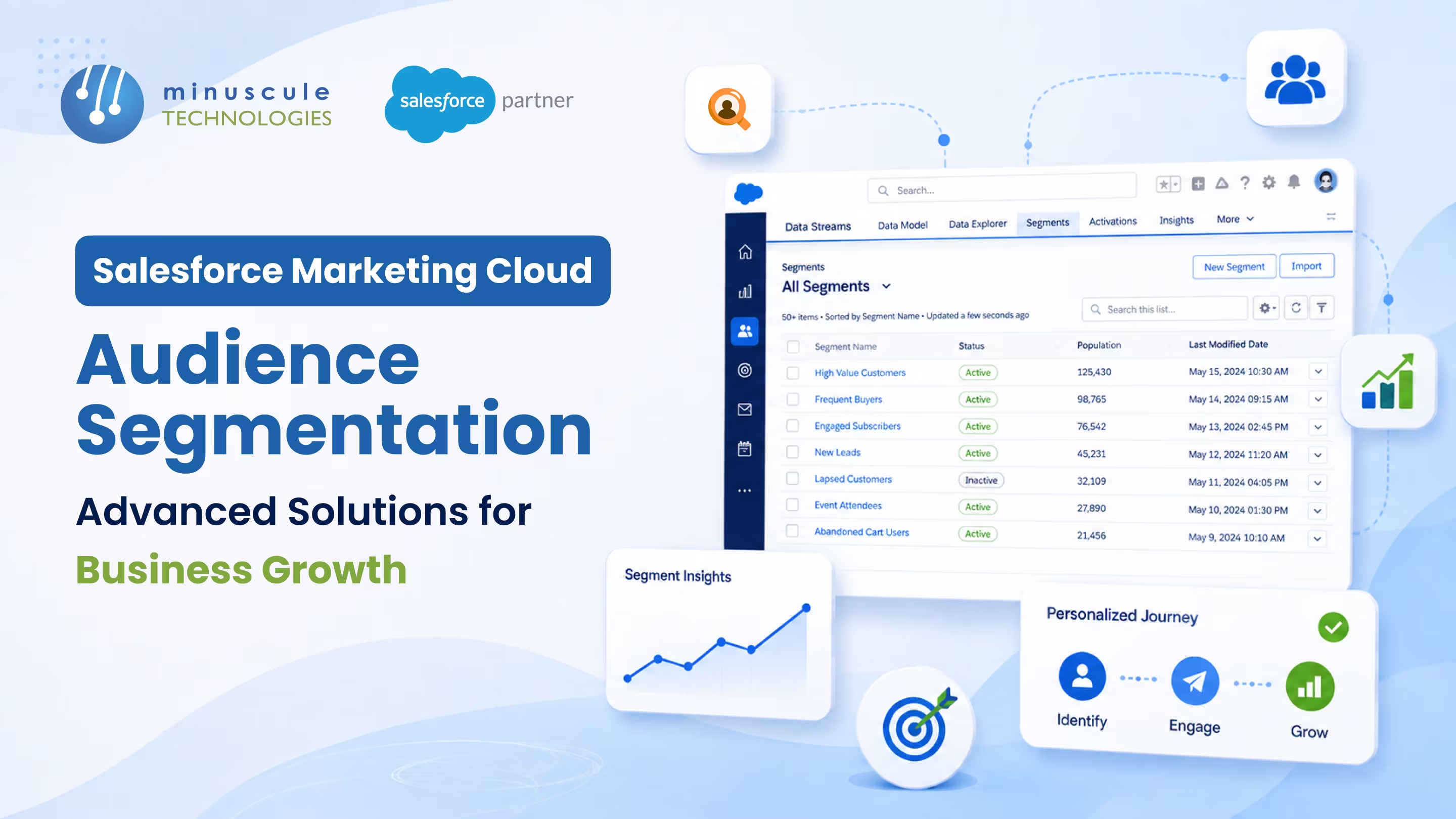
Advanced audience segmentation in Salesforce Marketing Cloud is the practice of dividing your contacts into precise, intent-based groups, then using the platform's data tools, automation, and AI to send each group the right message at the right moment. Done well, it turns one tired email list into dozens of targeted audiences that open more, click more, and buy more, without adding a single new contact. The strongest segmentation programs pull from four capabilities:
Picture a marketing manager who blasts the same weekly newsletter to the entire database. Opens keep sliding, unsubscribes creep up, and the sales team quietly stops trusting the leads. The content is fine. The problem is that a first-time visitor, a loyal repeat buyer, and a customer who churned six months ago all get the identical email. Segmentation fixes that, and it's where most of the untapped revenue in your existing list is hiding.
This guide walks through the segmentation methods inside Salesforce Marketing Cloud, the advanced strategies that tie directly to business growth, how Data Cloud and AI change the game, and where a strong implementation or consulting partner earns its keep. Read it end to end and you'll know exactly which method to reach for, and when.
Audience segmentation in Salesforce Marketing Cloud means grouping your contacts by shared traits — demographics, behavior, purchase history, lifecycle stage, or engagement - so each group receives messaging built for them. Instead of one message for everyone, you send many messages, each matched to a smaller, more relevant audience.
The payoff is practical. Relevant email earns more opens and clicks, protects your sender reputation, and keeps unsubscribes low. It also gives your sales team warmer leads, because the people raising their hands are the ones who actually saw content that fit their situation.
Segmentation lives across a few places in the platform. You build and store audiences in data extensions, refine them with Data Filters or SQL, activate real-time segments through Salesforce Data Cloud, and split them live inside Journey Builder. Understanding how these pieces fit together is the difference between a list that sends and a program that grows revenue.
There isn't one 'right' way to segment inside Salesforce Marketing Cloud. The method you pick depends on your data model, your team's comfort with SQL, and how fresh the audience needs to be. Here are the four you'll use most.
Data Filters are visual, drag-and-drop rules that carve a subset out of a data extension - no code required. You define conditions like 'purchased in the last 90 days' or 'location equals California,' and the platform returns a matching group. They're fast to build and perfect for marketers who want independence from a developer for everyday segments.
When a segment needs to join multiple data extensions or apply logic that filters can't express, SQL query activities in Automation Studio take over. A single query can combine purchase data, email engagement, and profile attributes into one audience, then refresh it on a schedule. It's the workhorse for complex, repeatable segments - and it rewards a team that knows its way around a SELECT statement.
Sometimes you want to segment people while they're already moving through a campaign. Decision splits inside Journey Builder branch an audience in real time based on what someone just did - opened, clicked, bought, or went quiet - and route each branch down a different path. This is segmentation as a live event, not a static list.
Salesforce Data Cloud builds segments on top of a unified customer profile that stitches together data from email, web, commerce, service, and offline sources. Because the profile updates continuously, these segments reflect what a customer is doing right now, not what a nightly batch captured last night. For real-time relevance, this is the most advanced option in the stack.
Here's how the four compare at a glance:
Basic segments split people by who they are. Advanced segments split them by what they're likely to do next — and that shift is where revenue growth comes from. Three strategies consistently pull the most weight.
Group contacts by what they actually do: pages viewed, carts abandoned, emails ignored for 60 days, products browsed but never bought. A win-back segment for lapsed buyers and a fast-track segment for high-intent browsers should never get the same email. Behavioral segments let you meet each mindset where it is, which is the heart of good Salesforce marketing automation.
Einstein scoring reads your historical data and predicts who's likely to open, click, convert, or churn. You can build a segment of 'high engagement probability' contacts and give them your boldest offer, or flag a rising churn-risk group for a retention play before they leave. This is Salesforce AI-powered marketing automation in practice — the model does the pattern-spotting your team doesn't have time for, and you act on the result.
Segmentation and Salesforce Marketing Cloud personalization work best together. Once you know a contact belongs to the 'premium shopper' or 'first-time visitor' group, dynamic content blocks swap the images, offers, and copy inside a single send so each segment sees its own version. One email template quietly becomes a dozen tailored experiences, and the reader feels like you built it just for them.
The biggest limit on old-school segmentation was fragmented data. Email lived in one place, web behavior in another, purchase history in a third, and stitching them together meant slow exports and stale files. Salesforce Data Cloud removes that wall.
Data Cloud ingests data from across your systems and resolves it into a single, unified profile for each person. Segments built on that profile see the whole customer — not just their email activity - and they refresh in real time as new signals arrive. A shopper who just abandoned a cart on your site can drop into a re-engagement segment within moments, not tomorrow morning.
For teams that have struggled with duplicate records and disconnected sources, Data Cloud paired with clean, well-modeled data is the upgrade that makes every downstream segment sharper. It's also the foundation for AI, because predictive models are only as good as the unified data feeding them. Getting that foundation right often starts with disciplined Salesforce data migration and harmonization so nothing important gets lost on the way in.
A segment is only useful when it triggers something. Salesforce customer journey automation is where your audiences go to work - feeding into multi-step journeys that send, wait, listen, and branch based on behavior.
Say you build a segment of customers who bought a starter product. A journey can welcome them, wait five days, check whether they've used the product, and split: engaged customers get an upsell, quiet ones get a how-to nudge. The segment defines who enters; the journey decides what happens next and keeps re-segmenting them as they respond.
This is the loop that compounds. Better segments make journeys more relevant, relevant journeys produce cleaner behavioral data, and that data sharpens the next round of segments. Tie it to Salesforce's own audience segmentation training and your team keeps the whole cycle running without guesswork.
Your best segments depend on data that often lives outside Marketing Cloud — in your CRM, your ecommerce platform, your service desk, or your data warehouse. Salesforce Marketing Cloud integration is what brings those signals in so a segment can act on the full picture.
Connect Sales Cloud or Service Cloud and you can segment on deal stage, support history, or account value. Connect commerce data and you can target by lifetime spend or category affinity. Connect a warehouse through an integration layer and even offline purchases inform who gets what. Each connection you add makes segments more precise and personalization more convincing.
The catch is that integrations have to be built to last - clean field mapping, sensible sync frequency, and no silent data drift. That engineering discipline is exactly what separates a segmentation program that holds up from one that quietly rots. A well-run integration practice keeps every source talking without downtime, whether you're syncing a CRM, an ERP, or a payment platform for a financial services team.
Marketing Cloud gives you the tools. Whether those tools produce growth depends on how the platform is set up, how your data is modeled, and how your team is trained. This is where expert Salesforce Marketing Cloud services matter - a Salesforce Marketing Cloud implementation partner and ongoing Salesforce Marketing Cloud consulting pay for themselves.
A strong implementation gets the foundations right: a data model that supports the segments you want, Data Extensions structured for reuse, naming conventions that keep the account tidy a year from now, and governance so the right people touch the right data. Skip these and you inherit a tangle that fights you on every campaign.
Consulting adds the strategy layer - which segments actually move revenue for your business, how to measure them, and how to evolve them as you grow. In our experience, the teams that win treat segmentation as a living program, not a one-time setup. That's the thinking behind Minuscule Technologies' Salesforce Marketing Cloud consulting and implementation services - build the platform for how your marketing really works, then keep tuning it. For the quick-reference logic behind common builds, the Salesforce Ben segmentation cheat sheet is a handy companion, and developer-heavy SQL segments are well covered in the official Salesforce Developers guide to Automation Studio and SQL.
Even good teams trip over the same issues. Watch for these:
Most of these trace back to one root cause: a shaky data foundation. Fix the data, and the segments take care of themselves.
Salesforce Marketing Cloud is a digital marketing platform for building and automating personalized customer experiences across email, mobile, web, advertising, and more. It combines audience data, segmentation tools, journey automation, and AI so marketing teams can reach the right people with the right message. It's widely used for email marketing, customer journeys, and data-driven personalization.
The four core methods are Data Filters for quick no-code segments, SQL query activities for complex joins, Journey Builder decision splits for live in-campaign branching, and Salesforce Data Cloud for real-time unified segments. Which one you choose depends on data complexity, how fresh the audience must be, and your team's comfort with SQL. Most mature programs use a mix of all four.
Salesforce Data Cloud unifies data from every channel into a single customer profile that updates in real time. Segments built on it reflect current behavior instead of last night's batch, and they draw on the full customer picture rather than email activity alone. That makes audiences sharper and gives AI models cleaner data to predict from.
Not for everything. Data Filters and Journey Builder splits are drag-and-drop and need no code, so marketers can build many segments on their own. SQL query activities do require SQL knowledge, and they unlock the more complex, multi-source audiences. Many teams pair marketer-built filters with developer-built SQL for the tougher jobs.
A consulting partner gets the data model, Data Extensions, and governance right so your segments are accurate and reusable. They also help decide which segments actually move revenue and how to measure them. That combination turns segmentation from a technical exercise into a growth program tied to business results.
Segmentation isn't a feature you switch on - it's how you get more revenue from the audience you already have. The teams that win build on clean, unified data, reach for the right method at the right moment, and let AI and journey automation do the heavy lifting. Everything else is just sending email and hoping.
If you'd rather build it right the first time, Minuscule Technologies' Salesforce Marketing Cloud implementation and consulting services set up your data model, segments, and journeys for growth from day one. To speed up customer engagement, our WhatsApp Salesforce Accelerator is a ready-to-deploy starter pack, with industry-customized starter packs available for retail, BFSI, and more.
Ready to make your segments work harder? Book a Salesforce Marketing Cloud strategy call and we'll map the fastest path from your current setup to segments that grow revenue.
You've seen what's possible. Now, let's make it happen for your business. Whether you need an end-to-end Salesforce solution, a complex integration, or ongoing managed services, our team is ready to deliver.

Schedule a Free Strategic Call


