
March 13, 2026
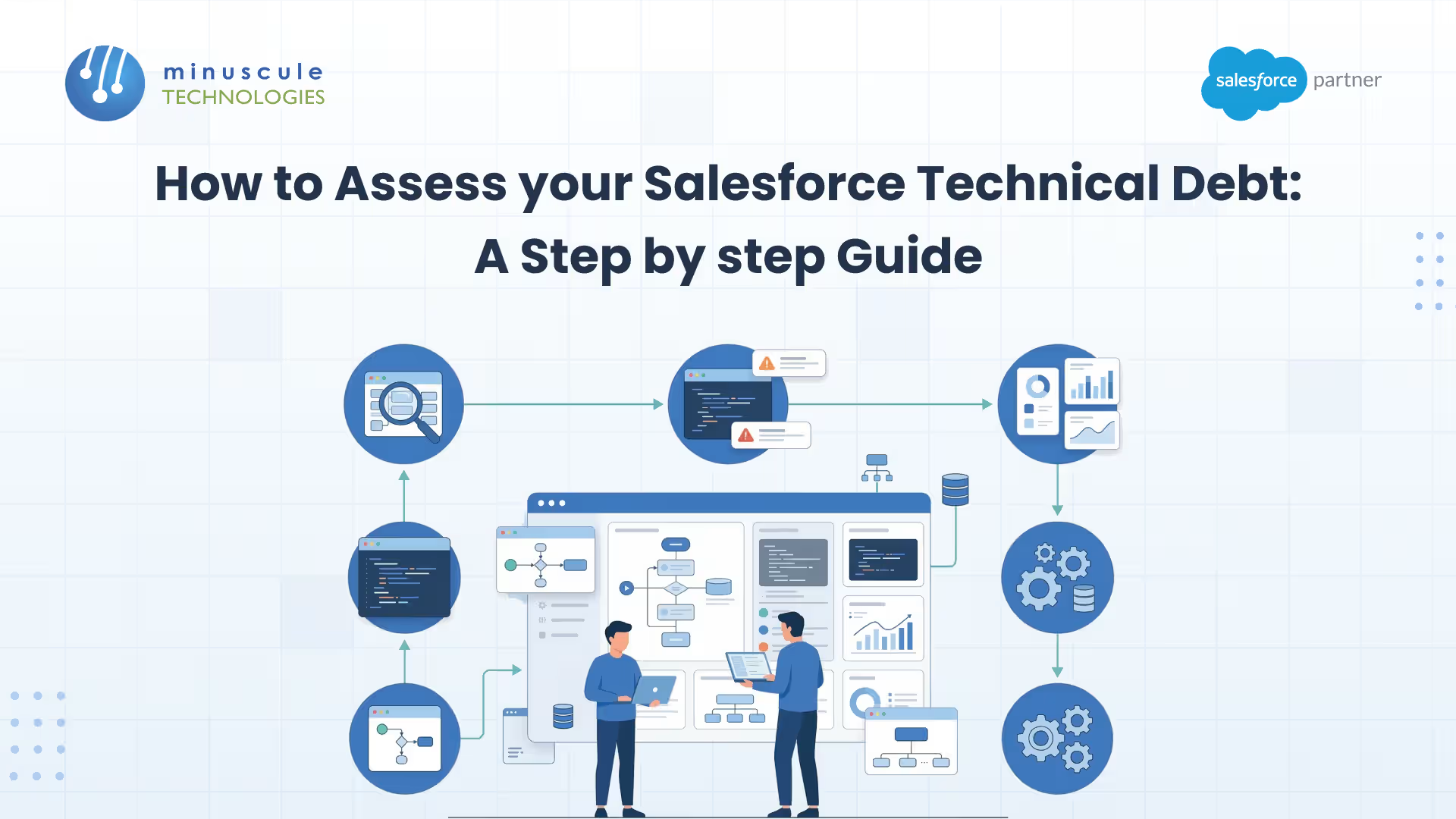
If you have been using Salesforce for a few years, "technical debt" isn't just a metaphor - it is a concrete reality. It is the custom field no one can safely edit because eighteen active flows reference it, the brittle Apex trigger written by a long-gone contractor, or the heavy page layout that frustrates your sales reps. Technical debt acts as a drag on every future change, increasing the time, effort, and Total Cost of Ownership (TCO) required to maintain your system.
The good news? You can measure it. And once you can measure it, you can eliminate it. Here is your step-by-step guide to assessing, prioritizing, and clearing technical debt in your Salesforce org.
Technical debt in Salesforce is the ongoing cost of expedient development decisions made for short-term benefits, such as faster time-to-market. It typically manifests in several distinct forms:
Before diving into an assessment, look for these telltale signs:
You cannot manage what you cannot see. Start by pulling a full inventory of your objects, Lightning pages, Apex classes, and permission sets.
Before you delete a "useless" field, you must understand its dependencies.
Logic hidden behind the scenes is often where the most "reckless" debt lives.
A surprising amount of debt is simply a lack of "Why."
Use hard data to justify your cleanup efforts to leadership. These metrics for assessing Salesforce technical debt give you a solid starting set.
Rank your debt items using a simple matrix:
Cleaning your org is a project; keeping it clean is a culture.
The most common cause is misalignment between delivery teams and business needs. Rushed implementations and "quick-fix" shortcuts taken to meet deadlines often result in inadvertent, reckless debt.
Translate "tech debt" into "business value." Show how reducing debt leads to faster cycle times, fewer system outages, and increased sales rep productivity. Mention that cleaning the org can free up to 50% of your developers' time for innovation.
We recommend a comprehensive annual audit supplemented by lighter quarterly reviews to catch "configuration drift" before it becomes a vulnerability.
Technical debt is not a sign of failure; it is an inevitable byproduct of a business that moves fast and evolves. However, allowing that debt to accumulate unchecked turns your CRM from a strategic asset into a stagnant liability. By taking a structured, data-driven approach to assessment and refactoring, you ensure your Salesforce environment remains a high-speed engine for innovation.
The goal isn't just to "clean up" the past - it’s to clear the path for the future. Establishing strong coding standards, empowering dedicated Platform Owners, and building a culture of continuous improvement will keep your system agile, and your team focused on what matters most: driving your business forward.
Is your team spending more time on "software archaeology" than on delivering new value? Don't let legacy clutter dictate your future. At Minuscule Technologies, a Trusted Salesforce Engineering Partner, we help you navigate the complexity of org optimization to reclaim system performance and reduce operational friction.
Collaborate with Minuscule Technologies Today. Let’s build a lean, high-performing Salesforce ecosystem that thinks, acts, and scales as fast as your ambition.
You've seen what's possible. Now, let's make it happen for your business. Whether you need an end-to-end Salesforce solution, a complex integration, or ongoing managed services, our team is ready to deliver.

Schedule a Free Strategic Call


Plot No. 4, Sridevi Amman Street, Perumal Nagar Extension, Old Pallavaram, Chennai, Tamil Nadu 600117, India.
