

November 19, 2024
Change management for a Salesforce implementation is the clear plan that helps your people adopt the new system. It works through executive sponsorship, plain communication, role-based training, and a phased rollout. It's the gap between an org that changes how teams work and one that becomes costly shelfware. Studies keep tying failed CRM projects to weak adoption, not bad software.
This guide gives you a simple framework. You learn what change management is, why projects fail without it, the eight pillars of a working plan, a phased approach, and the metrics that prove it pays off.
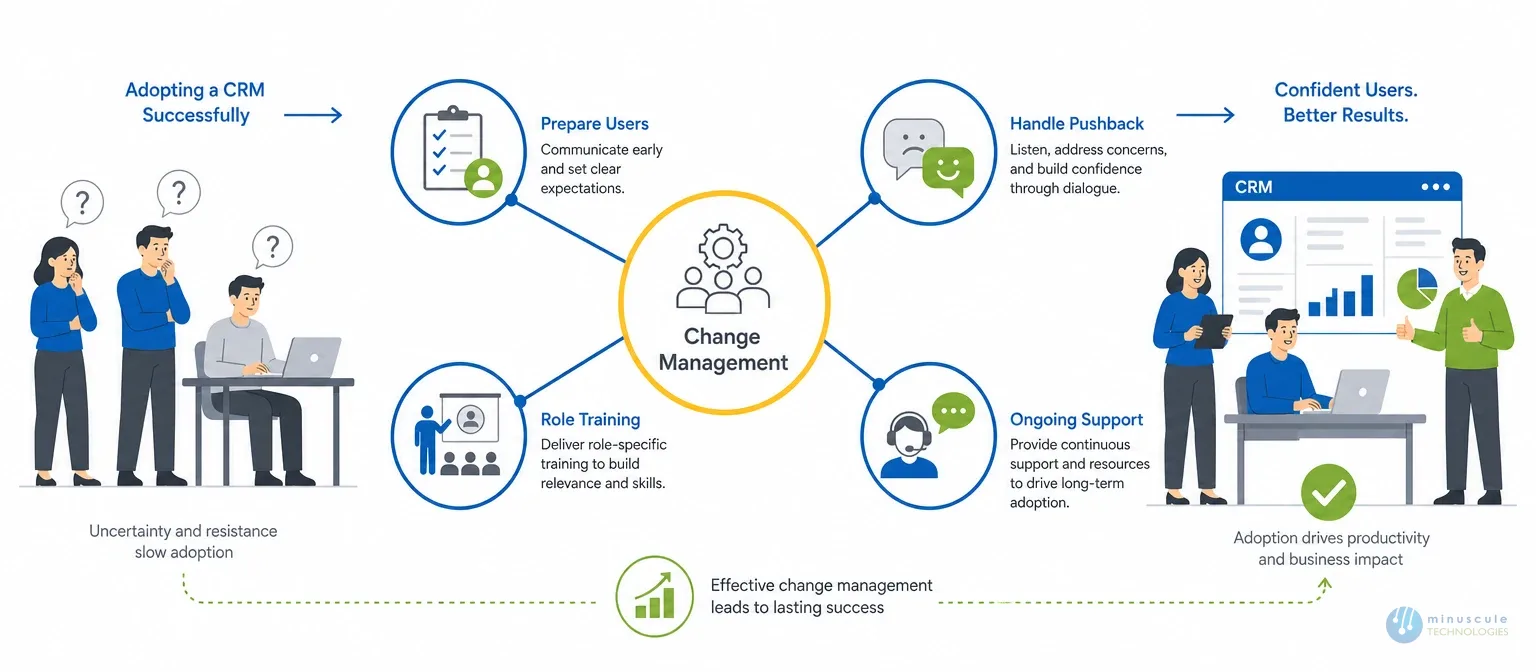
Change management is the practice of guiding people through a shift so the new system sticks. In a Salesforce CRM implementation, that means you prepare users, handle pushback, train by role, and back up adoption long after go-live.
When you roll out Salesforce, a lot shifts. Daily tasks change, core processes change, and data moves in new ways. Left alone, that shift breeds pushback, messy data, and workarounds. A strong change management plan clears those risks before they grow.
Think of it as the human side of the build. The engineering side sets up the platform. Change management makes sure people use it the way it was meant to be used.
Most Salesforce projects don't fail on the build. They fail on adoption. When users don't trust or grasp the system, they stay in spreadsheets, data quality drops, and leaders never see the payback.
Common failure patterns:
Every one of these is a change management problem, not a software problem. Fix the people side and the platform pays off.
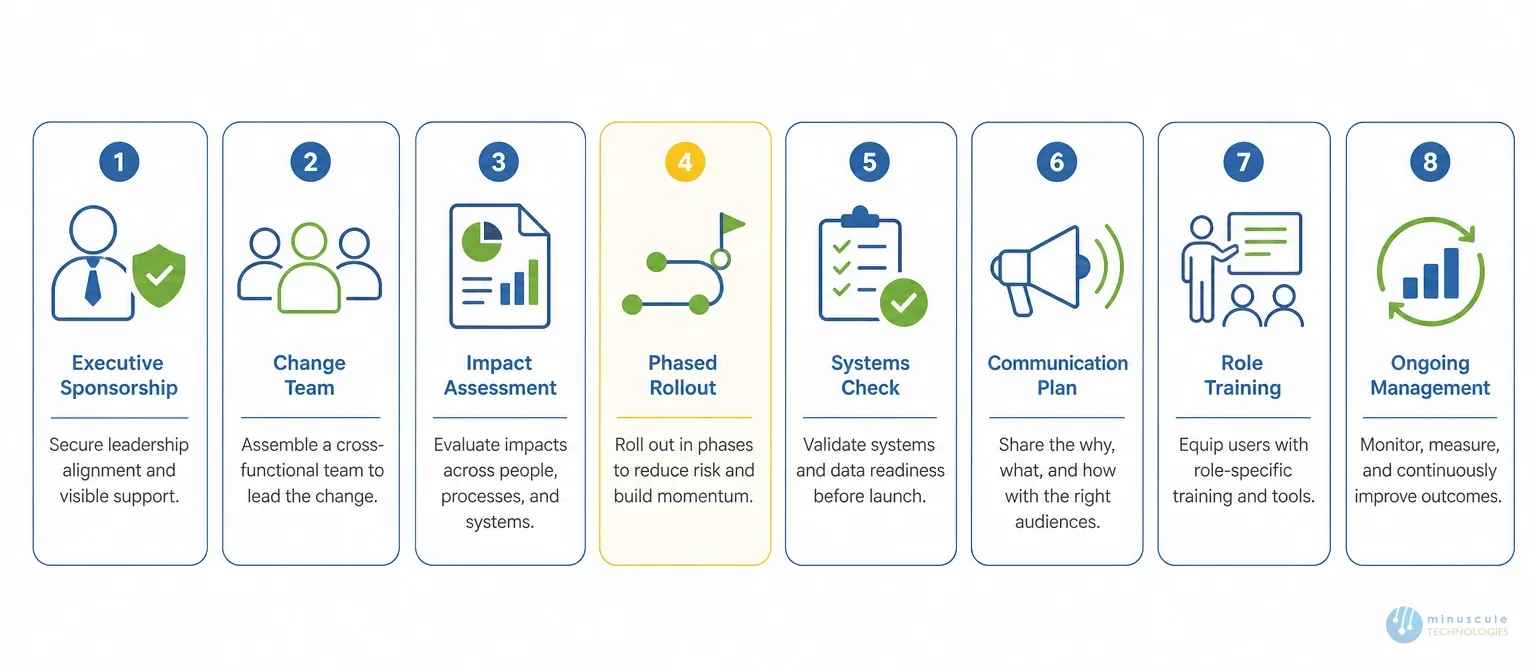
A working plan rests on eight pillars. Miss one and adoption wobbles.
Leadership support drives change across the org. Executives need to fund the project and use it too. When teams see the Salesforce dashboard in leadership meetings, they take adoption to heart. Sponsorship also frees up budget for licenses, customization, integration, and paid training time.
Assign a project manager to keep the rollout on schedule and budget. Add a champion from each team. Bring in communication staff to keep everyone informed, training staff to build materials and run sessions, and technical experts to set up Salesforce and fix issues.
Before you deploy, write down current workflows and tools. Then talk to each team to gauge how ready they are. These talks surface friction early and show you where to focus.
Changing everything at once overwhelms people. Pilot with a small group, gather feedback, refine, then expand. A phased approach keeps the business running and builds confidence as each stage works.
Test single features, field logic, and validation rules. Then test how the parts work together. Check security and permission sets so users see only what they should. Load-test for speed and capacity when many people work at once.
Your communication team explains the "why," shares timelines, and reports progress. They use email, video, and meetings. Address concerns in the open, since honesty builds trust. Everyone from executives to reps should get the message.
People learn in different ways, so offer webinars, workshops, and video tutorials. Make training fit each role, since reps, managers, and service staff use Salesforce in their own way. Give people a practice space, user guides, and an FAQ, plus support for new features.
Adoption work goes on after launch. Track logins and feature use, check data accuracy, and measure results against your goals. Those goals might be data visibility, customer satisfaction, or sales productivity. Use the data to keep getting better.
Mapping the eight pillars onto a proven change model (like the ADKAR approach from Prosci) keeps the work in order and easy to measure.
| Phase | Goal | Key Activities | Owner |
|---|---|---|---|
| Awareness | People know why change is coming. | Kickoff communications, executive messaging. | Sponsor + Communications |
| Desire | People want to take part. | Address concerns and demonstrate clear business benefits. | Department Champions |
| Knowledge | People know how to use Salesforce. | Role-based training and sandbox practice. | Training Team |
| Ability | People can perform their daily work. | Pilot program, hands-on support, and user acceptance testing (UAT). | Project Manager + Technical Team |
| Reinforcement | Adoption becomes part of daily operations. | Track adoption metrics, gather feedback, and drive continuous improvement. | Managed Services Team |
Order matters. Skip the desire step and even great training lands on users who resist.
A skilled Salesforce implementation partner brings more than setup. They bring a repeatable change playbook and the engineering skill to back it. Independent groups like Salesforce Ben make the same point. Adoption planning belongs in the project from day one, not tacked on at the end.
An engineering-led partner strengthens change management by:
This is where partner choice pays off. Among Salesforce implementation companies, the best ones treat adoption and engineering as one joined effort. That's the standard Minuscule delivers as a Salesforce Engineering Partner. You can compare our approach across Salesforce implementation, consulting, and DevOps solutions.
Adoption doesn't end at launch. You build it up over months. Ongoing Salesforce implementation services and managed support keep the momentum going after the first rollout.
A Salesforce managed services partner usually handles:
Salesforce's own Trailhead adoption resources make the same point. Reinforcement is an ongoing program, not a one-time event.
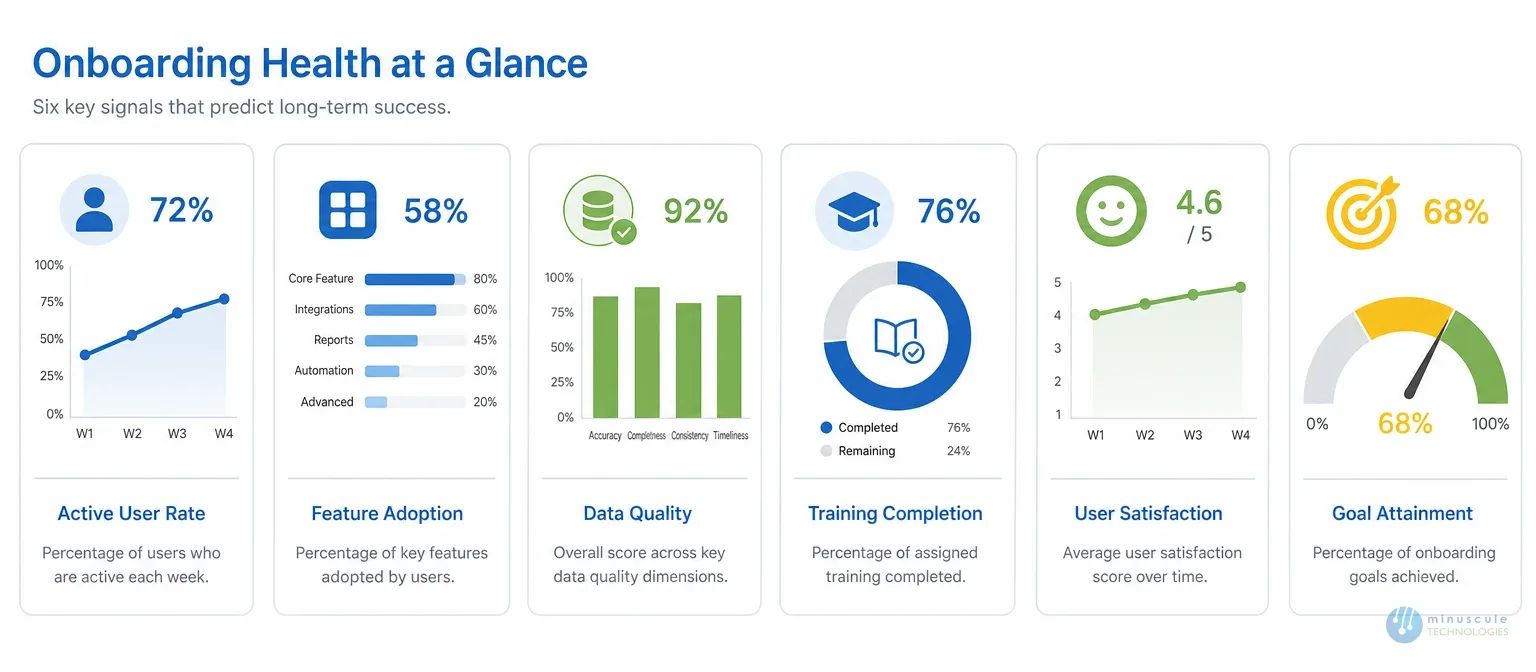
You can't manage adoption you don't measure. Track these.
| Metric | What It Tells You | Healthy Signal |
|---|---|---|
| Active User Rate | Are people logging in and working in Salesforce? | 80%+ weekly active users |
| Feature Adoption | Are key Salesforce features being used? | Steady quarter-over-quarter growth |
| Data Quality Score | Is customer and business data complete and accurate? | Low duplicate and blank record rates |
| Training Completion | Have users completed role-based training? | 90%+ completion rate |
| User Satisfaction | Do employees find Salesforce useful and easy to use? | Positive survey and feedback trends |
| Goal Attainment | Are initial business KPIs being achieved? | On or ahead of target |
Review these monthly in the first quarter, then quarterly. When a number dips, that's your cue to add training or adjust a workflow.
Salesforce change management is the clear process of preparing, supporting, and backing your people through a Salesforce implementation. It uses sponsorship, communication, role-based training, and phased rollout so adoption sticks and the CRM pays off.
Most fail on adoption, not technology. Weak executive buy-in, poor training, big-bang rollouts, and dirty data drive users back to old tools. Strong change management tackles each of these head on.
It runs across the whole project and beyond. It often starts weeks before go-live and goes on for months after, since reinforcement and adoption tracking never really stop.
If you lack in-house Salesforce and change skill, a partner cuts the risk with a proven playbook, governed releases, and post-launch support. It helps most when you compare Salesforce implementation companies for a complex or multi-team rollout.
A Salesforce managed services partner tracks adoption metrics, manages releases, trains new users, and keeps tuning the org. They keep a Salesforce CRM implementation healthy long after launch.
The hardest part of a Salesforce implementation isn't the build - it's getting people to trust it and use it. A solid change plan is what turns a new system into daily habit: real sponsorship, a dedicated team, a phased rollout, and metrics that prove it's working. Skip that, and even a flawless technical setup ends up as costly shelfware.
That's the gap Minuscule Technologies closes. As a Salesforce Engineering Partner, we pair a proven change-management playbook with real engineering discipline - governed releases, sandbox-first change control, and clean data from day one. So your teams see a system that makes their work faster, not harder, and adoption spreads on its own. Our 160+ Salesforce engineers bring that same rigor to rollouts across banking, manufacturing, logistics, and real estate.
The result is a rollout that earns buy-in instead of resistance - higher active usage, cleaner data, and a CRM that actually delivers the ROI you paid for.
You've seen what a solid change plan looks like. Now let's build yours.
Schedule a free strategic Salesforce call and let's plan a change management approach that makes your rollout stick.
You've seen what's possible. Now, let's make it happen for your business. Whether you need an end-to-end Salesforce solution, a complex integration, or ongoing managed services, our team is ready to deliver.

Schedule a Free Strategic Call


