
October 24, 2024
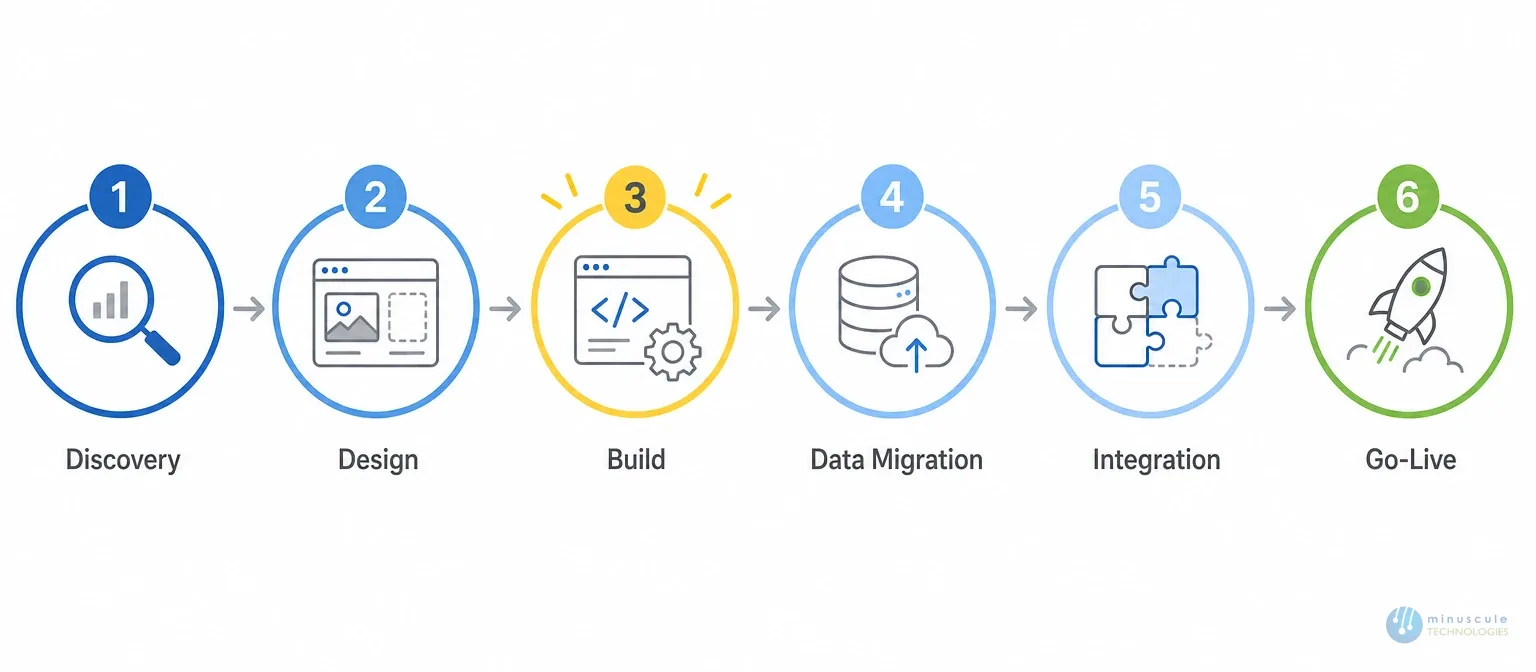
Salesforce implementation is the process of setting up Salesforce CRM so it fits the way your business works. A project moves through six phases: discovery, design, build, data migration, integration, and go-live. Most take 6 to 16 weeks, based on scope. Done well, it turns Salesforce from software you pay for into a tool your teams use every day.
This guide walks you through the full process. You get a ready-to-use checklist, real cost and timeline ranges, and tips to pick the right partner. The best partners build with care, not guesswork.
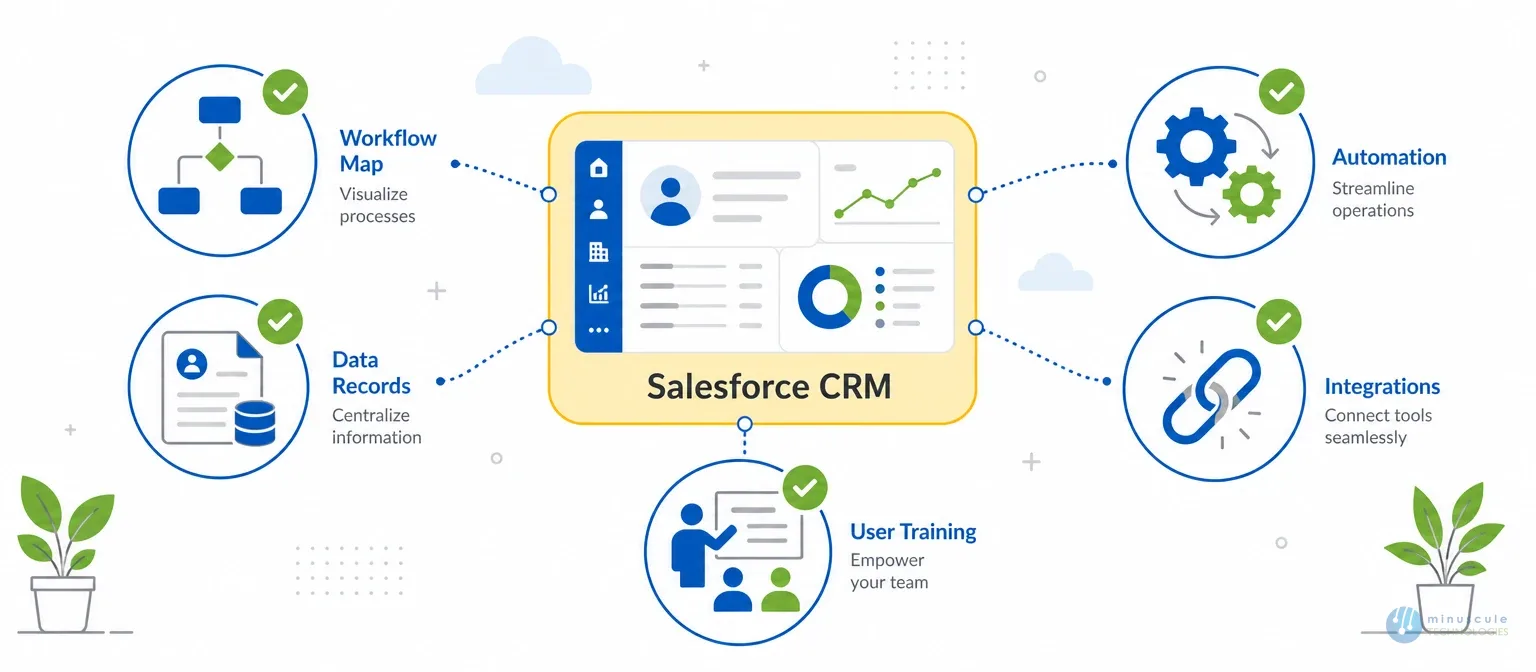
Salesforce implementation is the work of setting up the platform around your workflows, data, and goals. It's more than just switching it on. It covers planning, org design, building custom objects and automation, moving clean data, linking other systems, and training your users. Salesforce's own implementation resources say the same thing. The platform only pays off when you set it up around your process.
A well-run Salesforce CRM implementation does three things at once. It maps your sales, service, or revenue process into the platform. It keeps your data safe during the move. And it sets up rules so the system stays easy to manage as you grow. Skip that care and you build up tech debt. That means tangled automation, duplicate fields, and shaky links that cost more to fix later.
The gap between a project that sticks and one that stalls comes down to good engineering habits. That means tracked changes, tested releases, and a design built for the next three years, not just launch day.
Most winning projects follow the same path. Here's what each phase gives you.
You start by mapping your current processes, pain points, and goals. Talk to the people who use the system every day: sales, service, ops, and finance. Write down what success looks like in clear numbers. That could be a shorter sales cycle, faster case fixes, or cleaner forecasts.
Output: a ranked list of needs and a clear project scope.
Now you turn those needs into a technical plan. This covers the object model, data model, security and sharing rules, automation logic, and integration points. A good partner earns their fee here. A clean design now saves you years of rework later.
Output: a solution design document and org plan.
Now you build. Standard needs get configured with clicks, like page layouts, flows, and validation rules. Complex needs get developed with Apex, Lightning Web Components, or custom APIs. Follow the Salesforce Developers documentation to keep custom code clean and easy to test. Every line is future upkeep.
Output: a working org in a sandbox, built to the design spec.
You clean, de-dupe, and map your old data to the new object model. Then you load it in small batches. Check record counts and links after each load. Bad data is a top reason people quit a new CRM. So treat this as real work, not a copy-paste job.
Output: clean, trusted data in Salesforce.
Link Salesforce to your ERP, marketing platform, support tools, and data warehouse. That way, data flows without anyone typing it twice. Use a clear plan for each link, with API contracts, error handling, and monitoring. Then a change in one system won't quietly break another.
Output: a connected, no-silo operation.
Run functional tests, integration tests, and User Acceptance Testing (UAT) with real users on real tasks. Practical guides from groups like Apex Hours help you build repeatable test and release routines. Fix what breaks, train every role, then launch through a controlled release. Watch how people use it in the first two weeks.
Output: a live system your teams really use.
Use this checklist across the whole project:
Timelines grow with complexity. Here are real ranges.
| Project Type | Typical Duration | What's Involved |
|---|---|---|
| Basic (Single Cloud, Light Configuration) | 3–6 Weeks | Standard setup, minimal customization, and simple data migration. |
| Standard (One Cloud, Moderate Customization) | 6–12 Weeks | Custom objects, automation, reports, and a few third-party integrations. |
| Complex (Multi-Cloud, Heavy Customization) | 4–9 Months | Custom development, multiple integrations, and large-scale data migration. |
| Enterprise / Business Re-engineering | 9+ Months | Legacy Salesforce org refactoring, phased rollout, governance, and enterprise-wide transformation. |
Cost depends on scope, customization, and data volume. It's separate from your license fees. Here are general ranges.
| Scope | Typical Cost Range | Best For |
|---|---|---|
| Small / Quick-Start | $5,000 – $25,000 | Startups, single teams, and standard Salesforce configuration. |
| Mid-Market | $25,000 – $100,000 | Organizations requiring custom automation and multiple integrations. |
| Enterprise | $100,000 – $500,000+ | Large enterprises with multi-cloud deployments, custom development, and complex data migration. |
The cheapest bid is rarely the cheapest project. Weak builds cause rework, failed links, and tech debt. All of that quietly raises your total cost of ownership. A partner who focuses on TCO reduction designs for easy upkeep up front. So you don't pay twice.
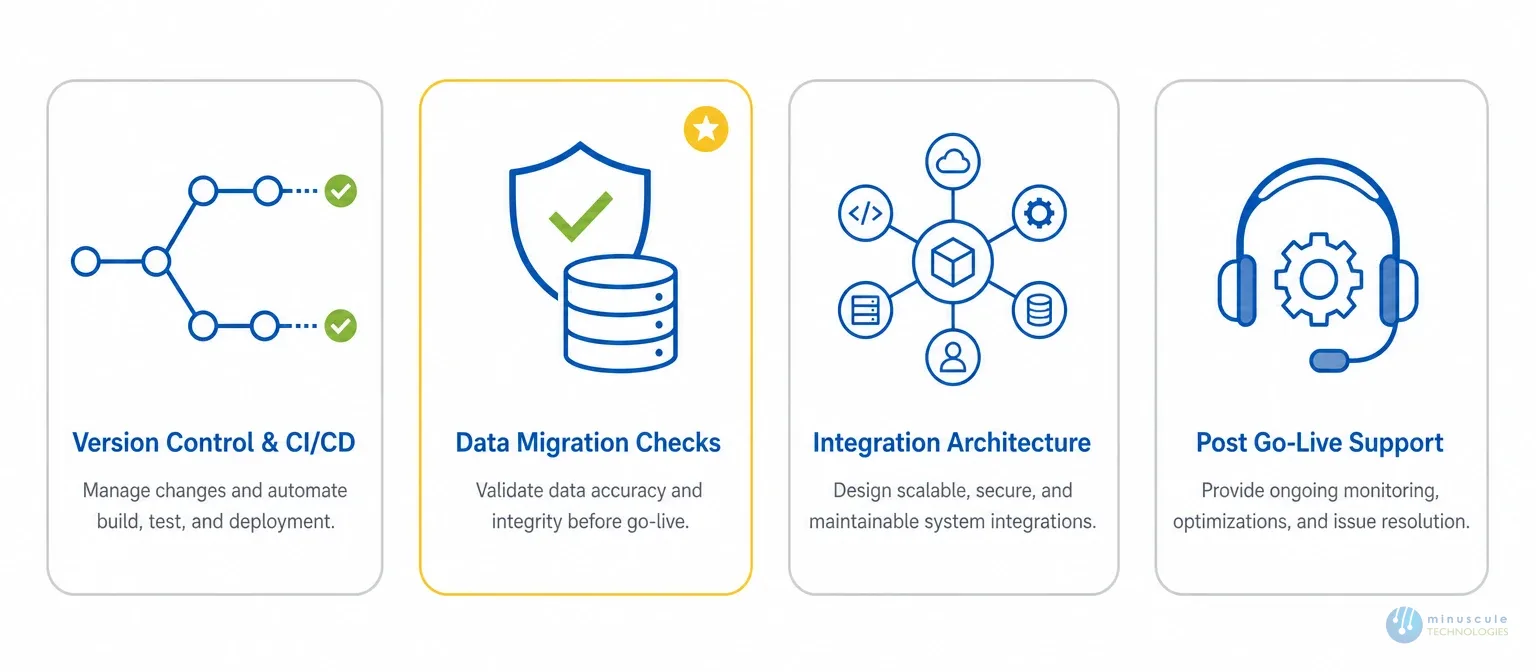
A strong Salesforce implementation partner does more than set up the platform. They bring engineering skill, industry know-how, and a track record of clean work. Independent sources like Salesforce Ben make the same point. Look past the badges and ask how a partner actually builds.
Key questions to ask any partner:
Among Salesforce implementation companies, the best ones treat your org like a software product. That means it's documented, tested, and well governed. That's the standard Minuscule delivers as a Salesforce Engineering Partner.
| Factor | In-House Team | Implementation Partner |
|---|---|---|
| Speed to Value | Slower due to the learning curve and internal resource availability. | Faster with proven implementation methodologies and delivery playbooks. |
| Salesforce Expertise | Limited unless experienced Salesforce specialists are hired. | Deep product knowledge backed by certified consultants and architects. |
| Cost | Ongoing salaries, hiring costs, and employee onboarding. | Defined project scope with predictable implementation costs. |
| Best Practices | Often developed through trial and error. | Industry best practices applied from day one. |
| Risk | Higher risk of delays, rework, and project overruns. | Lower risk with experienced delivery teams and established governance. |
In-house works when you have skilled Salesforce engineers on staff. For most teams, a partner cuts the risk and gets you live faster.
Our Salesforce implementation services are built on engineering skill, not guesswork. We cover the full lifecycle:
We work across Salesforce implementation, integration, and DevOps solutions. We also cover Sales, Service, Revenue (CPQ), Financial Services, and Field Service Clouds.
Most failures trace back to a few avoidable causes:
The fix is good engineering habits. That means tight scope, tested releases, staged data checks, and DevOps governance from day one. For a deeper look, see our breakdown of why Salesforce implementations fail.
Launch is the start, not the finish. Salesforce ships three updates a year, your processes shift, and small changes pile up. A Salesforce managed services partner keeps the org healthy. They handle monitoring, upgrades, admin support, and proactive tuning. So you keep gaining value instead of sliding into tech debt.
This ongoing work often includes release management, performance tuning, user support, and roadmap planning tied to your goals.
Salesforce CRM implementation is the process of setting up and shaping Salesforce to match your sales, service, or marketing workflows. It includes config, data migration, integration, and user training. The goal is a platform that supports real daily work.
Most projects take 6 to 16 weeks. Simple, single-cloud setups can finish in 3 to 6 weeks. Complex multi-cloud or legacy projects run several months.
It usually ranges from $5,000 for a quick-start to $500,000+ for enterprise work. That's separate from license fees. Cost depends on customization, integrations, and data volume.
If you don't have skilled Salesforce engineers in-house, a partner cuts the risk and speeds up go-live. The right partner brings CI/CD, tested releases, and integration skill that trial-and-error can't match fast.
Shortlist companies that use version control and CI/CD, check data migrations, show real integration work, and offer strong post-launch support. Put engineering skill ahead of the lowest bid.
A Salesforce managed services partner handles ongoing monitoring, release management, upgrades, admin support, and tuning. They keep your org stable and in step with your changing needs.
A Salesforce implementation is only as strong as the discipline behind it. Skip the planning, the data checks, or the governance, and you inherit tech debt that costs more to fix than it did to build. Do it right, and Salesforce becomes the engine your teams run on every day.
That's where Minuscule Technologies comes in. As a Salesforce Engineering Partner, we treat your org like a software product - clean data, tested releases, integrations that hold up, and an architecture built to scale for years, not just launch day. Our 160+ Salesforce engineers bring that same rigor to every project, from a first rollout to a full legacy re-engineering, across banking, manufacturing, logistics, and real estate.
The payoff is real: faster go-live, higher adoption, lower total cost of ownership, and a system that grows with your business instead of holding it back.
You've seen what a disciplined build looks like. Now let's make it yours. Whether you need an end-to-end implementation, a complex integration, or a legacy org re-engineered, our team delivers from day one.
Schedule a free strategic Salesforce call and let's map your project - no guesswork, no disruption.
You've seen what's possible. Now, let's make it happen for your business. Whether you need an end-to-end Salesforce solution, a complex integration, or ongoing managed services, our team is ready to deliver.

Schedule a Free Strategic Call


