
September 18, 2026
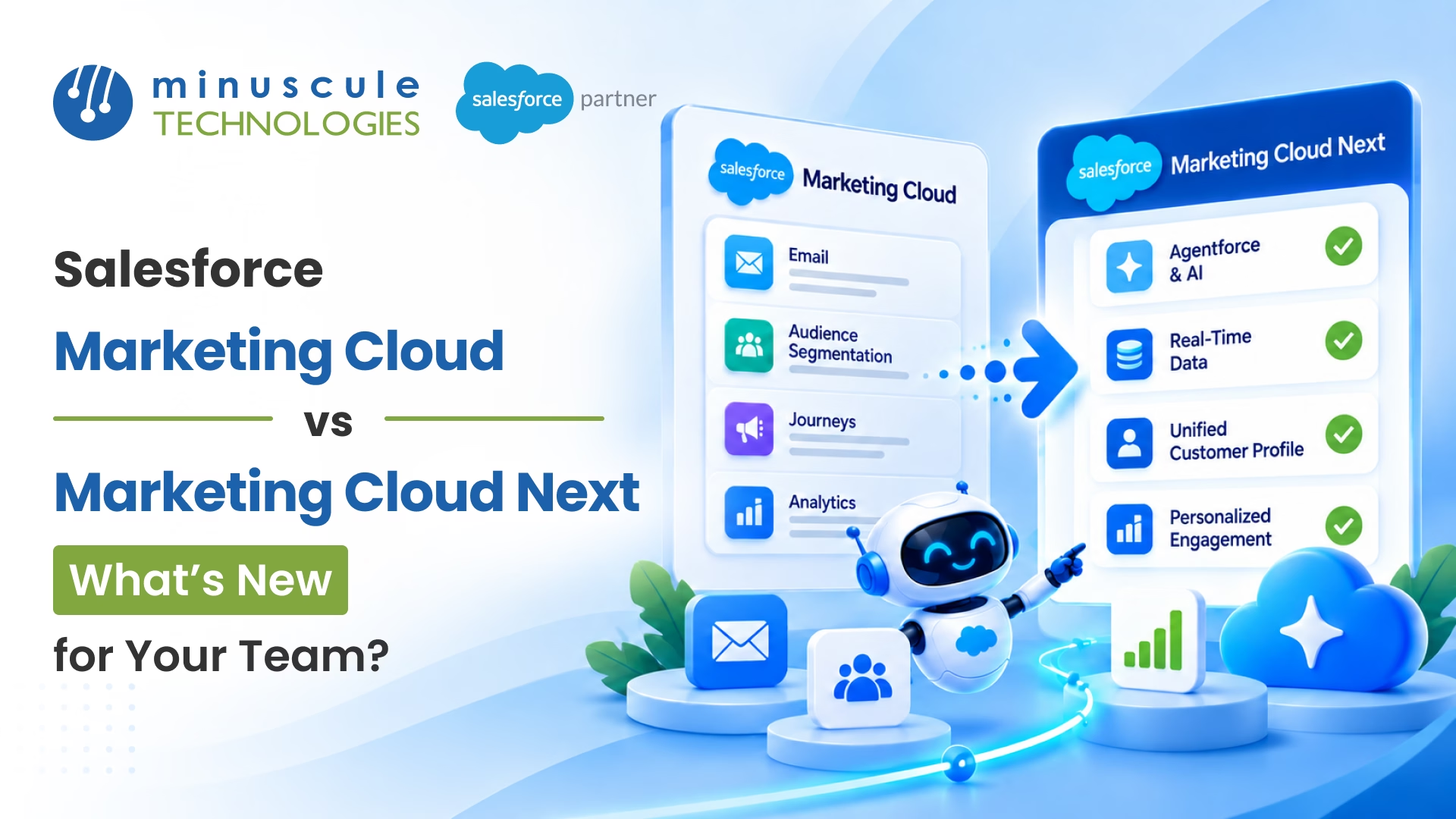
Salesforce Marketing Cloud vs Marketing Cloud Next is a choice between the old and new versions of the same Salesforce marketing platform. Marketing Cloud Engagement is a classic tool. It runs on its own platform and uses Journey Builder, Content Builder, and Automation Studio. Marketing Cloud Next is the new version. It's rebuilt on the core Salesforce platform, with Data 360, Flow, and Agentforce built in.
Here's what changes when you move from one to the other:
Picture a retail marketing team on the classic setup. Their loyalty data lives in one place, their service cases in another, and a connector syncs the two every few hours. A customer complains about support at noon. At 3 PM, the same customer gets a cheerful "We miss you!" email. Nobody did anything wrong. The data arrived late. Marketing Cloud Next was built to close that gap. This guide walks through what's new, how the two compare, what it costs, and how to plan a move, so your team can decide with clear eyes. If you want the broader product overview first, start with our guide to what's new in Salesforce Marketing Cloud Next.
Salesforce Marketing Cloud Next is the AI-first version of Salesforce's marketing tool. Salesforce calls it agentic marketing. Salesforce announced it on June 11, 2025, and more agents rolled out through the rest of 2025. It runs natively on the Salesforce platform. So marketing, sales, and service all share the same data.
Before Next, "Salesforce Marketing Cloud" mostly meant Marketing Cloud Engagement. That product began life as ExactTarget. It's still a strong, enterprise-grade tool for email, SMS, push, and cross-channel journeys. But it sits apart from your CRM. Data has to travel back and forth through Marketing Cloud Connect.
Next grew out of Marketing Cloud Growth and Advanced, the "on-core" editions Salesforce first released for smaller teams. Forcetalks has a clear walkthrough of how those Marketing Cloud on cre editions handle campaigns, flows, and segments. Next takes that base and adds a full set of AI agents, Data 360, and deeper analytics. Developers can manage contacts, segments, campaigns, and content through the Marketing Cloud Next developer docs.
The short version? Engagement is the proven engine many teams run today. Next is the future of the Salesforce Marketing Cloud, and it's where Salesforce is putting its new work.
This table sums up the Salesforce Marketing Cloud comparison. It shows Marketing Cloud Next vs Marketing Cloud Engagement at a glance.
Marketing Cloud Next features cover four jobs. Each one maps to a real task your team does every week.
The biggest Marketing Cloud Next benefits come from one design choice. Everything sits on the same platform as your CRM. A closed deal, a support case, or a website visit can start a journey right away. Sales can see every marketing touch on the record they already use. That's real marketing and sales alignment, not a nightly sync.
Marketing Cloud Next capabilities also lower the skill bar. Most work happens in clicks, guided screens, and Flow. You don't need a SQL expert to build a basic segment. Teams with strong Salesforce admins often get up to speed faster on Next than on Engagement.
Journey Builder vs Flow is the question most Engagement teams ask first. Both build automated customer journeys. They just come from different worlds.
Marketing Cloud Engagement Journey Builder is built just for marketing. You drag steps onto a canvas, like emails, waits, splits, and SMS sends. It shines for high-volume consumer journeys, such as welcome series, cart reminders, and win-back programs. Many teams have years of journeys and know-how built on it. The Trailhead module Journey Builder Basics is a good hands-on start. For a deeper look, see our guide on how Journey Builder works.
Marketing Cloud Next Flow Builder is the same Salesforce Flow Builder your admins already use. It now runs your journeys too. That opens new doors for customer journey orchestration. A marketing flow can update a case, alert a rep, call an Agentforce agent, or change content in real time. Flow for marketing means one tool for every team, not one for marketing, and one for everyone else.
The best news for current users is simple. Salesforce is adding support for running existing Journey Builder journeys in Flow, so you won't have to rebuild everything on day one. That makes a gradual move far less risky.
Salesforce Data 360 is the customer data platform under Marketing Cloud Next. Its old name was Data Cloud. Apex Hours explains why the Data Cloud to Data 360 rename matters for teams planning their data strategy.
Data 360 integration pulls in data from your CRM, website, apps, stores, and other systems. It matches records and builds one live profile for each customer. That's what unified customer data looks like in practice.
In Engagement, customer segmentation often means SQL queries that run on a schedule. In Next, you build Data 360 segments with guided tools. Just describe an audience, and AI can help build it. Segments can refresh as new data lands. This real-time segmentation means your list shows what customers did today, not last week.
Real-time customer data stops awkward mistakes, like a promo email to someone with an open complaint. It also lets you show each person the right content at the right time. That's real-time personalization. A shopper who looks at running shoes can see running content in the next email, on the next web visit, or in a WhatsApp reply. Our Salesforce Data 360 implementation services guide covers how to set up that data foundation well.
Agentforce Marketing is the name for Salesforce's AI marketing tools. Agentforce for marketing puts AI agents to work on tasks that used to eat whole days.
With Agentforce Campaign Creation, you set the goal and the guardrails. It drafts the brief, suggests the audience, writes content for each channel, and builds the journey from your brand guidelines. Your team reviews, edits, and approves. Salesforce says campaigns that once took weeks can come together in hours. Treat that as the best case, but the shift is real. Your team spends less time on campaign automation tasks and more time on strategy.
Agentic marketing goes further than AI campaign creation. Piper, Salesforce's AI SDR agent, answers inbound leads on your website and in email, qualifies them, and books meetings. The Agentforce SDR Agent works outbound leads from your CRM. The paid media agent can pause weak ads while a campaign runs. This is AI marketing automation that acts, not just suggests. Marketing Cloud Next AI keeps humans in charge. You set the rules, and agents work inside them.
Engagement has AI too. Its top editions include Einstein Engagement Scoring for predictive scoring. They also pick the best time to send and offer Agentforce Campaign Creation. But Next has the full set of Salesforce AI marketing agents.
Both tools cover email marketing automation, SMS marketing, and mobile messaging. The big change is how they talk with customers.
Most marketing sends "do-not-reply" messages. Next is built for conversational marketing. In the Advanced Edition, customers can reply to SMS and WhatsApp marketing messages. An agent can answer or pass the chat to a person. These two-way customer conversations turn a one-way blast into real customer engagement. If WhatsApp is a key channel for your market, our WhatsApp Salesforce Accelerator can speed up setup.
Engagement is still very strong for cross-channel marketing when you send a lot. It handles email, SMS, push, and app messages for huge lists. Next is catching up fast. It adds web and chat channels tied to CRM data. For true omnichannel marketing, where sales, service, and marketing share every touch, Next has the edge.
Engagement uses Content Builder for emails and content blocks. Next uses a newer drag-and-drop email builder, plus forms and landing pages, included from the Growth Edition up. Teams used to Salesforce's drag-and-drop tools, like Experience Builder, will feel at home. For deeper personalization, Next connects to Salesforce Personalization (sold separately as the Personalization+ add-on). It runs on Data 360.
Marketing analytics in Engagement lives mostly in built-in reports and dashboards. It works. But tying it to revenue often takes extra work.
Marketing Intelligence is Salesforce's reporting tool for marketing. It works with Marketing Cloud Next and is sold as the Intelligence+ add-on. It pulls data from your ads, emails, and other channels into one place. Key features include:
This matters when you want to improve campaigns. When your reports, CRM, and journeys share one platform, you can see what works and act on it the same day.
Marketing Cloud Next pricing is set per org, per month, and billed each year. The prices below are based on Salesforce's US prices as of September 2026. Treat them as a starting point, not a quote. Prices vary by region and currency. Your final cost also depends on contacts, add-ons, and contract terms.
Here's the key detail. Each Engagement+ edition now comes with a Next edition. So many teams don't face an either-or choice. They can run Engagement for today's programs and start new work on Next under the same contract. Outside the US? Check local prices with Salesforce or a partner, since regional rates can shift these numbers.
Here are the Marketing Cloud Next use cases where the new platform pays off fastest.
Engagement still fits best when you send huge volumes, run hundreds of complex journeys, or depend on deep AMPscript and SQL work. Customer lifecycle marketing at that level often stays on Engagement for a while.
A Marketing Cloud Next migration doesn't have to be a big-bang switch. Most teams do better with a phased plan. Here's a simple path to Marketing Cloud modernization.
A good Marketing Cloud Next implementation also covers opt-ins, sending domains, and your email reputation. Those details decide if your first emails land in the inbox. Our Salesforce migration services team plans moves like this, so nothing important gets lost along the way.
There's no single right answer. The best Salesforce marketing platform matches your data, your channels, and your team's skills. Use this chart as a quick guide.
Salesforce CRM integration is the deciding factor for many teams. If your sales and service data already live in Salesforce, Next has a clear edge: one login, one security model, and one set of records. If most of your data lives outside Salesforce, Engagement may still suit you better today.
Salesforce Marketing Cloud vs Marketing Cloud Next compares Salesforce's classic marketing tool with its new AI-first one. Marketing Cloud Engagement runs on its own platform with Journey Builder and Content Builder. Marketing Cloud Next runs natively on the Salesforce platform with Data 360, Flow, and Agentforce built in.
Not right away. Salesforce still supports and sells Marketing Cloud Engagement. But Next is where most new features are landing, and the new Engagement+ editions include a Next edition. Most teams will run both for a while.
Not all at once. Salesforce is adding support for running existing Journey Builder journeys in Flow in Marketing Cloud Next, so you can move in phases. Many teams still choose to rebuild key journeys over time to use CRM data and agents.
Yes. Data 360 is the data foundation for Marketing Cloud Next. It builds your customer profiles and Data 360 segments. It also drives real-time personalization. Plan your Data 360 setup early, since it shapes everything else.
Based on US pricing in September 2026, the Growth Edition lists at $1,500 per org per month and the Advanced Edition at $3,250 (billed annually). Prices vary by region and contract.
Yes, through AI. Piper and the Agentforce SDR Agent qualify and route leads, and agents help find your best audiences. Teams that need classic B2B lead scoring and grading can also pair Next with Account Engagement.
Marketing Cloud Engagement is the proven engine. Marketing Cloud Next is where Salesforce marketing is going. For most teams, the smart move isn't picking one forever. It's knowing which work belongs where and moving at a pace your team can handle.
Minuscule's pre-built accelerators help you get there faster. The WhatsApp Salesforce Accelerator adds two-way chat to your journeys from day one. Our industry starter packs come ready for retail, BFSI, education, manufacturing, and real estate teams. Our Salesforce Marketing Cloud implementation services cover data setup, Flow journeys, and AI agents on both tools.
Ready to see where your team stands? Book a free strategic Salesforce call for a Marketing Cloud Next readiness review. We'll look at your journeys, data, and team skills. Then we'll map a clear, step-by-step path to Next.
You've seen what's possible. Now, let's make it happen for your business. Whether you need an end-to-end Salesforce solution, a complex integration, or ongoing managed services, our team is ready to deliver.

Schedule a Free Strategic Call


