
March 7, 2025
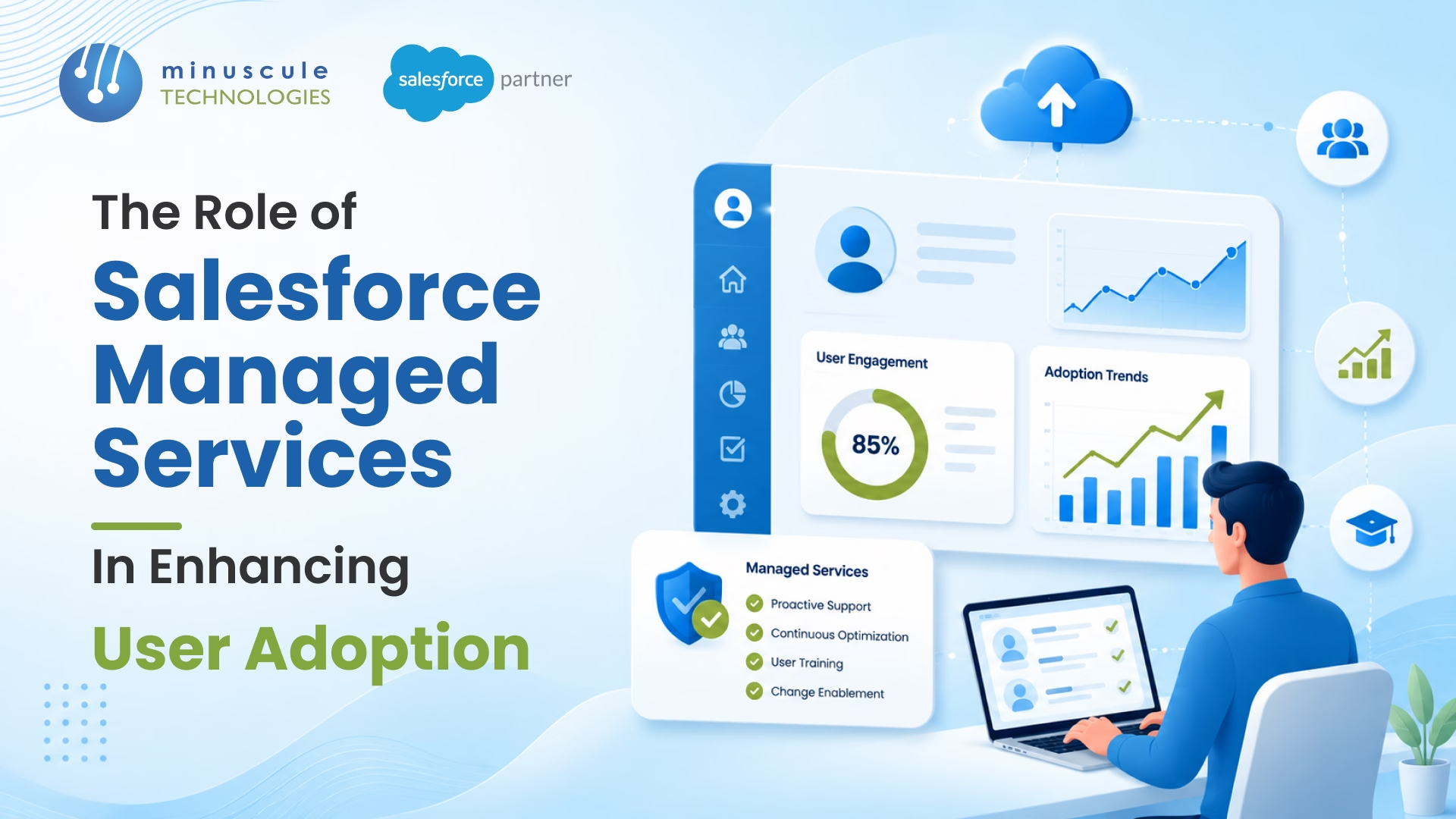
Salesforce managed services boost user adoption by removing the friction that makes people avoid the platform - slow performance, clunky workflows, unanswered questions, and broken releases. A managed services partner keeps the org clean, trains users, and fixes issues fast, so employees actually log in and use it. Higher adoption then turns your CRM spend into real ROI.
This guide shows how managed services drive adoption, what's included, how to measure it, and how to choose the right Salesforce managed service provider.
Salesforce is powerful, but power doesn't guarantee usage. Most orgs don't fail because the software is weak - they fail because people quietly stop using it.
When the platform is slow, confusing, or full of stale data, users go back to spreadsheets and sticky notes. That's lost pipeline visibility and wasted license spend.
What this looks like in practice: On one legacy org we assessed, reps skipped logging deals because a bloated page layout took eight clicks to update a single opportunity. Adoption wasn't a training problem - it was an engineering problem. Fix the layout and automation, and usage climbs on its own.
Salesforce managed services are an ongoing partnership where a certified team runs, maintains, and improves your org for a predictable monthly fee. Often bundled as Salesforce support services, that steady ownership is exactly what adoption needs.
Strong Salesforce managed support raises adoption in four ways:
Because it runs on an SLA, you always know response times and scope. That reliability is what keeps users engaged long after go-live.
Scope varies by partner, but strong Salesforce maintenance services span these areas - each with a direct line to adoption.
Your team handles users, permission sets, layouts, reports, and dashboards. The better providers add proactive health scoring - watching storage limits, automation conflicts, and governor-limit risks before they cause an outage. A healthy org loads fast, and fast orgs get used.
Adoption jumps when Salesforce fits how each role actually works. Custom dashboards and automated workflows cut busywork, so reps and agents see value in minutes, not months.
Support is layered so the right person handles the right issue. Tier 1 covers logins and report tweaks; Tier 2 and 3 handle broken integrations and Apex errors. Fast, friendly help keeps frustrated users from abandoning the platform.
Salesforce ships three major releases a year, and each can break custom code or automation. A DevOps-led partner runs regression testing and deploys through a governed CI/CD pipeline with rollback plans. You get zero-downtime releases - no surprise Monday bugs that erode user trust. Our Salesforce DevOps solutions are built for exactly this.
When Salesforce holds all the data users need, they stop switching tools. Reliable Salesforce integration connects your ERP, marketing, and service systems with no silos - treating integrations as monitored, engineered infrastructure.
Adoption isn't a launch-day event. Ongoing training, in-app guidance, and quarterly adoption reviews keep skills current as your org evolves.
Managed services teams use proven levers to lift usage:
You can't improve what you don't track. A good Salesforce support partner reports on:
Watching these monthly turns adoption from a guess into a managed metric.
Build a team or hire a partner? Here's the honest comparison for adoption-focused support.
In-house works when your org is simple and staff are already Salesforce-savvy. For advanced automation, complex integrations, or fast scaling, a Salesforce support partner usually delivers more value with less overhead.
You're likely ready for Salesforce managed support if:
If two or three sound familiar, low adoption is already costing you.
Pricing is more transparent than it used to be. Most Salesforce managed service providers use one of these models.
Published market rates run roughly $70–$85 per hour, with block plans near $7,000/month for 100 hours. The best partners also lower your bill over time by harvesting unused licenses and cutting storage waste.
Use this checklist when comparing a Salesforce MSP:
For the release process, the official Salesforce release notes are worth bookmarking, and resources like Salesforce Ben and Apex Hours keep your team sharp. To build in-house skills, Salesforce Trailhead is the standard starting point.
Most providers treat managed services as break-fix and housekeeping. We treat your org as a product to be engineered - because adoption follows good engineering. Our Salesforce managed services pair daily administration with the deeper work competitors skip:
The result: fewer frustrated users, higher login rates, and a CRM that becomes a growth engine. Our Salesforce consulting team can map the right scope to your org.
They're an ongoing service where a certified partner handles administration, support, development, and optimization of your Salesforce org for a set monthly fee, all under an SLA.
They remove adoption blockers - slow performance, clunky workflows, and unanswered questions - while providing ongoing training and fast support, so employees use the platform consistently.
Track login and active-user rates, feature usage, data quality, ticket trends, and user satisfaction. Reviewing these monthly turns adoption into a managed metric.
Most plans run about $70–$85 per hour or use fixed monthly fees, often near $7,000/month for 100 hours. Price depends on user count, org complexity, and custom code.
A Salesforce managed service provider (MSP) is a certified partner that runs your org end to end, so you don't have to build and retain a full in-house team.
Yes. Strong partners build custom features and connect Salesforce to your ERP, marketing, and service tools, treating integrations as monitored, engineered infrastructure.
High adoption isn't luck - it's the result of an org that's fast, clean, and built around how your people actually work. That's exactly what Minuscule Technologies delivers.
As a Salesforce engineering partner, we don't just keep your org running. We re-engineer the friction out of it, ship every release cleanly through governed DevOps, unify your data through solid integrations, and cut the license waste that quietly drains your budget. The outcome your team feels day to day: fewer support tickets, higher login rates, and a CRM people trust and use.
Whether your adoption is stalling after go-live or you're scaling fast and need dependable Salesforce managed support, we'll map a plan to your org - and own the results with a clear SLA behind every commitment.
Ready to turn licenses into real usage? Schedule a free strategic Salesforce call with Minuscule Technologies today, and get a practical adoption roadmap built for your team.
You've seen what's possible. Now, let's make it happen for your business. Whether you need an end-to-end Salesforce solution, a complex integration, or ongoing managed services, our team is ready to deliver.

Schedule a Free Strategic Call


