

September 23, 2026
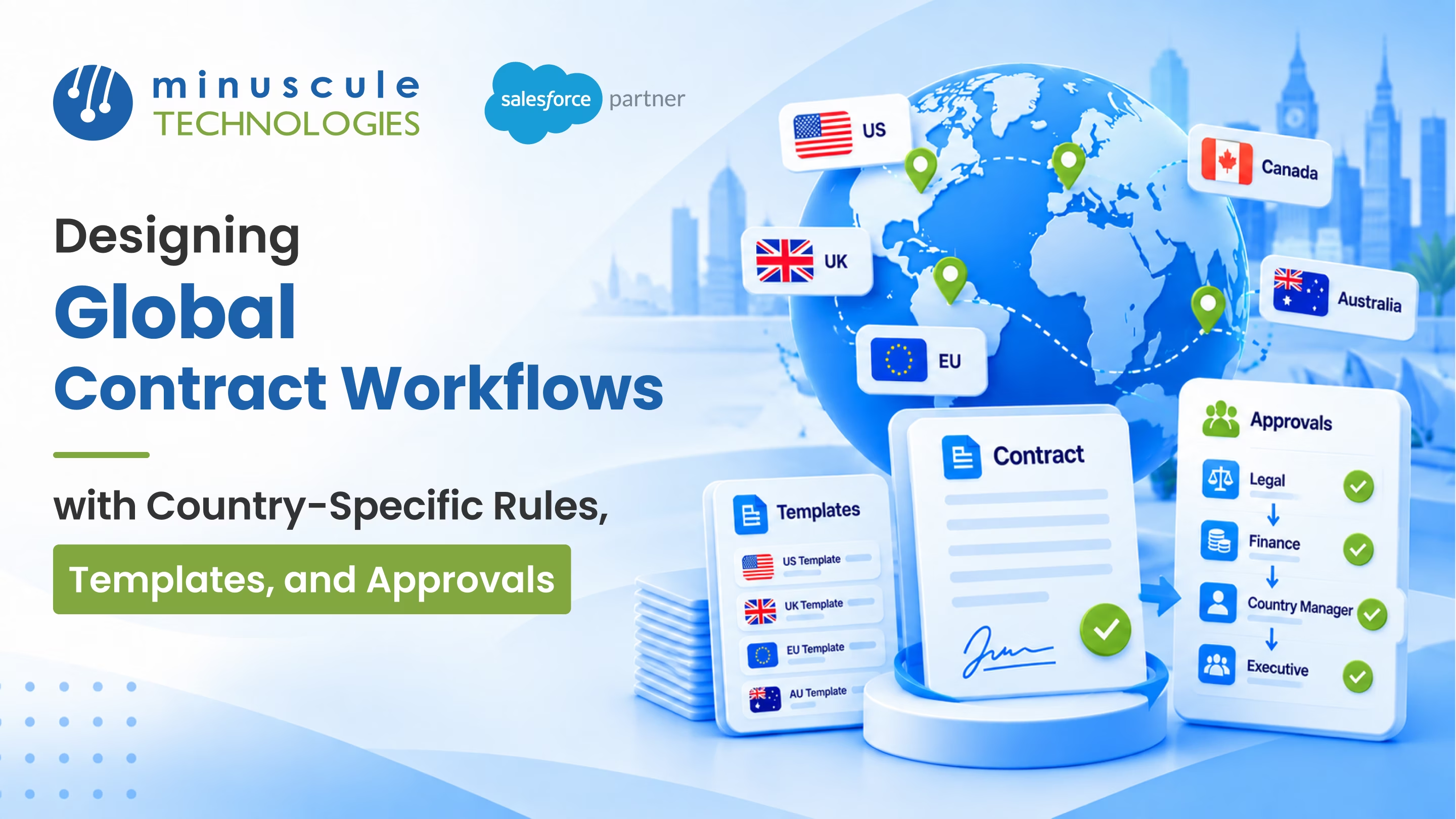
Global contract workflows are contract processes built for the reality that rules, languages, and approvals change from one country to the next. A contract that's fine in the US might need different clauses in Germany, a translated version in Japan, and a local approver in Brazil. Global contract workflows handle all of that in one system, so a deal in any country follows the right path on its own. Build them well and every region stays compliant and quick. Build them as one rigid process, and you either break local rules or bury local teams in manual workarounds.
Good global contract workflows take care of:
Picture a company that grew into a dozen countries by copying its home-country process everywhere. Sales in France send contracts with US governing law, approvals sit with a manager who can't read the local terms, and a deal in Japan stalls because there's no translated template. Each region quietly invents its own fixes, and head office loses any single view of how contracts actually get signed. This guide covers what makes global contract workflows different, what must change country by country, and how to build it all in one system without chaos.
A single-country contract workflow only must satisfy one set of rules. A global one must satisfy many at once, and switch between them based on where the deal is happening. That's the core difference: the workflow must know the country and then apply the right template, language, approvers, and thresholds for it, without a person hand-picking each one.
The mistake most companies make is treating "global" as "the home-country process, used everywhere." It works until a local law, currency, or language forces an exception, and then the exceptions pile up until the process is really a dozen undocumented processes. A real global workflow plans for the differences on purpose. It keeps one shared backbone and lets specific pieces vary by country, so local teams get what they need while head office keeps one clear view. Minuscule has done this kind of country-aware contract automation before, including work that generates lease contracts in multiple languages for property firms operating across borders.
The payoff is reach without disorder. When the workflow handles local rules on its own, a company can enter a new country without rebuilding its contract process from scratch. That matters most for organizations scaling across regions, from a manufacturer selling into many markets to a financial group operating under different regulators.
Not everything changes at a border, but a handful of things reliably do. Knowing which elements vary helps you design a workflow that flexes only where it must and stays shared everywhere else.
| Element | Varies by country? | Example |
|---|---|---|
| Legal clauses | Yes | Governing law, liability, privacy terms |
| Language | Yes | A local-language version for signing |
| Approvers | Yes | A local legal or finance sign-off |
| Currency and thresholds | Yes | Approval limits set in local currency |
| Signature and data rules | Yes | Local e-signature law and data residency |
| Core deal data | No | Account, product, and price structure |
The bottom row is the key to sanity. Most of your data model stays the same everywhere, and only the outer layer, clauses, language, approvers, and thresholds, changes by country. Design around that split, and the workflow stays manageable no matter how many countries you add.
Templates are where country differences show up first. A contract needs the right governing law, the right clauses, and often the right language for the party to sign it. The goal is a template set that maps to each country without becoming an unmanageable sprawl of one-off documents.
A few habits keep templates in order across countries:
Done this way, adding a country means adding its clauses and language, not rebuilding a contract from scratch. The translation and multi-currency guidance in Salesforce's own developer documentation is a useful reference for the underlying mechanics.
Approvals are the other place where "one global process" breaks down. A deal in one country may need a local legal review that another doesn't, and approval limits that make sense in one currency are meaningless in another. The workflow has to route each contract to the right local reviewers automatically.
Use the country on the deal to pick up the approval path. A contract in Germany routes to the German legal reviewer, one in Brazil to the local finance lead. Point each step at a role tied to the region rather than a named person, so the routing survives staff changes. The declarative approval guidance on Salesforce Admins covers how to build this cleanly.
Approval limits should reflect local value, not a single global number converted loosely. Define each country's thresholds in its own currency, so a mid-size deal isn't over-escalated in one market and waved through in another. This keeps the level of review consistent in meaning, even when the numbers differ.
Some countries require a documented review that others don't, whether data handling, industry rules, or local signing law. Build those extra steps into the country's path, so they happen every time, not when someone remembers. The revenue and architecture write-ups on Salesforce Ben are helpful references for structuring this.
The trap with global workflows is ending with a separate build per country that no one can maintain. The way out is one shared system with a country as a variable, not a fork. A few principles keep it clean.
Build one workflow backbone that every country shares, then layer only the country-specific pieces on top. The shared core handles the deal; the local layer handles clauses, language, approvers, and thresholds. This keeps most of the system in one place while still respecting local rules.
Let a single country value on the record decide which template, language, approvers, and thresholds apply. When one field drives the differences, adding or changing a country is a configuration change, not a rebuild. The practical tutorials on Salesforce Geek show patterns for this kind of data-driven routing.
Name someone in each region who owns their country's clauses, thresholds, and approvers. Local rules change, and a clear owner keeps each country's setup current without head office guessing foreign law. Central team owns the backbone; local owners keep their layer accurate.
Hold your setup against this list. Each gap is a place where a cross-border deal could break a local rule or stall.
Most companies start with their two or three largest markets, get the country-driven pattern working there, then add markets one at a time. Once the pattern is proven, each new country is a configuration, not a project.
They're contract processes designed to apply the right rules, templates, language, and approvals based on the country a deal is in. Instead of forcing one home-country process everywhere, they keep a shared core and vary the country-specific pieces automatically. The result is local compliance without a separate process per country.
Usually the legal clauses, the signing language, the approvers, the approval thresholds in local currency, and local signature or data rules. Core deal data like account, product, and price structure stays the same. Designing around that split keeps the workflow manageable as you add countries.
No, and you shouldn't. Start from one master template and hold only the country-specific clauses as variations. That way a shared change updates everywhere at once, and each country still gets its correct governing law, clauses, and language.
Set each country's thresholds in its own currency, based on local value, rather than converting one global number. That keeps the meaning of a review consistent, so a deal isn't over-escalated in one market and under-reviewed in another.
Keep one shared backbone and drive the differences from a single country field, so adding a market is a configuration change. Give each region an owner for its local rules and keep one central reporting view. That balance of shared core and local ownership is what keeps it maintainable.
Going global doesn't have to mean a tangle of country processes no one controls. When one shared workflow carries the deal and a country's value drives the local clauses, language, approvers, and thresholds, a company can sign compliant contracts in any market and still see them all in one place. Build the core once, let each country vary only where the law demands, and new markets become a setting rather than a rebuild.
We've built exactly this kind of market-specific contract workflow for one of the world's largest US commercial real estate firms, where lease rules, templates, and approvals vary from state to state, and a single country-and-region-driven design kept every market consistent. This is the kind of work Minuscule Technologies was built for. As a Trusted Salesforce Engineering Partner with offices across the US, India, and Malaysia and 75+ global implementations for enterprise clients, we engineer country-aware contract workflows that stay compliant market by market. If your business spans standard and custom lines across regions, our B2B Marketplace accelerator brings product-aware ordering and approval flows to banking, financial services, and manufacturing teams, and we tune each starter pack to your markets, so you go live faster with local rules already handled.
Want a plan for your own market? Book a Salesforce contract-workflow review with our team, and we'll map your country-specific rules, templates, and approvals into one workflow with a plan to build it.
You've seen what's possible. Now, let's make it happen for your business. Whether you need an end-to-end Salesforce solution, a complex integration, or ongoing managed services, our team is ready to deliver.

Schedule a Free Strategic Call


