

September 26, 2026
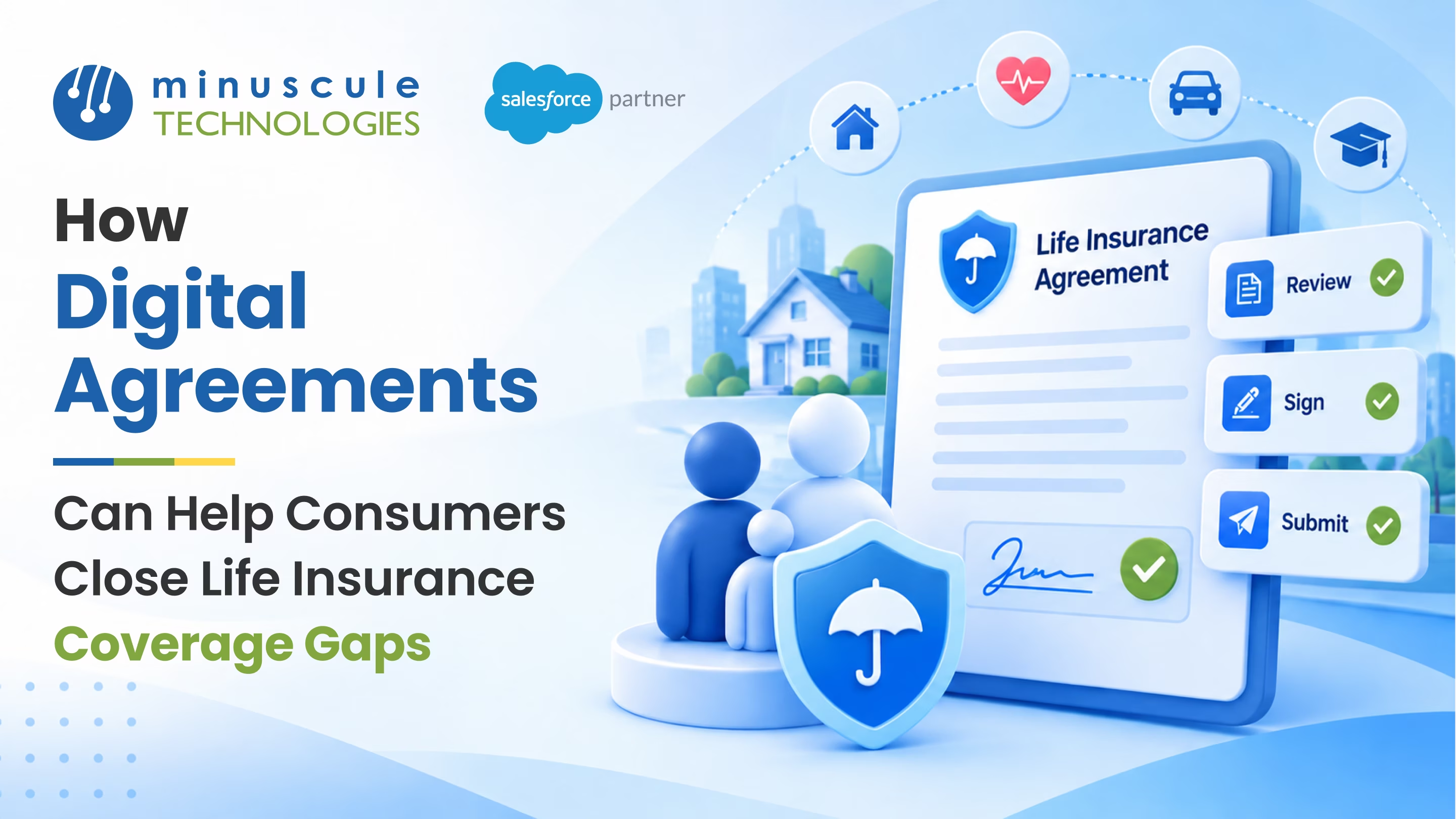
The life insurance coverage gap is the distance between the protection families have and the protection they would need if they lost an income earner. Digital agreements help close that gap by removing the friction that stops people from finishing the buying process, so a policy application that once took weeks of paperwork can be completed, signed, and issued in days. When getting covered is quick and clear, far more people who mean to protect their families actually follow through.
Most people who lack enough life insurance are not against the idea. They started an application and stalled, or they assumed it would be slow, costly, and full of forms. A parent decides to get coverage, hits a long paper application and a request to print and mail signed documents, and quietly puts it aside. Months later they still have a gap they meant to close. Digital agreements are how that story ends differently.
This guide explains what the life insurance coverage gap is, why it persists, what digital agreements actually are, and how they help consumers get covered, plus what the shift means for the insurers who want to reach them.
The life insurance coverage gap, often called the protection gap, is the shortfall between the coverage households own and the coverage they would need to stay financially stable if a wage earner died. Someone can have a small policy through work and still carry a large gap once you count the mortgage, future education costs, and years of lost income the family would face.
The gap shows up in two forms. Some people are uninsured, with no life insurance at all. Many more are underinsured, holding a policy that would not come close to covering what their family relies on. Both leave a household exposed at the exact moment it can least absorb a financial shock.
What makes the gap frustrating is that it is not mainly about willingness. Surveys across the industry keep finding that most people believe they need more coverage than they have. The barrier is rarely the decision to buy; it is everything that happens between deciding and being covered.
If most people want more coverage, why does the gap stay so wide? A few recurring reasons explain most of it, and they point straight at where digital agreements help.
None of these are about people not caring. They are about friction, and friction is exactly what technology can remove. Industry research keeps confirming this; LIMRA's work on the life insurance consumer points to the same mix of cost misconceptions and process friction, not a lack of interest.
Digital agreements are the electronic versions of the forms and contracts that move a life insurance application from interest to an active policy. Instead of a printed application and a wet signature, the applicant fills in a smart online form, verifies their identity, and signs electronically, and the policy documents are generated, stored, and shared digitally.
In practice, a digital agreement setup usually includes a few connected pieces. There is a guided digital application that only asks relevant questions, electronic signature that is legally binding, automated document generation that builds the right forms from the applicant's answers, and a digital record that keeps every step for compliance. Together they replace the paper packet with a single online experience.
The point is not simply to digitize paper. It is to remove the waiting and re-entry between steps, so an applicant moves from question to signature to issued policy without ever printing a page. The wider shift here is toward direct, digital buying, a move Citi describes as a digital revolution in insurance, and digital agreements are the part that carries a buyer across the finish line.
Digital agreements close the coverage gap by attacking the friction points one by one. Here is where they make the biggest difference.
A guided digital application adapts to the person filling it in, skipping questions that do not apply and explaining the ones that do. That turns a form that felt like a project into a task someone can finish in one sitting, which is often the difference between a completed application and an abandoned one.
Electronic signature is the step where paper processes lose most people. When an applicant can sign securely from a phone in seconds, the last hurdle before coverage disappears. No printer, no mailbox, no waiting for a document to arrive both ways.
Because the data and documents arrive clean and complete, underwriting can move faster, and in many straightforward cases a policy can be issued in days instead of weeks. Every day cut from that wait is a day fewer for an applicant to change their mind.
A digital process shows exactly where each applicant stands, so an insurer or agent can nudge someone who paused instead of losing them silently. That gentle follow-up recovers people who wanted coverage and simply got distracted. Docusign's own analysis makes the same case, that removing friction from the buying process is what turns intent into coverage.
Here is how a modern, digital-agreement path to coverage runs from a consumer's point of view.
Every step that used to invite a delay is now a tap, which is why digital agreements move so many more people all the way to coverage.
The contrast between the old packet and a digital agreement flow is easiest to see side by side.
| Step | Paper process | Digital agreements |
|---|---|---|
| Application | Long, one-size-fits-all form | Guided form that adapts to the buyer |
| Signature | Print, sign, and mail | Electronic signature from any device |
| Documents | Packet mailed back and forth | Generated and shared online instantly |
| Underwriting | Weeks, often with missing information | Faster, with clean and complete data |
| Drop-off | Silent, with no way to recover | Visible, so follow-up brings buyers back |
The paper column is not just slower. Each handoff is a place where a family that wanted coverage can quietly fall out of the process.
For carriers and agencies, closing the coverage gap and growing the business are the same goal. Every applicant who drops off at a paper step is a family left exposed, and a policy never written. Digital agreements turn more of those intentions into active coverage.
Getting there takes more than a signing tool bolted onto an old process. It works best when the application, identity checks, agreements, underwriting, and the customer record all connect on one platform, so data flows without rekeying and every step is tracked. Many insurers build this on Salesforce, with digital agreements wired into the customer record, which is the kind of work our team does across banking, financial services, and insurance engagements. As a Salesforce engineering partner, we connect these pieces, so the experience feels like one flow to the buyer, and clean Salesforce integration services keep the data honest behind the scenes. Looking ahead, Deloitte expects AI to push this further, moving life insurance from something that is sold to something people can more easily buy.
The life insurance coverage gap is the difference between the coverage a household has and the coverage it would need to stay financially secure if an income earner died. It includes people with no life insurance and the larger group who are underinsured.
Most people are not against coverage; they stall on the way to it. They overestimate the cost, find the application heavy, or lose momentum during slow, paper-based underwriting. Removing that friction is what helps them follow through.
Digital agreements are the electronic application, signature, and policy documents that carry a buyer from interest to an active policy without paper. They replace printed forms and wet signatures with a single guided online experience.
Yes. Electronic signatures are legally binding in the United States under the ESIGN Act, and they carry a full audit trail, which makes them well suited to insurance applications and policy documents.
They do. By removing paperwork, re-entry, and mailing delays, digital agreements let many straightforward policies move from application to issue in days rather than weeks, which keeps buyers from dropping off along the way.
The life insurance coverage gap is not mainly a problem of people not caring. It is a problem of friction, and digital agreements are one of the clearest ways to remove it. When applying, signing, and getting issued is quick and clear, far more families finish what they started and end up protected.
For insurers ready to make that experience real, the work is in connecting the pieces cleanly on a platform your teams already trust. Our Salesforce consulting team designs digital agreements and customer flows for banking, financial services, and insurance, built around your products and your compliance rules. If a paper-heavy process is where you are losing applicants, book a working session with our team and we will map a digital path that helps more of your customers close their own coverage gap.
You've seen what's possible. Now, let's make it happen for your business. Whether you need an end-to-end Salesforce solution, a complex integration, or ongoing managed services, our team is ready to deliver.

Schedule a Free Strategic Call


