
January 28, 2026
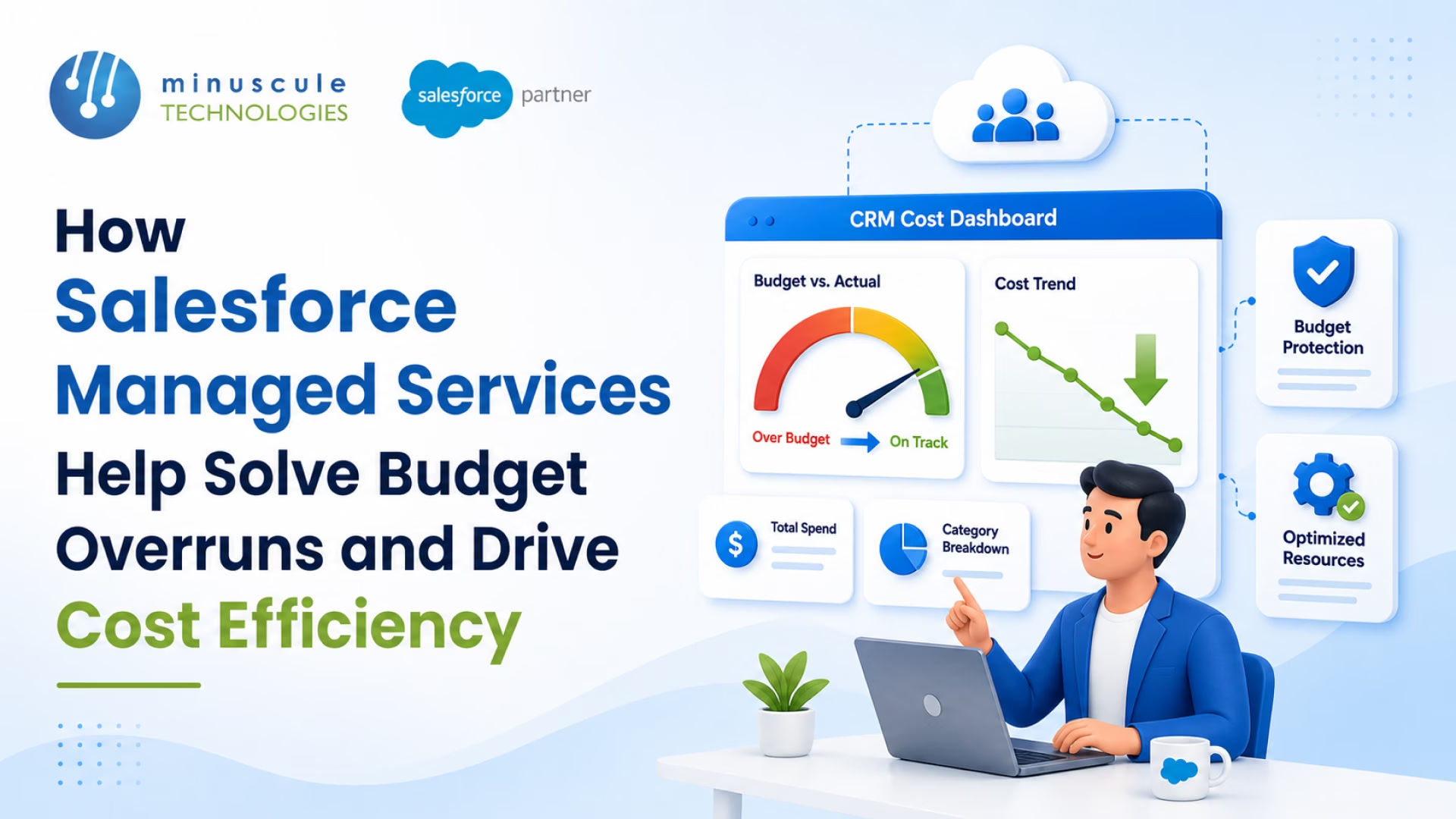
Salesforce managed services solve budget overruns by turning surprise costs into one fixed monthly fee. Emergency consulting, specialist hires, license waste, downtime - all covered by one subscription. The model swaps several six-figure salaries for a full expert team and cuts unused licenses. Salesforce's own Forrester study found expert services cut ongoing management costs by 30% from year two.
Salesforce is a powerful engine for growth. But without strict cost rules, it becomes a financial puzzle. You buy it to make money, yet it often ends up costing more than it earns.
Many leaders land in a "money pit." Unplanned hires for special skills. Emergency consulting to fix broken systems. The hidden drag of tech debt - old, messy code that slows every release. Each one pushes the budget past plan.
The fix isn't to stop investing in Salesforce. It's to change how you manage the investment. Moving from reactive, in-house hiring to a subscription-based managed services model turns surprise bills into stable, optimized monthly costs. Here's how.
Budget overruns rarely come from the license invoice. They come from everything around it:
A salesforce managed services provider attacks all six at once.
The most common cause of budget bloat is a belief: you must own the talent to own the platform. Building a full internal team costs a lot at today's rates.
| Factor | In-house Team | Managed Services |
|---|---|---|
| Talent Cost | Multiple six-figure salaries plus recruitment expenses | Single predictable monthly subscription |
| Skill Range | Limited to the roles you can afford to hire | Access to administrators, developers, architects, and release managers |
| Scaling | Requires hiring and downsizing as needs change | Easily scales up for launches and down during quieter periods |
| Training | Company funds ongoing certifications and upskilling | Training and certifications are covered by the service provider |
| Budget Shape | Variable costs with unexpected expenses | Fixed and predictable monthly investment |
The in-house path: top admins, developers, and architects earn premium salaries that compete with the biggest tech firms. Add hiring fees, benefits, equipment, and constant training to keep pace with three Salesforce releases a year.
The managed services path: one steady subscription buys the full skill stack:
For most orgs, salesforce management services run $2,000–$10,000+ per month - typically less than one senior hire, with a whole team's range included.
Going over budget isn't only about what you spend. It's also what you lose when the system fails. In a digital business, downtime burns money fast.
An in-house team is often reactive - fixing things after they break. A managed team shifts the model:
The quoting tool that would have died on quarter-close day gets fixed on a quiet Tuesday instead.
Internal IT teams spend most of their time keeping the lights on. Little time is left to improve anything. Meanwhile, budgets bleed through shelfware - licenses paid for but never used.
An engineering-focused salesforce managed services partner doesn't just maintain. They improve:
Many firms fund their entire managed services retainer from license savings alone.
Security and compliance look like technical problems. They're financial risks. IBM's annual research puts the average data breach cost in the millions. For healthcare or finance firms, one Salesforce security slip adds fines on top.
Keeping that security in-house means hiring costly specialists. Managed support services build it into the deal:
The deepest saving is opportunity cost. If your CIO worries about Salesforce backups, they aren't driving your next product launch.
Handing off daily platform care frees your people while you keep full control:
Four ways. One subscription replaces several specialist salaries. License audits remove unused seats. Proactive monitoring prevents costly downtime. Clean engineering stops tech debt from inflating every change. Salesforce's Forrester study measured a 30% cut in ongoing management costs.
Most engagements run $2,000–$10,000+ per month, based on org size, users, and scope. That's usually less than one senior admin - with architects, developers, and release managers included.
For basic admin work in a small org, an in-house admin can be enough. Once you need many skill sets development, integration, security, releases - managed services cost less than hiring each role. Many firms blend both: a small internal core plus a salesforce managed service provider for engineering.
Salesforce vets partners through its program: certified experts on staff, tracked projects, and client scores. Verify any partner on the official AppExchange directory before signing. Badges on a website prove nothing.
Budget certainty is a competitive edge. Managed services replace surprise costs with steady value, so your Salesforce system works as an asset, not a liability.
At Minuscule Technologies, we act as your engineering partner - from legacy modernizing to smart automation, with license audits and proactive monitoring built in. Our 125+ certified experts keep orgs lean for enterprises across manufacturing, BFSI, real estate, and healthcare.
Ready to stabilize your budget? Contact Minuscule Technologies today for a complimentary Health Check and see exactly where your Salesforce spend is leaking - and how to stop it.
You've seen what's possible. Now, let's make it happen for your business. Whether you need an end-to-end Salesforce solution, a complex integration, or ongoing managed services, our team is ready to deliver.

Schedule a Free Strategic Call


Plot No. 4, Sridevi Amman Street, Perumal Nagar Extension, Old Pallavaram, Chennai, Tamil Nadu 600117, India.
