
January 3, 2026
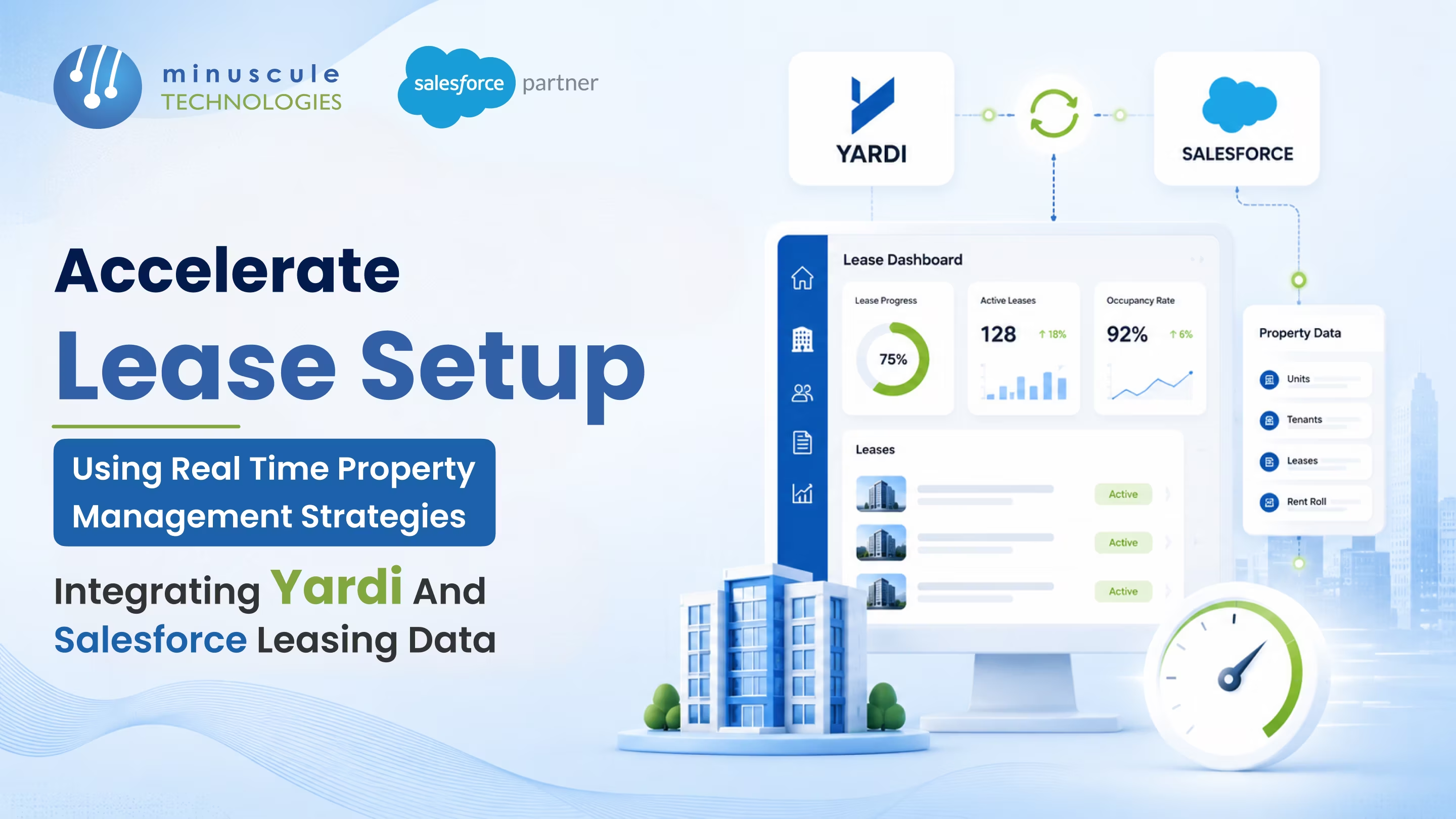
In the high-stakes world of global real estate and logistics, speed is the ultimate competitive advantage. For industry leaders managing massive portfolios, the ability to move from a property enquiry to a finalized lease agreement depends entirely on data fluidity. However, many organizations still struggle with a "data wall" between their financial systems and their customer relationship management platforms.
As an expert Salesforce partner, Minuscule Technologies has pioneered strategies to break down these walls by integrating Salesforce with industry-standard tools like Yardi to create a high-velocity leasing ecosystem.
Many enterprises rely on Yardi for back-office property management and Salesforce for front-office sales and engagement. While both platforms are powerful, they often operate in silos. In traditional setups, lease data from Yardi is imported into Salesforce manually, often on a daily basis.
The core of our strategy is the transition from "scheduled imports" to "real-time synchronization." By building a direct bridge between Yardi and the Salesforce platform, we ensure that every update in the property database is immediately reflected in the hands of the sales team.
One of the most significant breakthroughs for our clients was the automation of complex financial KPIs directly within the Salesforce interface.
Beyond just numbers, the integration allows for a visual representation of property health.
A lease setup isn't complete until the ink is dry. To truly accelerate the cycle, the integration extends into automated document generation.
The goal of this Salesforce-Yardi integration is to transform your CRM into a comprehensive Business Growth Tracker. When property data, lease financials, and capital deployment pipelines are unified, your investment committee can evaluate deals with unprecedented clarity.
As a dedicated Salesforce Engineering Partner, Minuscule Technologies brings technical excellence dating back to our founding in 2006. With a team of over 160 Salesforce experts, we specialize in tailoring complex solutions that drive operational efficiency and user adoption. We don't just implement software; we engineer high-performance platforms that eliminate response delays and accelerate business growth.
Don't let manual data imports slow down your property portfolio. Contact Minuscule Technologies today to learn how our Salesforce engineering expertise can unify your data and transform your real-time property management strategy.
You've seen what's possible. Now, let's make it happen for your business. Whether you need an end-to-end Salesforce solution, a complex integration, or ongoing managed services, our team is ready to deliver.

Schedule a Free Strategic Call


