
January 19, 2026
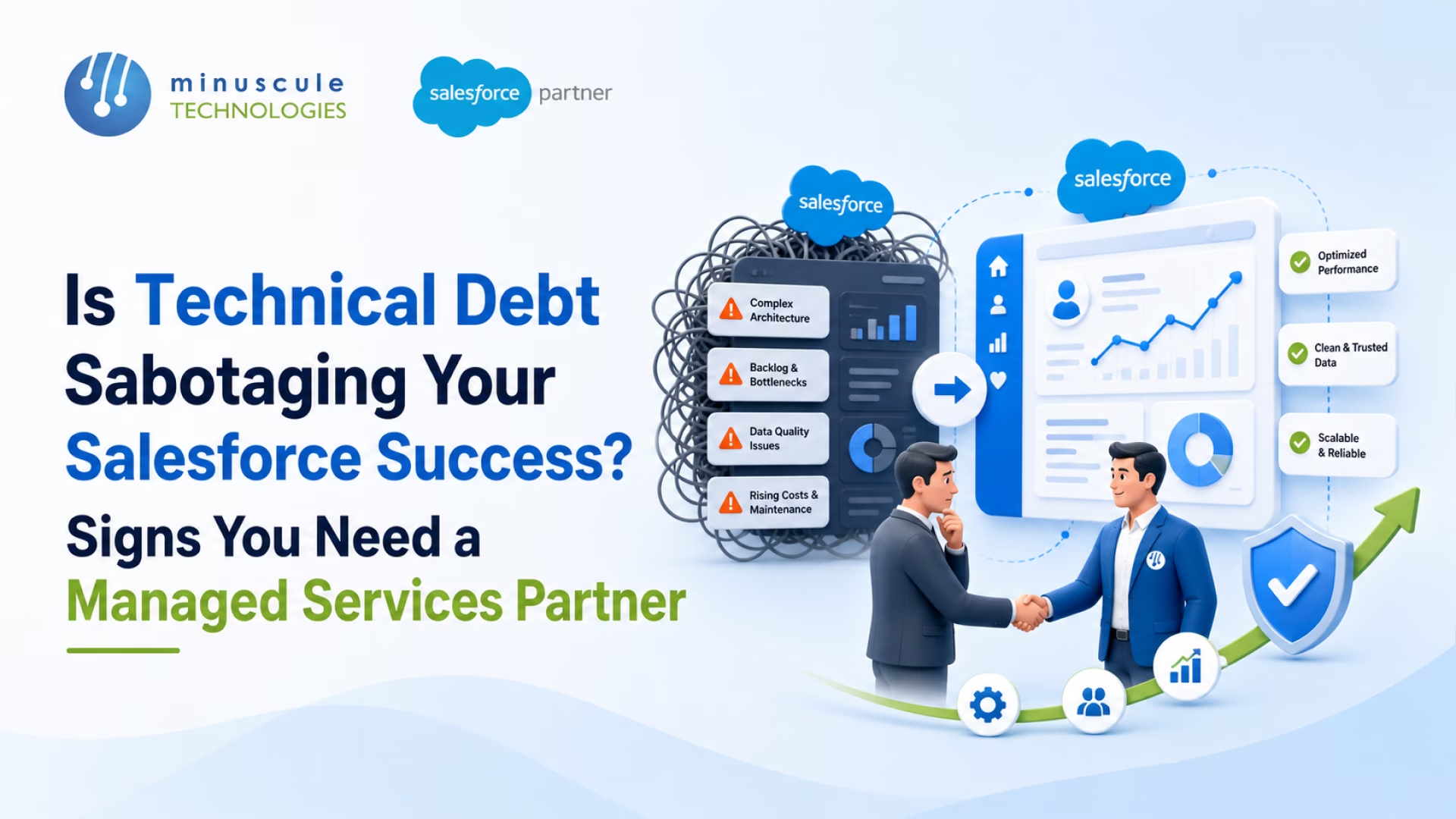
Six signs show technical debt is sabotaging your Salesforce org: a spiraling ticket backlog, releases that break things, falling user adoption, missing documentation, rising security risks, and a system too fragile to innovate on. If three or more sound familiar, a Salesforce managed services partner is the strategic fix - they pay down the debt through refactoring, data cleanup, and governance while your team gets back to building.
Salesforce is built to be the powerhouse of customer relationships. But buying a license doesn't guarantee success. Over time, many orgs find their once-fast system has become sluggish, hard to update, and frustrating to use.
The cause is usually Salesforce technical debt.
Like financial debt, technical debt builds when you pick the quick fix today instead of the better long-term build. Some debt is normal in a fast-moving business. Unmanaged debt charges interest - slower speed, higher maintenance costs, and system instability.
If your team spends more time fixing bugs than shipping features, you need reinforcement. Here are the six signs, and how the right partner fixes each one.
The clearest indicator of unmanaged debt is a rising ticket pile. When your admin drowns in user requests and bug reports that take weeks to resolve, business operations slow with them.
How a partner helps: a salesforce managed services partner brings dedicated resources under strict SLAs that guarantee response times. Your internal team gets back to strategy while the partner clears the debt-driven queue.
Does your team dread Salesforce updates? If small changes risk breaking automations, integrations, or data flows, your org suffers from fragility - a classic debt symptom.
The usual culprit is legacy automation debt. Many orgs still run old Workflow Rules and Process Builder, both past Salesforce's end of support. These tools slow the system and clash with modern configuration.
How a partner helps: experts refactor to Flow. They untangle the spaghetti of old Process Builders and migrate the logic to clean Salesforce Flows. Every change gets sandbox impact analysis first, so nothing breaks live.
Debt shows up as bad user experience. Slow page loads and governor limit errors push users away from the system -0 and once they leave, your data quality follows.
The usual cause is data debt: millions of old records clogging searches and reports as the org grows.
How a partner helps: data archiving and optimization. Old records move out of the daily view, page loads speed up instantly, and unused fields come off the layouts. The system feels fast again.
Turnover is a major debt source. When admins or developers leave without documenting their work, the remaining team inherits a black box nobody dares to touch.
Without docs, every future change needs expensive detective work just to learn how the system works.
How a partner helps: enforced governance. No release ships without documentation and user guides. The partner becomes a living repository of system knowledge, so staff changes stop erasing institutional memory. That documentation discipline is a hallmark of any certified Salesforce managed services partner - verify the credential before you sign.
As debt piles up, security settings age. Unmanaged permissions. Over-assigned admin access. No clear data retention policy. This isn't a technical nuisance - it's a legal and financial risk.
How a partner helps: salesforce management services include regular security audits and health checks. Access rules get enforced, GDPR and HIPAA compliance gets checked, and tools like Salesforce Shield add real-time threat detection.
The most damaging effect of debt is paralysis. If your team constantly firefights instead of improving, you can't adopt new features.
Complexity blocks modern capability. You can't run clean AI on dirty data or broken automations - which is why so many AI pilots stall on foundations.
How a partner helps: a strategic roadmap tied to your goals. The salesforce managed services provider handles keep-the-lights-on work and debt paydown, freeing your org to adopt Agentforce and Einstein AI. Salesforce shifts from cost center back to revenue driver.
A structured engagement runs in three moves:
The built-up cost of quick fixes: legacy automations, unused fields, undocumented code, bloated data, and stale permissions. Each one made sense at the time. Together they slow the org, raise maintenance costs, and block new features.
Through a structured cycle: audit the org, rank the debt by impact, refactor legacy automation to Flow, archive old data, document everything, and enforce governance so debt stops regrowing.
Quick wins archiving, layout cleanup, permission fixes - land in the first month. Full refactoring of legacy automation typically runs three to six months in planned sprints, alongside normal operations.
Most run $2,000–$10,000+ per month by org size and scope. A salesforce managed service provider handling debt paydown usually costs less than the productivity the debt is burning.
Ignoring technical debt doesn't make it disappear. It compounds - in lost productivity, missed opportunities, and an org too fragile for the AI era. If these signs feel familiar, your internal team is at capacity.
Engaging Salesforce managed services moves you from reactive to proactive. Regular audits, code refactoring, and strategic planning pay the debt down - and keep it down.
At Minuscule Technologies, we act as your engineering partner. We specialize in stabilizing fragile systems and re-architecting them for growth - it's the core of what we call The Refactor. Your Salesforce org becomes a scalable, agile engine again.
Is technical debt slowing you down? Contact Minuscule Technologies today for a System Health Check - we'll map your debt and show you the paydown plan.-
You've seen what's possible. Now, let's make it happen for your business. Whether you need an end-to-end Salesforce solution, a complex integration, or ongoing managed services, our team is ready to deliver.

Schedule a Free Strategic Call


Plot No. 4, Sridevi Amman Street, Perumal Nagar Extension, Old Pallavaram, Chennai, Tamil Nadu 600117, India.
