

January 5, 2026
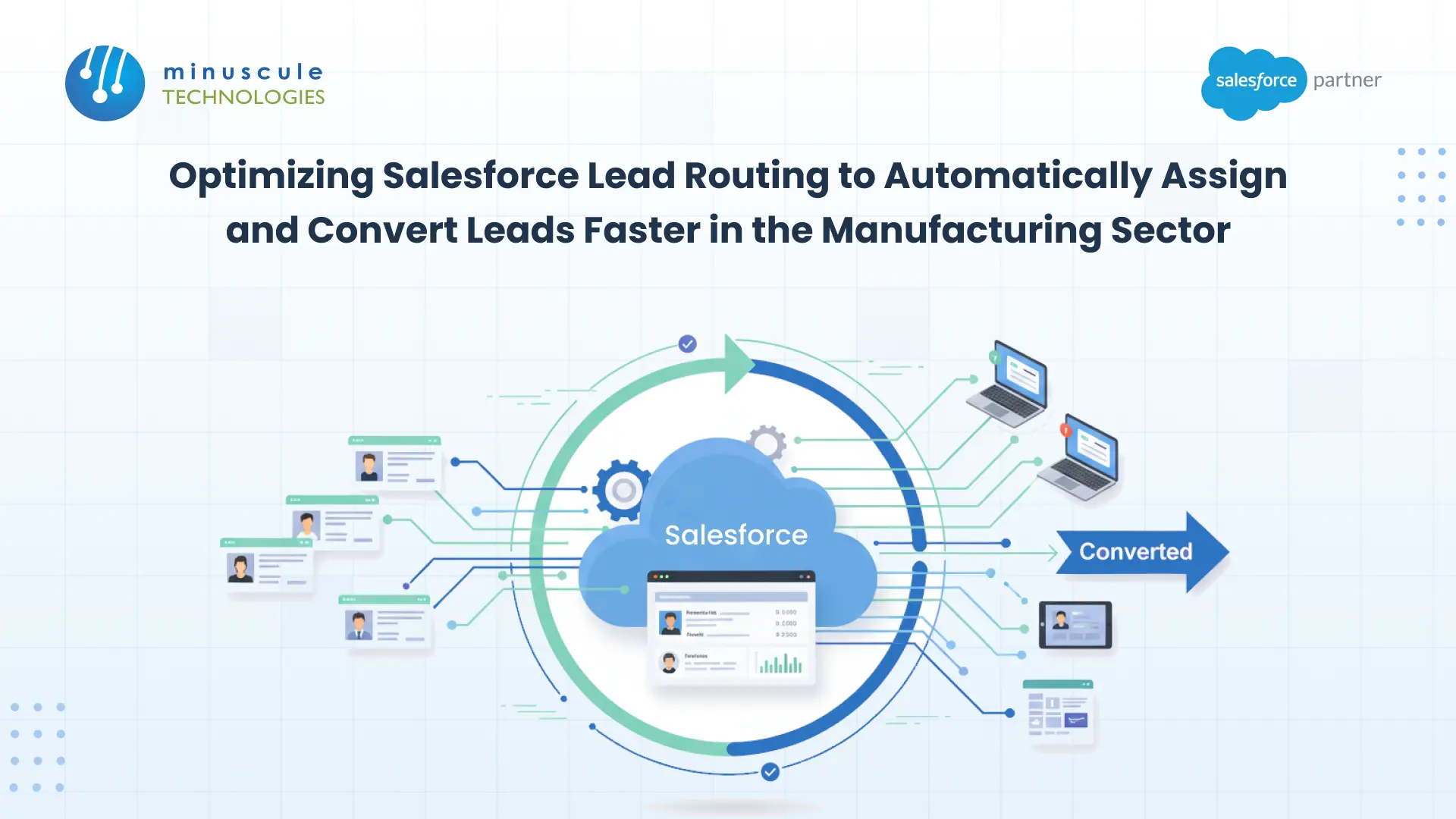
Salesforce lead routing sends each new sales lead to the right person the moment it arrives. It runs on rules like location, product interest, or account ownership. Manufacturers who sell through distributor networks and juggle complex product lines need this most. Get it right, and you win the deal. Get it wrong, and a competitor closes it first.
Here's what it looks like when it goes wrong. A procurement manager at a car plant requests a quote for custom hydraulic units. The inquiry lands in a generic inbox and sits for hours. It then bounces from a regional manager to a local distributor. By the time the distributor calls back, the buyer has already booked a site visit with your competitor. You didn't lose that deal on price or quality. You lost it to latency. One widely cited study found leads contacted within 5 minutes are roughly 21 times more likely to qualify than those contacted 30 minutes later.
This article covers how manufacturers close that gap. You'll get the four routing methods built for complex product lines and distributor networks. You'll see the Salesforce tools that make them work, and where native Salesforce hits limits you need to plan around. If your leads still travel through a shared inbox and a chain of email forwards, this is the fix.
Automated lead routing uses software to assign a new lead to the right salesperson. It works off specific rules. This removes the need for a human to read and forward emails by hand.
Generic routing rules don't work for manufacturers. Your logic needs to match how your business runs. Here are the four most effective ways we set this up for clients.
In manufacturing, location matters because of shipping costs and repair services. The system checks the lead's address — zip code, state, or country — and assigns it to the right regional team. The benefit: that rep knows local shipping rules and can visit the factory if needed.
A lead asking about "Hydraulic Systems" needs an engineer. A lead asking for a catalog just needs a support rep. The system reads the "Product Interest" field. Technical questions go to senior engineers. General questions go to inside sales. The customer talks right away to someone who gets their technical language.
If a lead comes from a major existing client, it should never land on a general waiting list. It should never go to a junior salesperson either. The system checks if the lead belongs to a large parent account. If it does, the system sends it straight to the Key Account Manager (KAM) who owns that relationship. This protects the account. It also avoids an awkward "cold call" to a long-term customer.
For general web leads that don't fit a territory or account, the system spreads leads evenly across the sales team. This keeps workload balanced. No one person gets overwhelmed while others sit idle.
In manufacturing, you almost always sell to a company, not one person. Before routing a lead, the system checks if that company already exists in your database. If it does, the lead converts to a Contact. It attaches to the existing Account. This stops duplicate records.
For many manufacturers, the "sales rep" is really an external distributor. Instead of emailing leads to partners, use Salesforce Experience Cloud as a secure partner portal. The system sends the lead straight to the portal. If the partner doesn't click "Accept" in time, the system pulls the lead back. It then assigns the lead to another partner. This keeps distributors active and responsive.
Routing fails if the salesperson ignores the alert. Build timers into your routing to fix this. If a lead sits as "New" too long, the system alerts the Sales Manager. If it still sits idle, the system moves it to a group queue anyone can claim.
You don't always need pricey third-party apps. Salesforce's built-in tools can handle complex manufacturing needs if you build them right. Here's where each tool is strong, and where it runs into limits:
[[HTML TABLE #1 — Native Salesforce Lead Routing Tools at a Glance]]
Native Salesforce has real ceilings. Assignment rules don't talk to each other. There's no built-in audit trail showing why a lead went where it went. Territory changes almost always need a developer. None of this means you should buy a bolt-on routing product. It means manufacturers need a Salesforce engineering partner instead. The right partner builds these tools right the first time. Otherwise, teams stack Flow on top of Flow until nobody can follow the logic.
Salesforce's Agentforce adds a different kind of intelligence to this picture. It can weigh intent signals and engagement history, not just fixed rules. That's a real shift from fixed, rule-based routing. It's also why governance matters. An AI agent making assignment decisions still needs clear rules. It also needs an audit trail behind it, the same way your Flow logic does. Our breakdown of common Agentforce implementation challenges covers what that governance layer needs.
When Minuscule Technologies upgrades an old Salesforce system with smart routing, the return on investment is real:
It's the automated process of assigning a new lead to the right salesperson or distributor. The system uses rules like location, product interest, account ownership, or availability. This replaces a human manually forwarding emails.
As fast as possible. Response-time research shows a sharp drop-off in qualification rates once a lead sits for more than a few minutes. That's the exact gap automated routing closes.
Yes. Salesforce Experience Cloud usually handles this. It gives distributors a secure portal where leads appear the moment they're routed. If a partner doesn't respond in time, the system hands the lead to someone else.
For a small, stable sales team with simple routing needs, native tools are often enough. Native tools still work even with multiple criteria, SLA enforcement, or complex territory hierarchies. But you have to build them right — and that's where most teams get stuck.
Your lead routing logic is the traffic control tower of your revenue. If it's manual, slow, or inaccurate, deals stall and distributors lose confidence in you. If it's automated and built for your manufacturing needs, your sales pipeline runs on its own.
Getting there takes more than switching on Salesforce's native tools. It takes engineering them right for how your business sells. That's where Minuscule Technologies differs from a typical Salesforce consultancy — we build routing logic around how manufacturers run their sales floor day to day.
At Minuscule technologies we bring pre-built Accelerators and Starter Packs for manufacturing-specific routing logic, so you're not building territory rules and SLA escalation flows from a blank canvas every time. Our tailored implementation frameworks cover distributor networks, multi-tier account hierarchies, and the product-complexity challenges manufacturers face daily. Is your lead routing logic stuck in the past? Contact Minuscule Technologies today to audit your Flow architecture and build a data-driven Salesforce environment engineered for how manufacturers sell.
You've seen what's possible. Now, let's make it happen for your business. Whether you need an end-to-end Salesforce solution, a complex integration, or ongoing managed services, our team is ready to deliver.

Schedule a Free Strategic Call


