
September 3, 2025
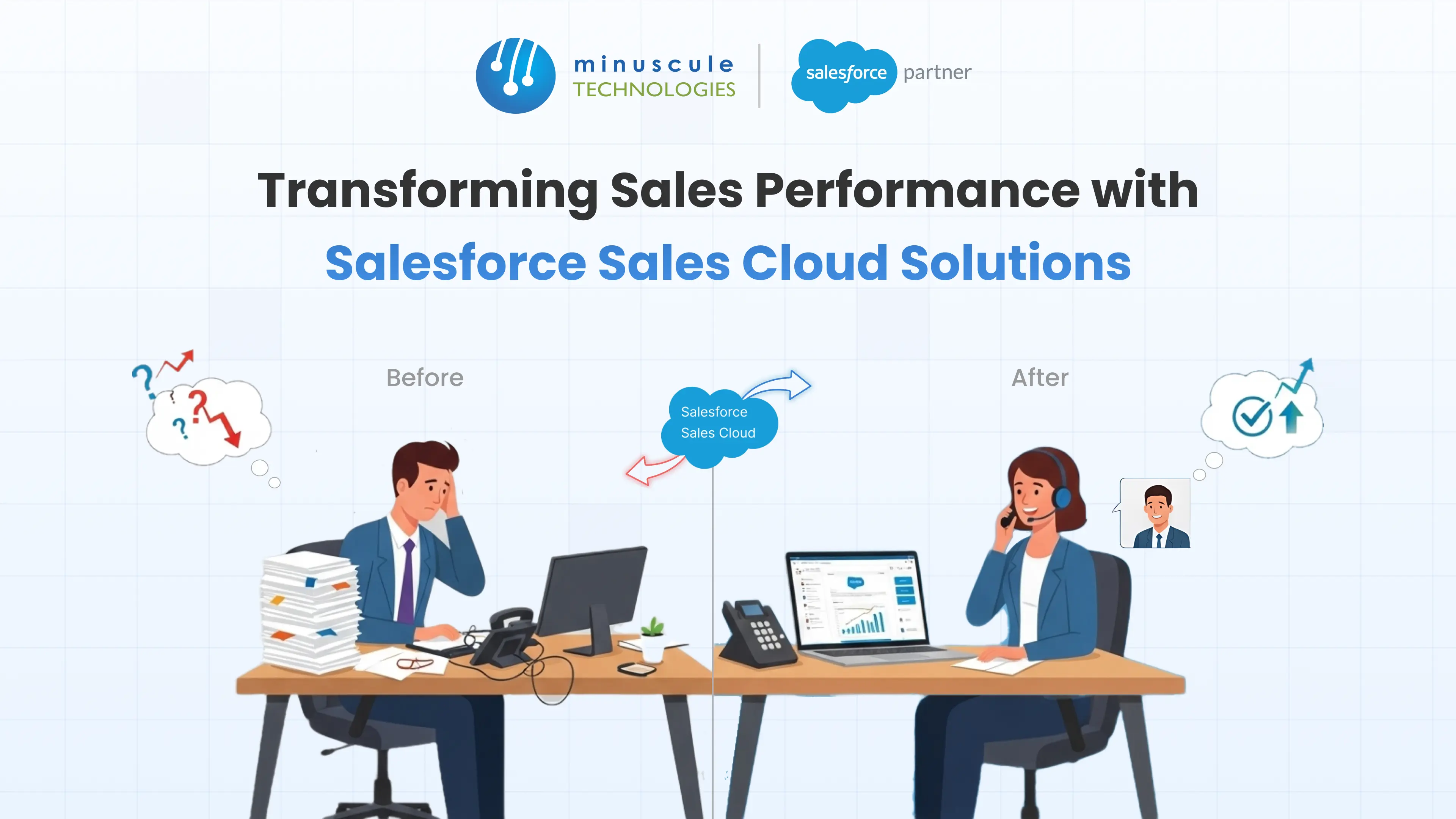
Salesforce Sales Cloud lifts sales performance in four concrete ways: it speeds up the pipeline, points reps at the deals most likely to close, frees them from admin, and gives leaders forecasts they can trust. Put together, those turn a scattered, spreadsheet-driven sales operation into a team that moves faster and wins more. This guide breaks down each performance lever, the capabilities behind it, and the numbers that tell you it is working.
The platform is proven, but performance comes from setting it up around how your team actually sells. The features become faster cycles and higher win rates only when the rollout reflects your real sales motion - otherwise you get one more tool people log into and ignore.
A quick note on naming
If you want the product basics first, our guide on what Salesforce Sales Cloud is covers the fundamentals, so this post can stay focused on performance. One point to know going in: Salesforce has been moving the Sales Cloud brand toward Agentforce Sales as AI agents take a bigger role in selling. The core CRM - leads, opportunities, pipeline, forecasting - is the same; the AI layer on top is what has grown. We say "Salesforce Sales Cloud" throughout, since that is what most teams still call it.
Sales performance is not one number. It is a handful of levers that, pulled together, decide how much a team sells and how efficiently. The main ones are pipeline velocity, conversion rate, rep productivity, forecast accuracy, and the long-term value you build with each customer.
When any one of those slips, the whole engine slows. A team can have great reps and still miss quota if the pipeline crawls or the forecast is wrong. The value of Salesforce Sales Cloud is that it works on all of these levers at once, which is why sales performance management gets easier once the platform is set up well.
Here is what changes on the ground, lever by lever.
Manual work - data entry, lead sorting, follow-up scheduling - quietly stretches every sales cycle. Sales Cloud automates the repetitive parts with Salesforce Flow, so reps get reminders, templates, and clean handoffs instead of busywork. The result is a shorter cycle and more selling hours per rep, which is the most direct route to sales cycle optimization. Community write-ups on Forcetalks are a useful reference when you are mapping your automations.
Reps who chase every lead equally waste time on deals that were never going to close. Einstein lead and opportunity scoring predicts which leads and deals are most likely to convert, and guided selling walks reps through the right next step. That focus is where a lot of conversion-rate improvement comes from - the same effort, aimed better. Over a quarter, a team that works the top of its list first simply closes more, and the reps who used to burn hours on dead-end leads get that time back for real selling.
Productivity drops when a rep's day is spread across spreadsheets, email, and half a dozen tabs. Sales Cloud puts accounts, contacts, activity, and next steps in one workspace, with mobile access and built-in collaboration so a deal keeps moving whether the rep is at a desk or on the road. Less hunting for information means more time in front of customers. A thoughtful Salesforce Sales Cloud implementation designs that workspace around the rep's day, not the org chart.
Forecasts built on gut feel and stale spreadsheets are the first thing to break under pressure. Sales Cloud reports and dashboards show pipeline health and forecast in real time, and deeper analysis runs through CRM Analytics (the product once branded Einstein Analytics) and Tableau. Leaders can call the quarter with confidence and spot risk early, which turns forecasting from a monthly scramble into a steady discipline. Certification-focused explainers on SaaSGuru help teams get comfortable with forecasting concepts.
Scattered customer data caps how well a team can sell. Centralizing it gives every rep a 360-degree view — preferences, history, past interactions - so they can personalize outreach and anticipate needs. That lifts satisfaction and opens the door to upsell, cross-sell, and the kind of retention that quietly grows revenue year after year. Performance is not only about winning new deals; it is about keeping and growing the ones you have.
Each performance lever is powered by a specific set of tools. Here is how the main ones map to the results they drive.
Salesforce Flow automates lead management, opportunity updates, approvals, and follow-ups, so nothing slips and no lead sits cold. It is the current automation engine, having replaced the older Process Builder and Workflow Rules, which Salesforce has retired. Cleaner automation means faster deal cycles and fewer human errors, and it frees reps to spend their hours selling. Getting this right often depends on solid integration with the other systems your data lives in.
Einstein brings predictive analytics into the daily workflow — next-best-action suggestions, deal-outcome predictions, and lead prioritization drawn from historical trends and live data. Agentforce Sales adds AI agents that can draft outreach and tee up next steps with a person in the loop, so reps spend more time selling and less time on prep. Used well, this is real sales intelligence: the system points, and the rep acts. The effect on performance is quiet but steady — better-prioritized days, fewer forgotten follow-ups, and a forecast that reflects what is actually happening. Technical build patterns on Jitendra Zaa's blog are a solid reference here.
For teams with complex products and pricing, CPQ (now part of Revenue Cloud) lets reps build accurate quotes, contracts, and invoices in minutes instead of days. Faster, error-free quotes keep deals moving and protect the buyer's trust at a fragile moment in the cycle, which feeds straight back into pipeline velocity.
Sales is rarely a one-team effort. Partner Relationship Management lets you onboard, enable, and train distributors, resellers, and channel partners the same way you support internal reps — extending reach without adding headcount. For channel-heavy businesses, that is a performance lever in its own right. Session recordings on Apex Hours cover many of these features in depth.
Sales Cloud connects to Marketing Cloud Account Engagement (formerly Pardot), so leads are nurtured through personalized campaigns and handed to sales cleanly. That tighter marketing-to-sales handoff means reps work better-fit leads and waste less effort chasing prospects who were never ready to buy.
Once Sales Cloud is live, a handful of metrics tell you whether performance is actually improving. Watch them together, not in isolation.
Set a baseline before you change anything, then track these on a rhythm — weekly for pipeline and activity, monthly for the bigger trends. Real sales performance optimization shows up as several of these moving in the right direction at once, not one number spiking while another slides. For a step-by-step method of proving the gain, our post on how to measure the return on Sales Cloud lays it out.
It helps to know what to expect and when, so stakeholders stay patient through the early weeks.
The first wins are felt by reps - less admin, faster follow-up, cleaner handoffs - and show up as productivity within a quarter or two. Over the first year, the compounding gains arrive: shorter cycles, higher conversion, steadier forecasting, and the revenue growth that follows when the whole team is aimed at the right deals. A rollout that starts with one team and expands as confidence grows tends to hold those gains better than a big-bang launch. Naming both kinds of win up front keeps everyone focused on the metrics that prove it rather than expecting an overnight jump.
The capabilities above are only potential until someone sets them up around your business. That is where an engineering-minded partner earns its place.
The high-value work sits under the surface: a clean data model so every dashboard is accurate, integration with ERP, finance, and marketing tools so data stays in step, and governed releases so improvements ship without breaking what already works. Adoption matters just as much — a well-built org that reps route around delivers nothing, which is why training and change management are part of the job. Many of these same issues show up as day-to-day friction for the people running the team; our post on the challenges sales managers face looks at that side. A good partner also right-sizes licensing so you pay for what actually drives performance, and keeps tuning the org as the business changes. The goal is a system that keeps getting better on its own rhythm, not one that peaks at launch and slowly decays back toward the spreadsheets it replaced.
It is the sales-focused part of the Salesforce CRM - leads, contacts, accounts, opportunities, pipeline, and forecasting in one place, with AI and automation to speed the work.
It speeds the pipeline with automation, lifts conversion with scoring and guided selling, makes reps more productive with one workspace, and sharpens forecasting with live dashboards. Because it works on all of those levers at once, the gains compound rather than cancelling out.
Yes. Sales Cloud supports both, and the same performance levers apply - the difference is in how you configure stages, automation, and reporting to match each motion.
Salesforce has been moving the Sales Cloud brand toward Agentforce Sales as AI agents take a bigger role. The core CRM is the same; the AI layer has grown. Our post on the rebranding of Sales Cloud to Agentforce Sales covers the detail.
Sales velocity measures how fast your pipeline turns into revenue - a blend of opportunity count, average deal size, win rate, and sales-cycle length. Raising it is one of the clearest signs performance is improving.
Set a baseline, then track sales velocity, win rate, lead conversion, quota attainment, and forecast accuracy over time, tying each to a business goal.
Teams often see early wins - less admin, faster follow-up - within a quarter, while the bigger gains build over the first year as adoption deepens and the data gets cleaner.
Salesforce Sales Cloud is more than a place to store contacts. Handled well, it lifts every lever that decides sales performance — velocity, conversion, productivity, and forecasting — and gives the whole team one clear view of the customer.
The difference between a tool people ignore and an engine that drives growth is the setup underneath: the data model, the integrations, the adoption, and the steady tuning. If you want to take your sales performance to the next level, a Salesforce engineering partner can help you build it that way.
You've seen what's possible. Now, let's make it happen for your business. Whether you need an end-to-end Salesforce solution, a complex integration, or ongoing managed services, our team is ready to deliver.

Schedule a Free Strategic Call


